General News
Nigeria to Join Global Celebration of International Francophonie Day with Cultural Fair in Abuja

By Iyojo Ameh
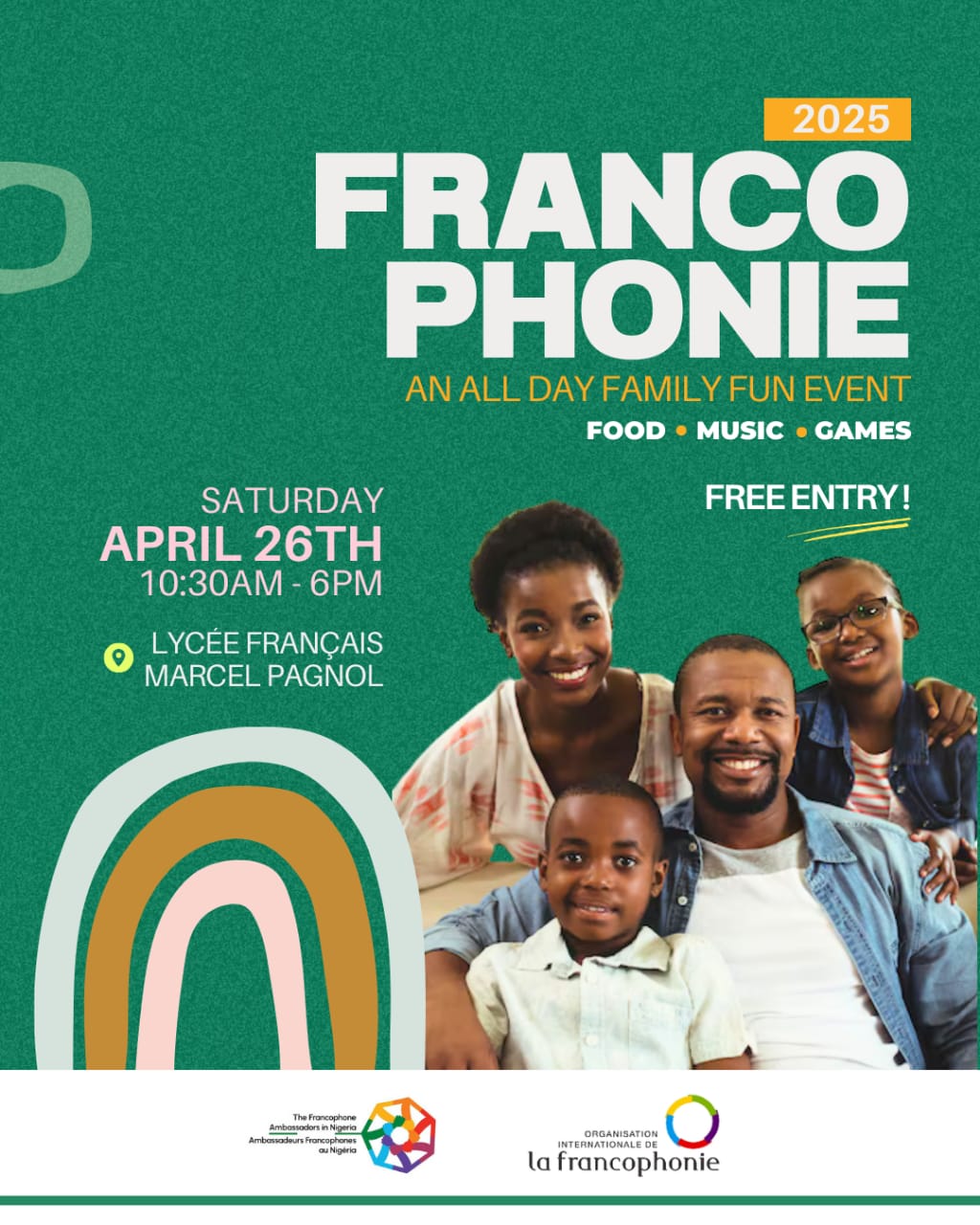
Nigeria will join other French-speaking and Francophile countries in celebrating the Journée Internationale de la Francophonie, which was officially to be observed on March 20, but moved to April in the Nigerian capital to allow wider participation.
The event will commemorates the creation of the first Agency for Cultural Cooperation at the Niamey Conference in 1970, and has been marked annually by the Organisation Internationale de la Francophonie (OIF) since 1988.
According to the release, this year’s celebration in Abuja will be spearheaded by the Groupe des Ambassadeurs Francophones (GAF) in Nigeria, comprising about 20 member countries.
The Ambassador of Bulgaria, H.E. Yanko Yordanov, currently serves as GAF President.
The event will feature a vibrant gastronomic and cultural fair, offering visitors a taste of the rich and diverse cultures of Francophone nations through food, music, dance, games, and presentations by students and teachers of the French language. The cultural showcase will also include a tribute to Nigeria’s own heritage.
The 2025 Francophonie celebration adopted the theme “Tous unis pour la planète” (“All United for the Planet”), reflecting a global focus on natural resource management, environmental protection, sustainable development, and energy transition in French-speaking countries.
Globally, the French language is spoken by an estimated 321 million people across five continents, with over 60% of these speakers residing in Africa, according to the 2018 report by the Observatoire de la langue française.
In Nigeria, French is recognized as the second official language under the National Education Policy, and is compulsory at the junior secondary level. The introduction of French in Nigerian schools dates back to the Yaoundé Convention of 1961, which advocated for French as a second European language in Africa, complementing English and serving as a bridge between English- and French-speaking countries.
However, the development of French education in Nigeria continues to face significant challenges. These include a lack of textbooks, inadequate technological tools, limited teaching hours, and overcrowded classrooms. Many teachers also struggle with a limited command of the language and a lack of training in modern pedagogical methods for teaching French as a foreign language (FLE). The shortage of qualified instructors is particularly severe—only 15,000 French teachers currently serve the country, despite a need for at least 30,000.
Despite these hurdles, initiatives like the Francophonie Month and support from diplomatic communities such as the GAF continue to promote the French language, strengthen educational partnerships, and celebrate cultural diversity in Nigeria.