General News
FRC, Lawmakers Roll Out New Governance Blueprint to Boost Transparency in Nigeria’s Petroleum Sector

By Iyojo Ameh
The Fiscal Responsibility Commission (FRC), in partnership with the House of Representatives Committee on Petroleum Resources (Upstream), has launched a comprehensive Policy Paper aimed at strengthening good governance, transparency, and fiscal accountability in Nigeria’s upstream petroleum sector.
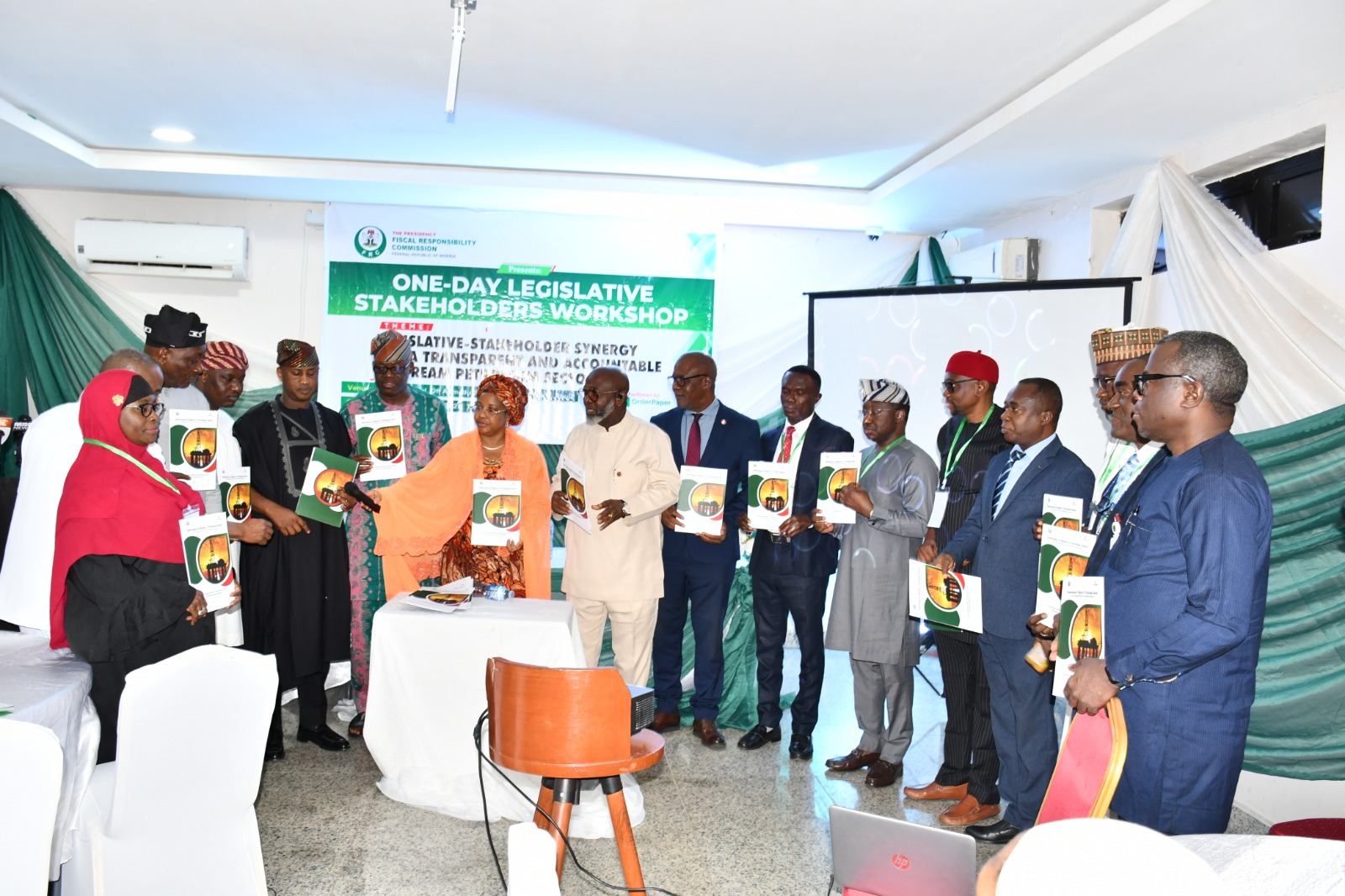
The document was formally unveiled at a high-level Legislative Stakeholders’ Workshop held in Abuja, drawing lawmakers, regulators, and industry experts to discuss strategies for improving oversight in the nation’s most critical revenue-generating industry.
Executive Chairman of the FRC, Victor Muruako, Esq., described the gathering as a “significant and timely milestone” in Nigeria’s drive toward enhanced fiscal responsibility across the oil and gas sector. He commended the turnout and highlighted the importance of collaboration between regulators and the legislature in addressing governance challenges.
Muruako gave special acknowledgment to the Chairman of the House Committee on Petroleum Resources (Upstream), Rt. Hon. Alhassan Ado Doguwa, OON, whose remarks were delivered by Hon. Kalifat Ogbara. He praised Doguwa’s commitment to sector reforms through active legislation and oversight.
Reiterating the FRC’s mandate under the Fiscal Responsibility Act (2007), Muruako noted that the workshop offered an opportunity to confront persistent issues affecting transparency and accountability in the petroleum industry.
One of the major highlights was the presentation of the Policy Brief, a product of extensive research evaluating the 10th National Assembly’s approach to petroleum sector governance. The document examines existing laws, oversight mechanisms, and institutional structures, identifying compliance gaps and proposing targeted reforms.
According to the FRC, the Policy Paper outlines strategies to tighten reporting standards, close revenue leakages, strengthen oversight, and ensure equitable distribution of petroleum earnings. Stakeholders described the document as a practical guide capable of aligning Nigeria’s petroleum governance with global best practices.
Muruako acknowledged advancements under the Petroleum Industry Act (PIA) 2021 and ongoing reforms by the Tinubu administration but stressed the growing urgency of addressing challenges such as oil theft, pipeline vandalism, security threats, and the need to integrate Environmental, Social, and Governance (ESG) principles into petroleum operations.
Delivering Doguwa’s remarks, Hon. Ogbara reaffirmed the Committee’s commitment to empowering the FRC to fully execute its mandate. She stressed that transparency in the upstream sector is vital to economic stability, investor confidence, and the wellbeing of host communities.
Ogbara also spoke on the Committee’s ongoing legislative work, particularly the Bill seeking to establish the National Commission for the Decommissioning of Oil and Gas Installations. The proposed law aims to address aging infrastructure, environmental restoration, and industry safety concerns.
The workshop drew participation from key stakeholders including members of the House of Representatives Hon. Mansur Musa, Hon. Akinlayo Kolawole, Hon. Jimi Odimayo, Hon. Jafaru Yakubu, Hon. Doris Okafor, Hon. Hamisu Ibrahim, Hon. Adewale Morufu, and Hon. Ismaila Agoka—as well as representatives from RMAFC, NEITI, the Oil & Gas Free Zone Authority, and senior management of the FRC.
As deliberations began, Muruako urged participants to contribute practical, solution-driven ideas. He emphasized that Nigeria must manage its petroleum resources with the highest level of fiscal responsibility for the benefit of all citizens.