
Crime
Nigeria Under Siege: Cult Groups, Child Initiations, and the Betrayal of Elders

By Sam Agogo
Cultism in Nigeria has grown into a national nightmare, a phenomenon that has evolved from its intellectual beginnings into a violent scourge now threatening schools, communities, and the nation at large. The roots of cultism trace back to 1952 at the University College Ibadan, when Wole Soyinka and six others founded the Pyrates Confraternity.

What makes today’s cultism even more alarming is the involvement of influential men, community elders, and elites who should be discouraging it but instead are aiding and sponsoring it. These figures provide money, protection, and influence, ensuring that cult groups thrive. Their actions betray the responsibility of adulthood, turning them into enablers of violence. Instead of guiding the younger generation away from danger, they are financing their involvement, perpetuating a cycle of bloodshed. This betrayal has opened the door for children as young as 12 to be recruited into cult groups, often encouraged by adults who should be protecting them. Schools have become battlegrounds, where minors are initiated into violent brotherhoods that promise power and belonging but deliver only destruction.
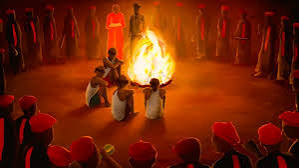
The groups themselves are numerous and notorious. The Pyrates Confraternity, once a symbol of activism, gave rise to splinter groups such as the Buccaneers, Black Axe, Vikings, Eiye, Aiye, Greenlanders, Icelanders, and Deygbam. Female cult groups also exist, including Black Bra, Daughters of Jezebel, Amazons, and Pink Ladies. Their initiation rites are often degrading and exploitative. Reports from campuses reveal that many boys are forced to sleep with a female cult member as a sign of initiation, while female recruits are subjected to beatings, forced drinking of concoctions, or coerced sexual acts with multiple male members. These practices are designed to break down boundaries and bind recruits to the cult through fear, shame, and secrecy.
The menace has spread beyond universities into secondary schools and communities, dragging even children into its grip. In October 2025, a viral video from Delta State showed a toddler being blindfolded and forced to drink alcohol during a cult initiation. The child screamed in pain as older boys carried out the ritual. Police later confirmed the arrest of four suspects responsible for the act. In Anambra State, another viral video showed a minor, estimated to be just four or five years old, being coerced into initiation with blood rituals. The police launched investigations and promised to prosecute those involved. These shocking incidents highlight how cultism has descended to unimaginable depths, targeting the most vulnerable.
The violence is not confined to initiation. In Rivers State, cult clashes have claimed hundreds of lives. A report revealed that Rivers recorded over 200 deaths from cult clashes between 2020 and 2025, the highest in Nigeria. In May 2025, rival factions of the Deygbam cult group—Blood Suckers and D12—turned Diobu, Port Harcourt, into a war zone, killing multiple people before police dismantled their network and arrested suspects. In Cross River, a former student union president was gunned down during his father’s burial ceremony, a double tragedy that shocked the community.
Makurdi in Benue State has also witnessed chilling cult killings. In October 2025, a young man was beheaded in North Bank, Makurdi, during a clash between rival groups. In November 2024, a soldier and three others were killed in cult clashes in the same area. Residents recall harrowing incidents where rival cultists killed a young man in front of his parents, and another case where a man who had long abandoned cultism was traced years later by rivals and murdered, proving that cultism’s grip is relentless and unforgiving.
The betrayal lies not only in the corruption of the original ideals of confraternities but also in the complicity of adults and elites who sponsor and protect these groups. Many of these men joined cults in their youth and remain loyal decades later, continuing to influence or sponsor activities. Politicians exploit cult groups as thugs during elections, further entrenching their influence. The result is a nation under siege, where cultism has become both a social and criminal epidemic.
Nigeria must confront this crisis with honesty and urgency. Law enforcement must dismantle cult networks and prosecute sponsors, including the elders who aid them. Schools must enforce discipline and provide counseling to protect vulnerable children. Families must reclaim their role as moral guides, rejecting the temptation to aid cult involvement. Communities must rehabilitate former cultists, turning them into advocates for peace. Government policies must address poverty, unemployment, and inequality, tackling the socio‑economic pressures that make cultism attractive. Above all, society must remember that confraternities were once symbols of activism and justice, and that those values can be reclaimed.
Nigeria stands at a crossroads. The grip of cultism is strong, but it is not unbreakable. Saying no to cultism is not just a slogan; it is a survival strategy for Nigeria’s youth and future. The country must confront the menace with honesty and balance, recognizing both the noble origins and the destructive reality. Only then can Nigeria turn this dark chapter into a lesson for building a safer, stronger society. Cultism’s story is one of betrayal, but it can also be one of redemption—if the nation chooses courage, unity, and justice over fear, violence, and exploitation.
For Comments, Reflections, and Further Conversation:
📧 Email: samuelagogo4one@yahoo.com
📞 Phone: +2348055847364