
Business and Economy
Obasanjo: “Something Is Wrong, I Can’t Believe the Naira Has Lost Its Value in My Lifetime”

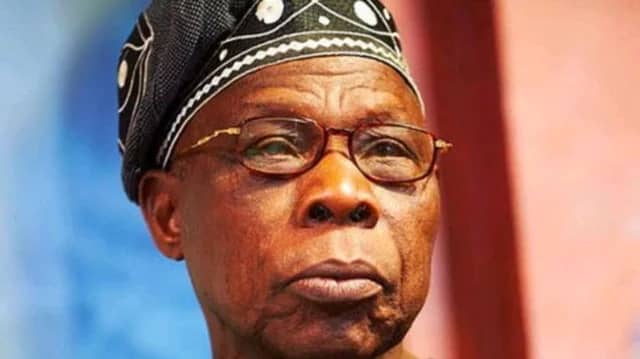
Former Nigerian President, Olusegun Obasanjo, has once again expressed concern over Africa’s dependence on foreign currencies, reiterating his call for the adoption of a single African currency.
Speaking at a Fireside Chat during the ongoing Intra-African Trade Fair (IATF 2025) in Algiers, Algeria, Obasanjo warned that the continent’s economic future remains endangered unless urgent steps are taken to achieve financial independence.
The session, moderated by CNBC Africa’s Fifi Peters, featured Obasanjo voicing his worries about the drastic depreciation of Nigeria’s currency and its wider implications for Africa’s economic stability. He was blunt in his assessment of the naira.
“Nigeria’s currency today is not worth the paper it is printed on,” Obasanjo said, lamenting the steep fall of the naira since his time in power. He recalled that when he left office as military Head of State in 1979, the naira traded at nearly two dollars per unit. “In 1979, one naira was $1.80. Today, $1 is equivalent to about ₦1,600,” he noted, describing Nigeria’s currency decline as worrisome.
Questioning the rationale behind the devaluation, the former president said: “What have we done to devalue our currency to this extent? Something must be wrong. I cannot believe that in my own lifetime, the naira has become so devalued that it is not even worth the paper it is printed on.”
Obasanjo went further to criticize Africa’s continued reliance on foreign currencies such as the US dollar and the euro, which he argued negatively affect intra-African trade. As Chair of the IATF Advisory Council, he stressed that this dependence obstructs Africa’s development goals and regional integration.
He commended the African Export-Import Bank (Afreximbank) for driving initiatives like the Pan-African Payment and Settlement System (PAPSS), which enables cross-border trade in local currencies. According to him, PAPSS marks a significant milestone in reducing Africa’s reliance on external monetary systems.