
Governance
Ogulana Warns Against Disruptions, Urges Staff to Embrace Accountability and Teamwork

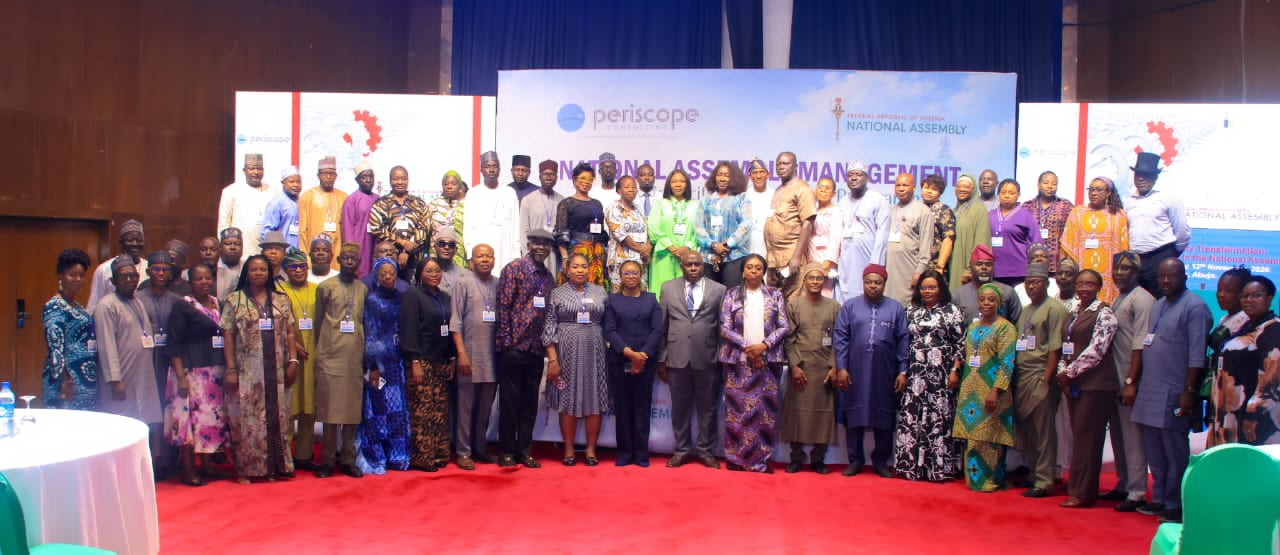
The Clerk to the National Assembly, Kamoru Ogulana, has urged parliamentary staff to uphold professionalism, discipline, integrity and institutional loyalty in the discharge of their responsibilities.

Ogulana, who was represented by the Secretary of Human Resources and Staff Development, National Assembly, Essien Eyo Essien, made the call during the opening ceremony of a training programme for parliamentary staff organised by the management of the National Assembly.

He described training and capacity development as essential to an effective parliamentary service, noting that the quality of democracy is influenced by the competence, integrity and professionalism of personnel providing institutional support to Parliament.


The Clerk emphasised that service in the National Assembly is a specialised vocation that demands political neutrality, institutional loyalty and commitment to constitutionalism.
He urged staff to remain diligent in their duties, responsible in their communication and conscious of how their individual conduct, including activities on social media, could affect the reputation and credibility of the institution.
Ogulana also reaffirmed management’s commitment to improving staff welfare, professional development and general working conditions.
He disclosed that management had initiated reforms aimed at improving conditions of service, enhancing administrative efficiency, promoting transparency and strengthening the institutional framework of the National Assembly.
According to him, although the reforms had involved difficult decisions and challenges, they remained necessary to build a responsive and effective parliamentary service capable of meeting the demands of a modern Parliament.
However, he expressed concern over what he described as persistent opposition, misrepresentation and allegations against management, some of which were allegedly unsupported by adequate facts.
While acknowledging the right of staff to express grievances, seek clarification and demand accountability, Ogulana stressed that such rights must be exercised responsibly and through established communication channels.
He particularly raised concerns over petitions to external investigative agencies, allegations involving salary payments, statutory deductions, pension contributions and staff union dues, as well as disparaging comments directed at senior management officials on social media.
The Clerk maintained that allegations of financial impropriety should be backed by verifiable facts and subjected to proper examination through appropriate institutional and legal mechanisms.
He also stated that, according to management records, the administration had continued to meet its obligations to staff, including the payment of salaries and allowances, without outstanding arrears of a day’s salary or allowance.
Ogulana further expressed concern over reports of threats to shut down the National Assembly and disrupt parliamentary activities in pursuit of staff grievances.
He warned that any attempt to paralyse the operations of the National Assembly went beyond an ordinary disagreement between staff and management, as it raised serious concerns about institutional security, continuity of parliamentary business and the discharge of constitutional responsibilities.
He therefore urged staff to exercise restraint, maturity and professionalism while channeling their grievances through recognised administrative structures and other lawful avenues.
The Clerk assured staff that management would remain committed to reforms aimed at improving welfare, strengthening administrative processes and ensuring the long-term development of the National Assembly.
He called for cooperation between management and staff, stressing that sustainable reforms required mutual respect, transparency, accountability and collective commitment.
Ogulana also urged participants to use the training programme to strengthen their knowledge of institutional ethics, communication, teamwork, emotional intelligence, conflict management and accountability.
He expressed confidence that the collective efforts of management and staff would help build a more efficient, transparent, accountable and responsive parliamentary service.
DIGITAL LEADERSHIP TRAINING FOR ASSISTANT DIRECTORS
Meanwhile, the Director of Training and Staff Development at the National Assembly, Madam Justina Chinwo, has described capacity building as a major priority of the current administration.
She disclosed that all staff members from Grade Level 04 to Grade Level 17 would undergo training within four weeks.
Chinwo made this known during the opening ceremony of a training programme organised for Assistant Directors of the National Assembly in collaboration with Periscope Consulting Limited.
She commended the Clerk to the National Assembly and his management team for their commitment to continuous staff development, describing training and retraining as the heartbeat of the administration.
Speaking on the theme, “Digital Leadership for Parliamentary Transformation: Driving Efficiency and Service Delivery in the National Assembly,” she said the demands of modern parliamentary administration required higher levels of knowledge, innovation, leadership and efficiency.
She described Assistant Directors as a critical cadre in the institution, serving as the bridge between strategic policymaking and daily administrative implementation.
According to her, Assistant Directors are no longer merely officers responsible for carrying out instructions but leaders, supervisors and mentors who translate management’s vision into practical results within their respective units.
She stressed that effective leadership at their level was essential to the overall performance and growth of the National Assembly.
The Director explained that the training programme was designed to strengthen participants’ administrative capabilities, technological and managerial skills while aligning internal processes with the institution’s core values of professionalism, integrity, diligence and excellence.
She disclosed that participants would engage with experienced facilitators and exchange knowledge on issues including building resilient institutions, digital transformation, work-life balance and managing exit.
She urged participants not to regard the programme merely as a routine exercise, welfare package or opportunity to obtain additional certificates, but as an important investment in their career development and the effectiveness of the institution.
Chinwo encouraged them to apply the knowledge acquired to their respective departments and directorates.
She also appreciated the leadership of the National Assembly for supporting the capacity-building initiative and urged participants to embrace the process of learning, unlearning and relearning.
PERISCOPE CONSULTING HIGHLIGHTS ROLE OF TECHNOLOGY IN PARLIAMENTARY TRANSFORMATION
Also speaking at the opening ceremony, the Chief Operating Officer of Periscope Consulting Limited, Rabbi Oyawale, said technology was increasingly reshaping public administration, institutional operations, decision-making and service delivery.
Oyawale expressed appreciation to the leadership and management of the National Assembly for the confidence reposed in the company and the opportunity to partner in the capacity-building initiative.
He noted that embracing digital solutions was essential for the National Assembly to improve administrative efficiency, strengthen institutional processes and enhance parliamentary service delivery.
According to him, Assistant Directors have important responsibilities in translating management decisions into operational results, supervising teams and ensuring that departmental objectives are achieved.
He said their ability to leverage technology, encourage innovation and lead change would significantly influence the overall performance of the institution.
Oyawale explained that the programme would expose participants to practical applications of emerging technologies, including artificial intelligence, data analytics, automation and digital collaboration tools, to improve parliamentary administration.
He encouraged participants to actively engage in the training, share experiences and identify processes that could be simplified, operational bottlenecks that could be eliminated and opportunities to improve productivity within their departments.
The Periscope Consulting executive stressed that the success of the programme would not be measured by the number of sessions attended or certificates obtained, but by the practical improvements participants introduced upon returning to their offices.
He urged them to become champions of efficiency, innovation and continuous improvement.
Oyawale further stated that strong institutions were built through capable personnel, effective processes, sound leadership and the appropriate application of technology.
He assured the National Assembly management of Periscope Consulting’s continued commitment to supporting initiatives aimed at strengthening institutional capacity and improving public sector performance.
He concluded by reminding participants that while technology provides the tools for progress, leadership determines the results, urging them to ensure that digital solutions translate into measurable improvements in the operations and service delivery of the National Assembly.