
Governance
Onion Commercialisation: Aliyu Approves 25% State Contribution, Seeks Loan Subsidy

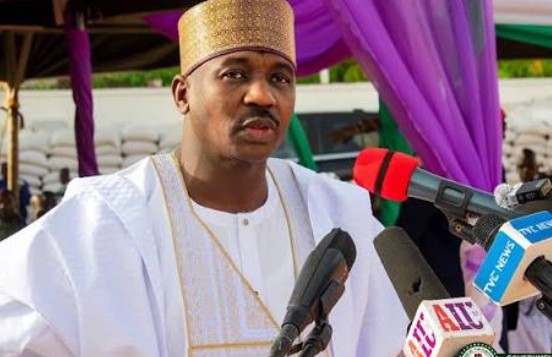
By Muhammad Gazali Garba, Sokoto
Sokoto State Governor, Dr.


The governor announced the approval on Saturday in Sokoto during the flag-off of the programme, explaining that the intervention was designed to expand farmers’ access to agricultural financing and increase onion production.

Aliyu said the state government’s decision followed an appeal by onion farmers for a 50 per cent equity contribution to enable them to participate in the programme.

He also appealed to the Federal Government to convert 50 per cent of the existing loan component of the financing package into a direct subsidy, citing increasing agricultural input costs and the financial challenges confronting smallholder farmers.
Describing Sokoto as Nigeria’s leading onion-producing state, the governor disclosed that more than 80,000 farmers in the state were actively engaged in onion cultivation as their primary source of livelihood.
He noted that onion production remained a major economic pillar of the state, providing income, creating employment opportunities, supporting businesses and sustaining thousands of farming households.
According to him, his administration has continued to promote the development of the onion value chain through deliberate policies, strategic interventions and partnerships.
The governor recalled that Sokoto hosted the International Onion Conference in October 2022, which brought together investors, researchers, stakeholders and development partners to explore opportunities for transforming Nigeria’s onion industry.
He further disclosed that the state government had provided free land to private investors for the establishment of onion storage facilities, supported the commencement of an onion processing facility at Kalambaina and facilitated farmers’ participation in the Federal Government and Bank of Agriculture input financing programme.
Aliyu added that his administration had prioritised agricultural development through the free distribution of fertilisers, agrochemicals and improved seeds to farmers across the state.
On agricultural mechanisation, the governor revealed that his administration had procured 250 Massey Ferguson MF375 tractors at an estimated cost of ₦22.13 billion.
He said the tractors had been delivered and fully paid for, adding that they were ready for commissioning.
He also expressed the state’s readiness to participate in the Federal Government’s tractor subsidy programme to improve farmers’ access to modern agricultural equipment.
Speaking on irrigation development, Aliyu said the rehabilitation of Lugu Dam was progressing steadily and would significantly improve agricultural production, particularly onion cultivation, upon completion.
He explained that the project would also strengthen the state’s export potential by allowing farmers to export their produce directly to international markets without necessarily routing them through Ghana.
The governor lamented that onions produced in Sokoto had, over the years, become popularly known as Ghana onions despite being locally cultivated.
“These are not Ghana onions; they are Sokoto onions, produced by our hardworking farmers,” he emphasised.
He expressed optimism that improved storage, processing and direct export opportunities would help restore the identity of Sokoto onions and enable farmers to maximise the economic benefits of their produce.
Speaking at the event, the Minister of Agriculture and Food Security, Senator Abubakar Kyari, said the programme was designed to address longstanding challenges affecting Nigeria’s onion value chain, particularly inadequate storage facilities, transportation difficulties, limited processing capacity and significant post-harvest losses.
He described onions as an essential household commodity, noting that their availability and affordability directly affect the cost of living.
The minister said Nigeria was among Africa’s leading onion-producing countries, with the industry valued at approximately ₦1.1 trillion. However, he noted that substantial quantities of harvested onions were lost before reaching consumers.
He put annual post-harvest losses at between 14 and 15 per cent of total onion production, representing an estimated ₦300 billion in economic losses.
According to him, the losses were largely caused by poor curing practices, inadequate modern storage facilities, inefficient transportation systems and insufficient processing infrastructure.
Kyari recalled the recent increase in onion prices across Nigerian markets, attributing the development to flooding in major producing states, seasonal supply shortages and rising transportation costs.
He said the ministry had engaged relevant regulatory authorities and onion-producing states to assess the challenges affecting the supply chain before directing the Bank of Agriculture to commence large-scale financing of onion production.
The minister commended the Bank of Agriculture, the National Agricultural Development Fund and NOPPMAN for their collaboration in translating President Bola Ahmed Tinubu’s agricultural agenda into practical support for farmers.
He recalled that the Federal Government had earlier distributed more than two million bags of fertiliser to over 500,000 smallholder farmers under the Bank of Agriculture’s Renewed Hope Smallholder Support and Value Chain Programme.
He added that the National Agricultural Development Fund had also distributed 500,000 bags of fertiliser to farmers across the country.
Kyari further disclosed that the government had introduced a Guaranteed Minimum Price model to protect smallholder farmers against market uncertainties.
Under the arrangement, participating farmers would receive support from aggregators during planting and sell their produce at government-approved minimum prices at harvest.
On agricultural financing, the minister said President Tinubu had approved the recapitalisation of the Bank of Agriculture to the tune of ₦1.5 trillion, while the Federal Government had also provided a ₦250 billion facility through the bank to improve farmers’ access to credit at single-digit interest rates.
He said the ministry was working closely with the bank to strengthen its operations, improve lending to genuine farmers and expand access to agricultural financing, particularly for women and young people.
Kyari disclosed that the first phase of the onion intervention would support 11,000 farmers across six states, with Sokoto accounting for the largest share of beneficiaries.
He commended Governor Aliyu for providing an enabling environment for the programme, particularly through the early mobilisation and organisation of farmers in collaboration with their association.
The minister described Sokoto as a receptive partner in the initiative and urged other participating states to adopt a similar approach.
Meanwhile, the Managing Director of the Bank of Agriculture, Mr. Ayo Sotinrin, announced additional support measures for farmers in Sokoto, including solar-powered irrigation pumps, electric cargo tricycles and access to 100 tractors at a 40 per cent discount under a presidential approval.
He explained that the electric cargo tricycles, which have a carrying capacity of up to 2,000 kilogrammes per trip, would facilitate the transportation of agricultural produce from farms to aggregation centres and help reduce post-harvest losses.
The bank also disclosed that the Federal Government and Sokoto State Government were working towards a joint agricultural financing arrangement initially estimated at ₦10 billion, with each party expected to contribute ₦5 billion, to support at least 100,000 farmers.
It appealed to Governor Aliyu to consider increasing the state’s contribution to between ₦10 billion and ₦20 billion, assuring that the bank would provide a corresponding contribution to expand the programme to at least 200,000 farmers.
The bank further announced plans to invest in modern onion storage and processing infrastructure, including curing centres, ventilated warehouses and solar-powered cooling systems.
It said financing would also be extended to processors to enable them to purchase onions directly from farmers, reduce market gluts and develop value-added products such as onion powder, flakes and paste.
In his remarks, the President of the National Onion Producers, Processors and Marketers Association of Nigeria, Aliyu Maitasamu Isah, commended President Tinubu for approving the intervention, describing it as an important initiative for addressing the challenges confronting onion farmers.
He appealed to the President to consider converting 50 per cent of the subsidy component of the programme into an indirect subsidy arrangement to cushion farmers against rising production costs and other economic challenges.
Isah also appealed to the Sokoto State Government to provide a 50 per cent equity contribution towards the financing package for participating farmers.
The association assured the Federal Government, the Bank of Agriculture and other development partners of its commitment to mobilising farmers, strengthening cooperatives and ensuring the successful implementation of the programme.