
Crime
Rising insecurity in Kwara: Traditional rulers flee communities amid killings and abductions.

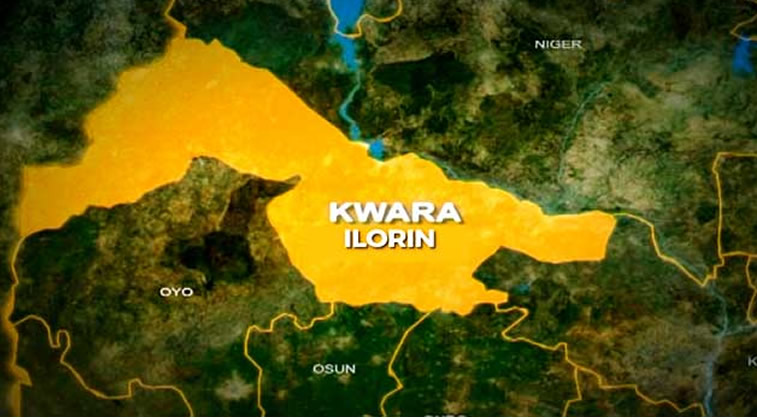
No fewer than 30 traditional rulers in the southern part of Kwara State have reportedly fled their palaces בעקבות a prolonged wave of kidnappings, killings, and violent attacks.
Findings by Saturday PUNCH revealed that many of the affected monarchs have relocated to safer urban areas such as Ilorin, Osogbo, Offa, and Lagos. Community sources confirmed that the rulers affected are from towns including Omugo, Afin, Oreke, Oreke Oke-Igbo, Olohuntele, Alabe, Ganmu Ailehri, Ologanmo, and Igbo Agbon.
While some monarchs have been away for several months, others have remained displaced for nearly a year. Their absence has created a significant leadership gap across the affected communities, largely triggered by persistent attacks from armed groups.
A resident of Omugo, Wale Olasunkanmi, explained that his traditional ruler, known as the Eesa, fled due to fears of being kidnapped. He noted that monarchs previously lived among their people and provided leadership during crises, but now only make brief visits for meetings or special occasions.
According to him, the situation worsened after a major attack on March 22, 2026, when bandits invaded a church and abducted about eight people. The incident forced many residents to flee their homes overnight.
Although there has been slight improvement in security recently, Olasunkanmi said the absence of traditional leadership continues to hinder coordination and rebuilding efforts in the community. He added that Omugo belongs to the larger Oro-Ago community, which comprises about 15 towns that have all experienced varying levels of attacks.
Further investigations showed that Oreke and Oreke Oke-Igbo have been largely deserted since June 2025 following repeated bandit attacks. The crisis escalated after an assault on a marble mining site near Oreke-Okeigbo on June 4, 2025, during which two police officers were killed.
A palace worker, Samuel Afolayan, stated that the attacks initially involved theft of food and livestock but later escalated to kidnappings and killings, prompting mass displacement. He added that the palace remains empty and surrounding communities have also been abandoned.
In Afin, the Oniwo, Oba Simeon Olaonipekun, has not returned since he was abducted with his son in December 2025. Though both were eventually released after ransom payments, the monarch is reportedly still receiving medical care due to the trauma.
Across the region, the effects of the attacks have been severe. Farms have been deserted, schools shut down, and markets rendered inactive as residents relocate to safer areas.
The most recent attack occurred in Olayinka community in Ifelodun LGA, where gunmen abducted the monarch, Oba Salman Olátúnjí Aweda, alongside his wife and another resident. Authorities later arrested 42 suspected illegal miners linked to the incident, while sources revealed that kidnappers demanded a ransom of about N400m.
Residents described the attack as chaotic, with gunmen shooting indiscriminately before abducting the monarch. They also suggested that the attackers had prior knowledge of activities at the palace.
Beyond Olayinka, several traditional rulers have been targeted. In September 2025, the Baale of Ogbayo was killed in his palace, while in February 2024, the Olukoro of Koro-Ekiti was also murdered. Other cases of abduction and ransom payments have been recorded, with demands ranging from N40m to N400m.
The Coordinator of the Joint Security Watch in Kwara South, Olaitan Oyin-Zubair, said earlier warnings about community displacement were ignored. He revealed that over 28 communities in Ifelodun LGA have now been abandoned, turning once-active areas into ghost towns.
Residents said the insecurity has disrupted farming and worsened food shortages. A trader, Bose Adeyemi, said she could no longer return home due to fear, while a retired civil servant, Janet Adebisi, disclosed that she had abandoned her farming investment.
The situation has also raised concerns about the response of the Kwara State Traditional Council. While sources say discussions with government and security agencies are ongoing, critics argue that the response has not been visible enough.
A socio-political advocate, Abdul-Rahoof Bello-Labelabe, blamed worsening insecurity partly on illegal mining and weakening traditional systems. He also claimed that many monarchs no longer reside in their communities due to safety concerns.
Similarly, the monarch of Osi community in Ondo State, Oba David Olajide, advised traditional rulers to adopt both traditional and modern security measures, while cautioning against flamboyant lifestyles that may expose them to danger.
Local vigilantes also expressed concerns about their inability to combat armed groups effectively due to poor equipment. A vigilante member identified as Musa said criminals have taken over forests and possess superior weapons.
The Chairman of the Igbomina Professional Association, Bode Iranloye, described the crisis as alarming, noting its impact on agriculture, commerce, and communal life. He recommended improved intelligence gathering, use of surveillance technology, and stricter control of illegal mining.
Security analyst Sadiq Lawal warned that attacks on traditional rulers signal a breakdown of authority structures, noting that monarchs are traditionally regarded as sacred figures.
Overall, the growing insecurity in Kwara South continues to displace communities, weaken leadership, and disrupt livelihoods, leaving residents in fear and uncertainty.