
Opinion
The Moose: Nature’s Aquatic Giant

By Sam Agogo
When most people picture a deer, they imagine a graceful creature darting through forests.
But the moose — the largest member of the deer family — rewrites that image entirely. Towering, solitary, and surprisingly aquatic, this remarkable animal is a living paradox: a heavyweight of the wilderness that can dive beneath the surface of a lake in search of dinner.The moose, scientifically known as Alces alces, is the undisputed giant of the deer family.

In North America, it’s called a moose; in Europe, it’s often referred to as an elk. A mature bull can stand more than six feet (1.8 meters) at the shoulder and weigh over 600 kilograms.

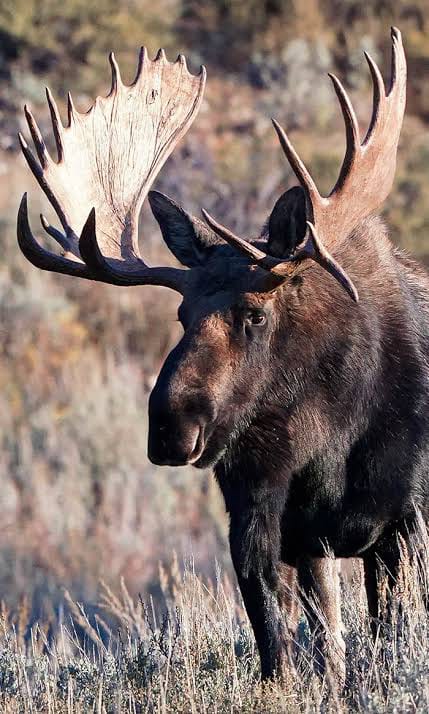
Their shoulders rise into a powerful hump, and beneath their throat hangs a flap of skin known as a “bell.” Perhaps most striking are the bull’s antlers — vast, hand-shaped structures that are shed and regrown each year.

These antlers, sometimes spanning over six feet across, are weapons in autumn’s rutting battles, when males clash for the right to mate.Despite their bulk, moose are excellent swimmers.

They can cover long distances across rivers and lakes, their long legs propelling them through marshes and shallow waters. But what truly sets them apart is their ability to dive.
Moose close their nostrils, submerge, and remain underwater for more than a minute, using their sensitive muzzle and flexible lips to pluck aquatic plants from the lakebed. This underwater feeding is not just a quirky skill — it’s a survival strategy. In summer, aquatic vegetation provides rich nutrition and offers relief from heat and biting insects.
Moose thrive in the boreal forests and wetlands of Canada, the northern United States, Russia, and Scandinavia. Their long legs allow them to stride through deep snow and reach vegetation inaccessible to smaller animals. Their thick coats insulate them against brutal winters, though in summer they often seek water to cool down. Unlike many deer species, moose are solitary.
A cow will stay with her calf for months, but otherwise adults live alone. Calves face dangers from wolves and bears, while adults, though formidable, are still vulnerable to predators and human threats such as hunting and vehicle collisions.Moose may look peaceful, but they are far from harmless. A cow defending her calf or a bull in rut can be dangerously aggressive.
Their sheer size and strength make them unpredictable when threatened. Yet, for all their power, moose embody adaptability. They can sprint through forests, wade across wetlands, endure freezing winters, and — most astonishingly — dive beneath the water to feed.The moose is a reminder that nature often defies expectations. An animal weighing hundreds of kilograms can vanish beneath a lake, forage underwater, and resurface with a mouthful of plants. It is a creature of contrasts: solitary yet imposing, massive yet agile, terrestrial yet aquatic.
The next time you think of deer as delicate forest dwellers, remember the moose — the giant that swims, dives, and thrives in some of the harshest landscapes on Earth.The moose’s story does not end with its physical abilities. It has long held cultural significance among Indigenous peoples of North America, who respected it as a source of food, clothing, and tools. Moose hides were used for shelter and clothing, while antlers and bones became tools and weapons. In folklore, the moose often symbolized endurance, solitude, and quiet strength.
In Scandinavian traditions, it was seen as a mystical creature of the forest, embodying the untamed wilderness. These cultural connections remind us that the moose is not just an animal but a symbol of survival and respect for nature.Ecologically, the moose plays a vital role in shaping its environment. By feeding on shrubs, trees, and aquatic plants, it influences the growth of vegetation and helps maintain balance in forest and wetland ecosystems.
Its browsing can open up areas of dense forest, allowing sunlight to reach the ground and encouraging new plant growth. In turn, this supports other species, from insects to birds. Predators such as wolves and bears also rely on moose populations, particularly calves, as part of their food chain. The moose is therefore not just a solitary giant but a keystone species that helps sustain the health of its habitat.Human encounters with moose are often memorable — and sometimes dangerous.
In northern regions, drivers must be cautious, as collisions with moose can be deadly due to the animal’s immense size. Hunters pursue moose for meat, hides, and antlers, though regulated hunting ensures populations remain stable. At the same time, many people admire moose from a distance, marveling at their majesty in national parks and wilderness areas. The sight of a bull moose with towering antlers emerging from a misty lake is unforgettable, a living emblem of the wild.
The life of a moose changes with the seasons. In spring, cows give birth to calves, which quickly learn to follow their mothers through forests and wetlands. Summer brings long days of feeding, with moose diving into lakes for aquatic plants and seeking relief from insects.
Autumn is the rutting season, when bulls clash with antlers and display their strength to attract mates. Winter is the harshest time, when moose rely on their thick coats and long legs to survive deep snow and bitter cold.
Each season demands resilience, and the moose adapts accordingly, embodying survival in every phase of the year.The lesson the moose teaches us is profound. True strength lies in adaptability. Despite its massive frame, it thrives by embracing versatility — striding through snow, swimming across rivers, and diving underwater for food. From this animal, we learn resilience in harsh conditions, balance between gentleness and power, and resourcefulness in finding opportunities where others might not look. The moose reminds us that greatness is not just about size, but about the ability to endure, adapt, and flourish in unexpected ways.The moose is more than a giant deer.
It is a symbol of nature’s ingenuity, a creature that defies expectations and thrives in extremes. Its story is one of survival, strength, and adaptability — a reminder that even the largest and most solitary beings can find harmony with their environment.
To watch a moose stride through snow, swim across a lake, or vanish beneath the water is to witness nature’s quiet brilliance. And in that brilliance lies a lesson for us all: that true greatness is not measured by size or power alone, but by the ability to adapt, endure, and thrive in the face of life’s challenges
. *For comments, reflection, and further conversation:
Email: samuelagogo4one@yahoo.com
Phone Number: +2348055847364*