International
Tinubu to World Leaders: Reform UN, Financial Systems or Risk Irrelevance

By Iyojo Ameh
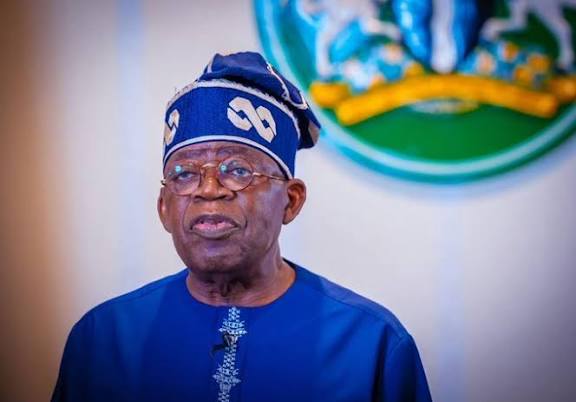
President Bola Ahmed Tinubu has urged world leaders to push through bold reforms at the United Nations and in the global financial system, warning that failure to act would deepen disillusionment with multilateralism.
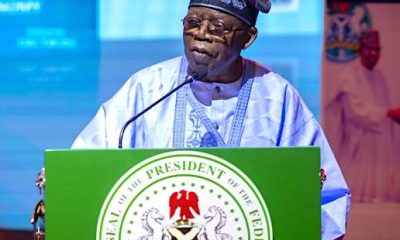
Delivering Nigeria’s national statement at the 80th United Nations General Assembly (UNGA80) through Vice-President Kashim Shettima, Tinubu said the UN must evolve beyond the structures of 1945 if it is to remain credible.
“The United Nations will recover its relevance only when it reflects the world as it is, not as it was,” Tinubu told the Assembly. He pressed Nigeria’s case for a permanent seat on the UN Security Council, citing its population of over 236 million, its peacekeeping record, and its role as a stabilising force in Africa.
Tinubu outlined four key priorities for global reform which includes: Expansion of the Security Council to reflect today’s geopolitical realities, debt and finance reform as a binding mechanism for sovereign debt management, which he described as “an International Court of Justice for money.” Resource Justice ensuring mineral producing countries benefit fairly through investment, local processing, and jobs and bridging the Digital Divide expanding access to technology, insisting that “A.I. must stand for ‘Africa Included.’”
Commitment to Peace
Tinubu reaffirmed Nigeria’s record of contributing troops to 51 of the UN’s 60 peacekeeping operations since independence, while stressing that global security cannot be achieved in isolation.
He also reaffirmed Nigeria’s support for a two-state solution to the Israeli-Palestinian conflict, saying: “The sanctity of human life should not be trapped in the corridors of endless debate.”
On extremism, Tinubu warned that terrorism feeds on division, adding that Nigeria’s experience shows that “military tactics may win battles, but values and ideas win wars.”
Climate and Economic Reform
Describing climate change as an urgent “everyone issue,” Tinubu urged that international climate funds be directed to education, housing, technology, and resilient communities.
He also defended Nigeria’s domestic economic reforms, including subsidy removals and currency adjustments, saying they were tough but necessary choices to attract investment and ensure long-term stability.
Tinubu pointed to the inaugural West Africa Economic Summit in Abuja as evidence of the region’s economic promise when reforms and innovation align.
Multilateralism at a Crossroads
Warning against the slow pace of global action, Tinubu said frustration with multilateral institutions was already driving leaders and events outside the UN framework.
“We must make real change, change that works, and change that is seen to work,” he said. “For none of us is safe until all of us are safe.”