
Business and Economy
Makurdi Hosts First International Conference on River Benue and Sustainable Development …Stakeholders Call for Safeguarding the River Amidst Climate Change Threats

From Dooshima Terkura, Makurdi
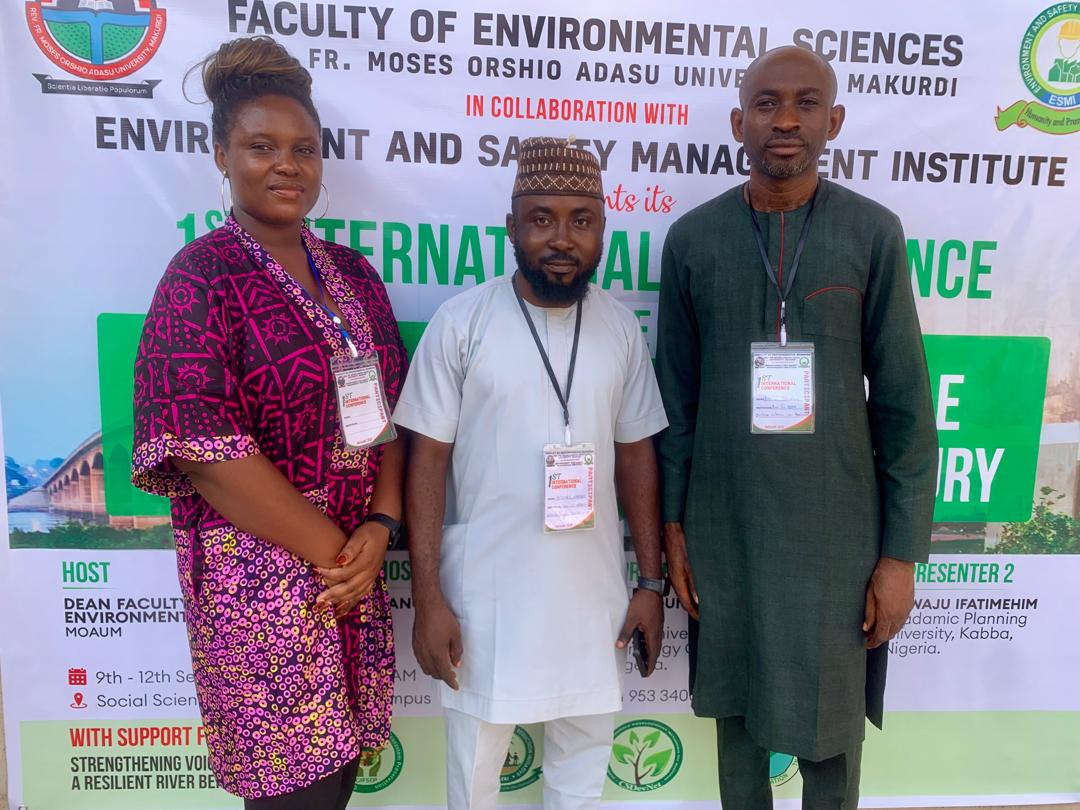
The Faculty of Environmental Sciences, Rev. Fr. Moses Orshio Adasu University, Makurdi (MOAUM), formerly Benue State University, in collaboration with the Environment and Safety Management Institute and civil society partners, has successfully hosted the maiden International Conference on “River Benue and Sustainable Development in the 21st Century.”
The conference, held from September 9–12, 2025, brought together over 200 participants from academia, government, civil society, and development organizations.

Welcoming participants, Acting Vice-Chancellor of MOAUM, Professor Simon Ubwa, underscored the global importance of rivers in sustaining civilizations, drawing parallels with the Nile, Indus, and Tigris-Euphrates. He stressed the urgent need to protect the River Benue from threats posed by climate change, flooding, and unsustainable practices.
In his remarks, Dean of the Faculty, Professor Daniel Ortserga, described the river as a “resource giant” with vast ecological and socioeconomic potential, while identifying challenges such as farmer-herder conflicts, unsustainable fishing practices, and untapped tourism opportunities.
Lead papers were delivered by eminent scholars. Professor Temi Emmanuel Ologunorisa of Olusegun Agagu University of Science and Technology examined climate change, flood hydroclimatology, and policy-science integration for flood risk management, while Professor Olarewaju Oluseyi Ifatimehin of Kogi State University spoke on land degradation, climate resilience, and sustainable river basin development.
Other key stakeholders also shared insights. Professor Member Genyi, Director of Gender Studies at MOAUM, stressed the need for effective management of the river for economic benefits, noting that outcomes from the conference should translate into policy. Engr. Terese Ninga, Managing Director of the Lower Benue Development Authority, warned of the river’s ongoing changes that threaten communities and called for research-driven sustainable solutions.
Dr. Kenneth Uchua of the National Space Research and Development Agency (NARSDA) emphasized evidence-based decision-making for environmental sustainability and livelihood improvement. Similarly, Dr. Daniel Dam, Deputy Dean of the Faculty, described the River Benue as a divine gift whose resources must be harnessed for regional development and food security.
Over 60 technical and plenary papers were presented, covering themes such as:
Climate Change and Water Resources – rainfall variability, flood risk mapping, and resilience.
Ecosystems, Land Use, and Sustainability – erosion, fisheries, riparian vegetation, and renewable energy.
Socioeconomic Development and Livelihoods – farmer-herder conflicts, inland water transport, and fisheries.
Health, Community, and Gender Dimensions – WASH interventions, public health, and vulnerable groups.
Tourism, Culture, and Education – sustainable tourism, secondary education, and youth-led climate action.
Innovation and Technology – geospatial analysis, GIS, remote sensing, and AI in climate adaptation.
The deliberations consistently described the River Benue as both an ecological resource and a socioeconomic lifeline, requiring urgent policy attention, technological innovation, and inclusive community engagement.
In goodwill messages, civil society leaders echoed these calls. Dr. David Terungwa, Executive Director of the Global Initiative for Food Security and Ecosystem Preservation (GIFSEP), urged protection of the river as a lifeline for over 20 million people. Stephanie Temang of Gender and Environmental Risk Reduction Initiative (GERI) highlighted gender-responsive environmental approaches, while Stephen Abuh of Climate and Sustainable Development Network (CSDevNet) stressed climate-smart agriculture and ecosystem-based management. The Global Health Education Foundation (GLOHEF) reaffirmed its commitment to community-driven environmental and health initiatives.
The conference concluded with a strong affirmation of the River Benue’s role in food security, biodiversity conservation, and socioeconomic resilience. Stakeholders called for enhanced collaboration among academia, government, CSOs, and communities, emphasizing climate adaptation, disaster risk reduction, sustainable livelihoods, renewable energy, and inclusive participation of women and youth.
Resolutions from the conference will feed into advocacy and policy dialogues aimed at repositioning the River Benue as a driver of sustainable development in Nigeria and beyond.