
Education
Governor Okpebholo Rolls Out Comprehensive Education Reform Agenda in Edo State

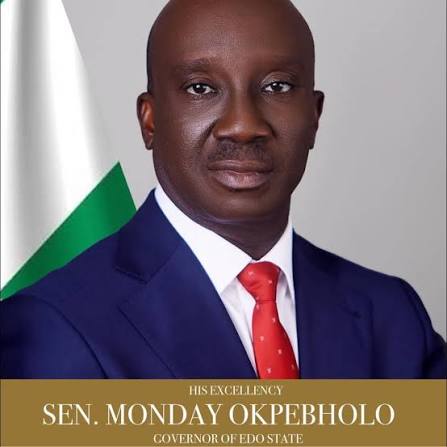
Edo State Governor, Senator Monday Okpebholo, has unveiled a far-reaching roadmap for education, underscoring his administration’s resolve to guarantee every child access to quality, future-driven learning opportunities.
This was disclosed in a statement by his Chief Press Secretary, Fred Itua, and made available to journalists.
The reforms, coordinated by the Commissioner for Education, Dr. Paddy Iyamu, are part of a deliberate and holistic strategy to reposition education as the bedrock of Edo’s long-term growth.
Governor Okpebholo’s administration is tackling years of neglect in the sector with bold interventions. Public schools are being transformed into modern learning centres equipped with STEM laboratories, functional classrooms, sanitation facilities, and essential teaching aids.
Through the “EduRescue Initiative,” out-of-school children are being reintegrated, with free books and learning materials provided to promote inclusivity and equity.
Recognizing teachers as the backbone of educational excellence, the government has prioritized their recruitment, continuous training, and digital empowerment. Equipped with tablets and standardized lesson scripts, educators now deliver uniform, high-quality instruction across the state.
“No education system can rise above the quality of its teachers,” Dr. Iyamu noted. “That is why we are investing in them like never before.”
The reforms also prepare students for life beyond the classroom. Every junior secondary school graduate will now obtain a trade certification, providing employable skills alongside academic knowledge. Technical colleges in Igarra, Irrua, and Benin are being revitalized, while a new National College is under construction in Ovia to strengthen vocational and technical education.
Efforts to restore credibility to the system include closing unregulated “miracle centres” and mushroom schools, while collaborations with WAEC and NECO are reinforcing the fight against examination malpractice. Parents, in turn, are regaining confidence in public schools.
Higher education is also experiencing a facelift. At Ambrose Alli University, work is ongoing on two 1,500-seat lecture theatres and a 600-bed hostel. At Usen Polytechnic, a 5-kilometre road abandoned for over 20 years is finally nearing completion. The launch of EdoCert 2.0 has further digitized academic records, enabling students to access certificates online and eliminating delays.
To support inclusivity, a bursary scheme for indigent students has been introduced, while the adoption of the Federal Government’s NELFund ensures that financial hardship does not deprive any child of education.
Beyond academics, the government is reviving civic education, guidance and counselling, moral instruction, and sports initiatives such as the Principals’ Cup and Governor’s Cup to instill discipline, teamwork, and leadership in young people.
Summing up the administration’s vision, Dr. Iyamu said: “Our long-term ambition is for Edo to become the national model of education reform. We want our children not only to be literate but also globally competitive, entrepreneurial, and future-ready.”