General News
FRC Chairman Seeks Stronger Institutional Collaboration During Visit to Nigerian Correctional Service

By Iyojo Ameh
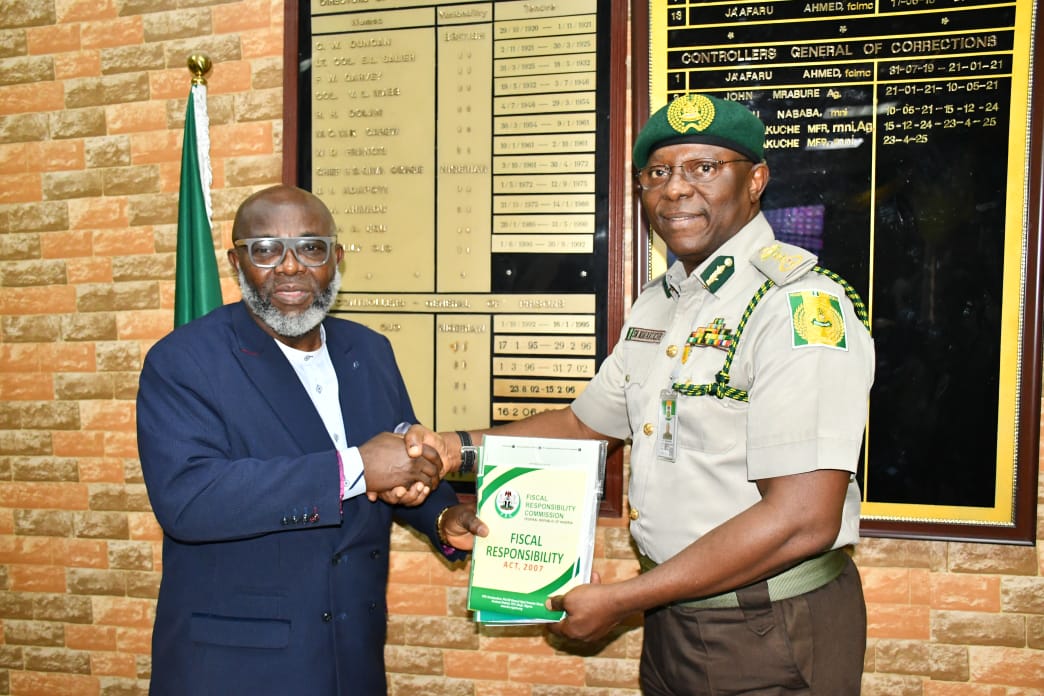
In a move to strengthen inter-agency cooperation and promote prudent management of public finances, the Executive Chairman of the Fiscal Responsibility Commission (FRC), Barrister Victor Muruako, on Thursday paid a courtesy visit to the Comptroller-General of the Nigerian Correctional Service (NCS), Comptroller Sylvester Ndidi Nwakuche, at the Service’s headquarters in Abuja.
The visit formed part of the Commission’s ongoing efforts to deepen partnerships with key government institutions and reinforce national objectives of transparency, accountability, and value for money in public service delivery.


In his remarks, Barr. Muruako commended the NCS leadership for the ongoing reforms within the Service, describing them as crucial to the broader goal of national development. He reiterated that the Fiscal Responsibility Commission, established under the Fiscal Responsibility Act, 2007, remains committed to ensuring fiscal prudence, sustainable budgeting, and efficient use of public resources.
“The purpose of this visit is not merely about oversight,” Muruako stated. “It is about building institutional systems that strengthen financial discipline, prevent waste, enhance transparency, and improve the quality of service delivery to Nigerians. The Fiscal Responsibility Commission remains committed to ensuring that every naira of public funds is judiciously applied for the benefit of citizens.”
The FRC Chairman further emphasized the importance of collaboration with institutions like the Nigerian Correctional Service in improving non-oil revenue generation. He noted that the Service contributes meaningfully to the economy through its enterprises and vocational training initiatives, which support inmate rehabilitation and productivity.

In his response, Comptroller-General Nwakuche commended the Fiscal Responsibility Commission for its proactive engagement with public sector agencies, describing such collaboration as vital for promoting fiscal discipline and operational efficiency. He briefed the FRC delegation on ongoing reforms within the Service, particularly in strengthening internal revenue systems and improving capacity despite budgetary constraints.
“We recognize the importance of fiscal responsibility in achieving our mandate,” Nwakuche said. “The Nigerian Correctional Service is determined to uphold the principles of accountability and efficient resource utilization in line with the objectives championed by the Fiscal Responsibility Commission.”
The visit concluded with the signing of the visitors’ register by Barr. Muruako and a group photograph with senior management officers of the Nigerian Correctional Service. Both parties expressed optimism that the engagement would herald a stronger partnership toward advancing fiscal responsibility, institutional efficiency, and sustainable national development.