General News
Prince Matewos Condemns Xenophobia, Calls for African Unity on Africa Day

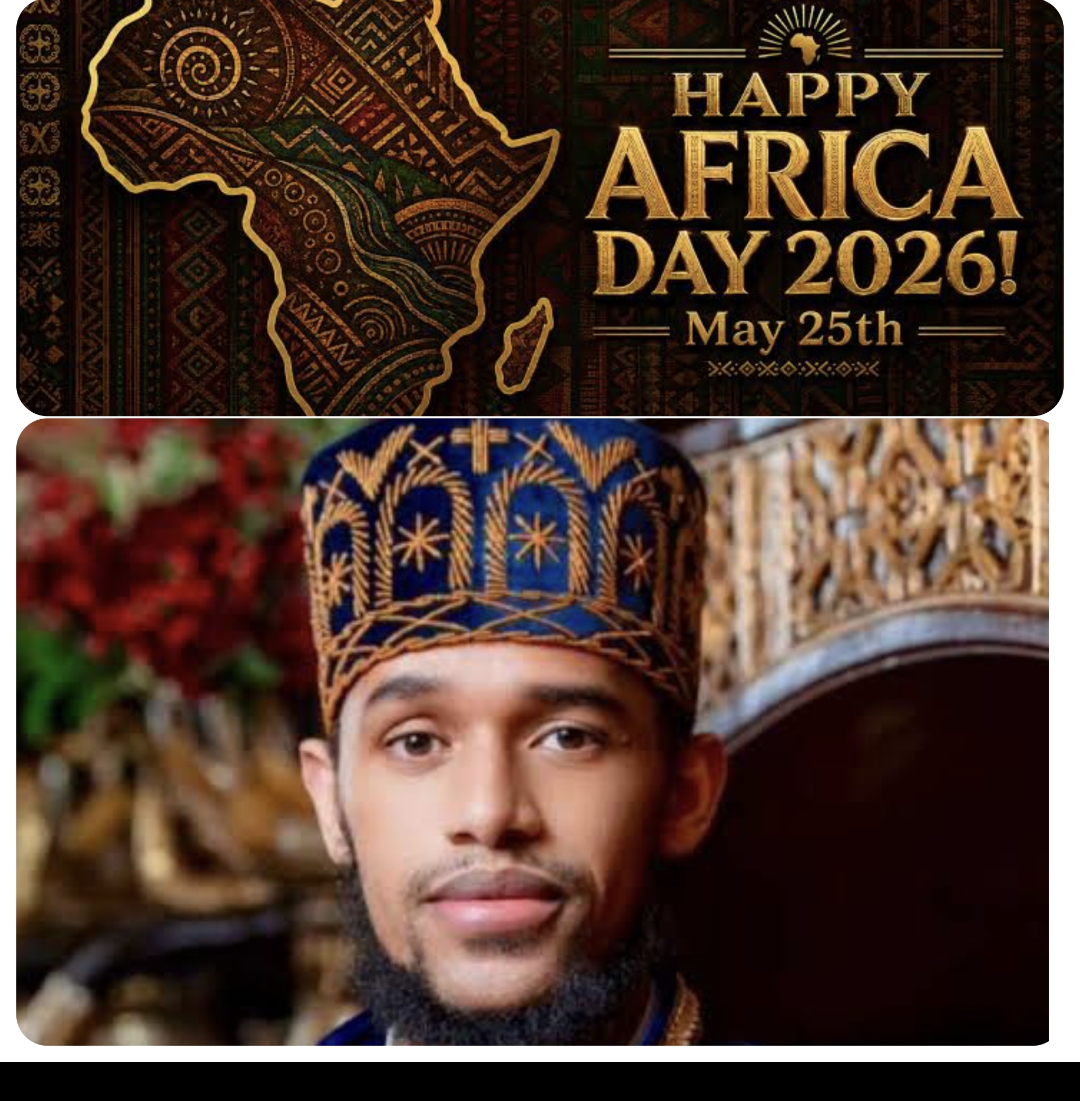
Prince Estifanos Matewos has called for stronger African solidarity and the rejection of xenophobia and Afrophobia across the continent, warning that Africa’s future cannot be secured through division and exclusion.
In a message commemorating Africa Day, the President of the United Africa Royal Assembly and Ambassador of the Pan-African Parliament to African Union member states declared that “No African is foreign in Africa.”
Prince Matewos’ remarks come amid growing debates across parts of the continent over migration, unemployment, economic inequality and tensions surrounding foreign nationals.

According to him, Africa’s progress depends on renewed commitment to Pan-African ideals, collective responsibility and shared prosperity rather than narrow nationalism and exclusionary politics.
He expressed concern over rising anti-immigration sentiments in parts of Southern Africa, where economic hardship, pressure on public services and insecurity have increasingly fueled hostility toward migrants, both documented and undocumented.
The royal leader warned that such divisions threaten decades of efforts aimed at strengthening continental integration and cooperation.
He argued that African borders should function as instruments of cooperation rather than barriers to unity, stressing that the continent’s shared history, culture and aspirations outweigh forces seeking to fragment African societies.
Prince Matewos also linked Africa’s future to economic sovereignty, describing industrialisation and intra-African trade as essential to the continent’s development.
He maintained that political independence would remain incomplete as long as African countries continued exporting raw materials while depending on imported finished goods.
The Pan-African advocate identified the African Continental Free Trade Area and the African Union’s Agenda 2063 framework as critical instruments for achieving economic transformation, stronger regional value chains and sustainable prosperity across the continent.
He further noted that traditional institutions, including kingdoms, chiefdoms and royal houses, still play significant roles in preserving social cohesion, indigenous knowledge and community governance.
The statement comes at a time when African countries are confronting multiple challenges, including insecurity in parts of the Sahel and Horn of Africa, climate-related pressures, migration concerns and growing geopolitical competition over Africa’s strategic resources.
Prince Matewos concluded by urging African leaders and citizens to embrace unity as the foundation for the continent’s future development.
“Divided, we diminish our potential. United, we shape our destiny,” he stated.