
Business and Economy
AWEP 2025 Conference: NEF President Identifies Infrastructure Gaps Hindering Women Entrepreneurs, Calls for Strategic Solutions

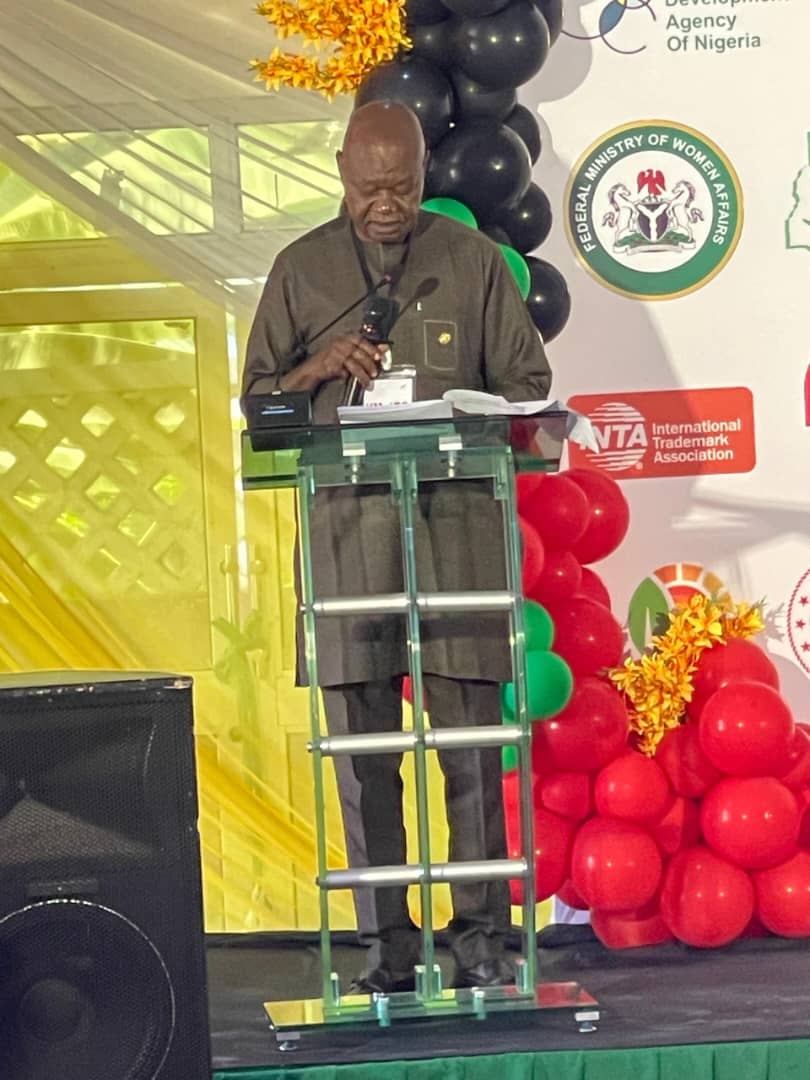
The President of the Nigeria Entrepreneurs Forum (NEF), Dr. Sidney Inegbedion, has reiterated the Forum’s commitment to supporting initiatives that provide Vital Voices for women entrepreneurs to enhance their productivity.
Dr. Inegbedion stated this in Abuja during the 2025 Annual Conference of the African Women Entrepreneurs Program (AWEP), themed “Together We Rise: Women’s Collective Impact.”
Delivering a presentation titled “Women’s Impact in a Developing Economy,” he explained that the essence of the Vital Voices initiative, pioneered by the U.S. First Lady, Mrs. Hillary Clinton, is to enable women to come together to share experiences, expertise, and aspirations for economic, social, and political empowerment, while involving men through persuasion rather than confrontation.
He noted that prominent figures such as Iyom Josephine Anenih, Pauline Tallen, and Kema Chikwe have played pivotal roles in shaping Nigeria’s democracy. He added that women constitute 41 percent of micro-business owners and control 60 percent of the informal sector across both rural and urban areas—operating in markets, farms, roadsides, and home-based enterprises.
Highlighting the significance of women’s contributions, Dr. Inegbedion pointed out that nano enterprises—such as frying akara, hair braiding, and small shop ownership—play vital roles in the nation’s GDP. He also referenced Folorunsho Alakija, the richest Nigerian woman and a prominent figure in the oil and gas industry, with a net worth of USD 2.6 billion.
He emphasized the importance of women supporting one another to achieve their goals and urged them to be “destiny helpers” by sharing opportunities that enable collective progress. He also encouraged women to maintain a positive mindset as they pursue their aspirations.

Dr. Inegbedion identified key infrastructure challenges facing women entrepreneurs, including inadequate road networks, poor potable water supply, insufficient power for domestic and industrial use, and fluctuating exchange rates relative to developed economies. He called on the Federal Government to urgently address these issues.
He reaffirmed NEF’s commitment to advocacy, entrepreneurship training, and capacity building to increase awareness of the vast business opportunities available in Nigeria. According to him, NEF was established in 2010 to address issues such as unemployment, youth restiveness, underutilized talent, antisocial behaviour, high population growth, rural-urban migration, and infrastructure gaps. Since then, it has focused on training, capacity development, and providing funding support for business startups and expansion.
Dr. Inegbedion pledged NEF’s continued support to AWEP in achieving its mission.
Earlier, the National President of AWEP Nigeria, Dr. Grace Okaro, stated that the organization under her leadership has remained committed to its vision of economically and politically empowering women to become agents of positive change and advocates for a diverse, equitable, inclusive, and sustainable society.
She explained that AWEP operates in five major business clusters—Agriculture/Food Processing, Fashion and Apparel, Hair and Body, Light Manufacturing, and Services—and has a presence across all six geopolitical zones of Nigeria, making it one of the country’s leading women’s business associations.
The AWEP 2025 Annual Conference featured goodwill messages from notable public and private sector leaders and included panel discussions, exhibitions, certificate awards to mentees, the annual general meeting, and other activities.