
Governance
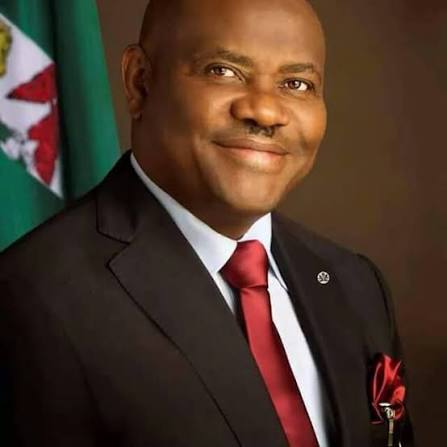
Wike And The Roads In FCT:The Old Keffi Road Miracle and the Politics of Tangible Governance

By Dr jarlat Uche opara
In politics, rhetoric is cheap. Promises are abundant. What remains scarce almost endangered is governance that can be touched, measured, and driven upon. In the Federal Capital Territory today, roads have emerged as the most honest witnesses to leadership, and they are speaking loudly, clearly, and without ambiguity.
If roads could vote, Abuja’s would cast their ballots in appreciation of the Minister of the FCT, Barrister Nyesom Ezenwo Wike. If roads were human, their campaign for his leadership would be massive, organic, and impossible to suppress.
Before his appointment, many critical road networks within the capital stood as symbols of institutional fatigue. They were scarred by neglect impassable stretches, half-finished projects, abandoned corridors, and arterial roads that slowed mobility, destroyed vehicles, endangered lives, and choked economic activity. Development, where it existed at all, crawled like a wounded snail.

These roads mirrored a deeper governance malaise , responsibility without urgency, authority without accountability, and resources without results.
Power and funds were available, but misuse, disuse, and corruption diverted them into private pockets rather than public benefit.
Within months of Wike’s assumption of office, the narrative changed not rhetorically, not incrementally, but physically. Roads once avoided became motorable. Dilapidated corridors were reconstructed, not patched. The outcome were roads built with visible engineering intent, structural strength, and finishing that reflected durability rather than tokenism.
Obscured and neglected areas were opened up, signalling deliberate urban planning instead of cosmetic intervention.
Abuja began to move again efficiently, confidently, visibly.
This is where the real politics lies.
Wike did not merely initiate new projects; he confronted abandonment. He completed roads that had long been trapped in bureaucratic limbo. In doing so, he turned infrastructure into a form of political communication more persuasive than press conferences or propaganda.
Infrastructure is not just concrete and asphalt; it is policy in motion. Every completed road is a declaration of priorities. Every reopened road is an argument against inertia. Through road construction, the FCT administration under Wike makes daily political statements that no opposition rhetoric can easily erase.
Roads determine access, economic flow, emergency response, security reach, social integration, and urban equity. When roads improve, time is saved, businesses expand, property values rise, communities reconnect, and trust in governance is quietly rebuilt.
By prioritizing road infrastructure, the Wike-led FCT administration has chosen functionality over fanfare and delivery over delay. This choice is not accidental; it is ideological. It reflects a belief that governance must first work before it is applauded.
Critics may debate style, temperament, or political alliances. Those debates are legitimate. But roads are stubbornly non-partisan. They do not respond to spin. They reveal either neglect or commitment. In Abuja today, they reveal work.
Wike’s intervention in the FCT road network reinforces a critical political lesson: leadership is not defined by the length of time spent in office, but by the intensity of purpose applied within that time. It is not how long one governs, but how decisively one confronts decay and reverses it.
The Old Keffi Road as a Case Study. Few examples capture this more vividly than the Old Keffi Road( Kado, Karmo, Gwagwa, Dei-Dei). Months ago, the bulldozers arrived on that road stripping layers and exposing years of neglect. For commuters, drivers, and residents, the road became a nightmare: ridges, potholes, corrugated slopes, damaged vehicles, lost time, and the daily frustration that faced them .
Many assumed it would become another long, unconscionable project one that would drag for years under the familiar excuse of “ongoing work.” Instead, as of 24 January 2026 the road stands about 80% completed, solidly constructed, and visibly engineered for longevity. What was once a symbol of suffering is fast becoming a sign of relief and renewed mobility. That is not accidental progress; it is administrative will translated into physical outcomes.
We must learn, as a political culture, to separate objective performance from blind opposition. Not everything should be reduced to propaganda or partisan hostility. We celebrate whom we must celebrate.
Barrister Nyesom Ezenwo Wike may have flaws as all leaders do. His drive, boldness, intensity, and idiosyncrasies may unsettle many. Yet even in unsettled minds, one fact remains difficult to erase: his capacity to work and deliver, particularly in road infrastructure, is undeniable.
We criticize where necessary, and we praise where obvious. On road construction in the FCT, Minister Wike scores a massive goal , symbolically dismantling the stubborn, normalized culture of bad roads that had long plagued FCT
In a country where public office is often remembered for excuses, the roads of Abuja present an alternative memory one of action, urgency, and visible results. Political arguments will fade. Speeches will be forgotten. But infrastructure endures.
The roads of the FCT will remain, testifying that for a moment in time, leadership chose to work and not just to work, but to work in ways that directly impact the masses.
A drive around the FCT today compels even the most reluctant observer to pause, acknowledge, and offer a salute of appreciation. Whether in the good books of many or not, Wike’s road interventions have earned commendation from both friends and foes.
That, perhaps, is the highest form of political validation.
Dr. Jarlath Uche Opara
Social Analyst with a Creative Slant.
Abuja
jarlathuche@gmail.com
07068420002