General News
“Food Security Is National Security” — Prof. Kalla Urges Strategic Shift at NIPR Week 2026

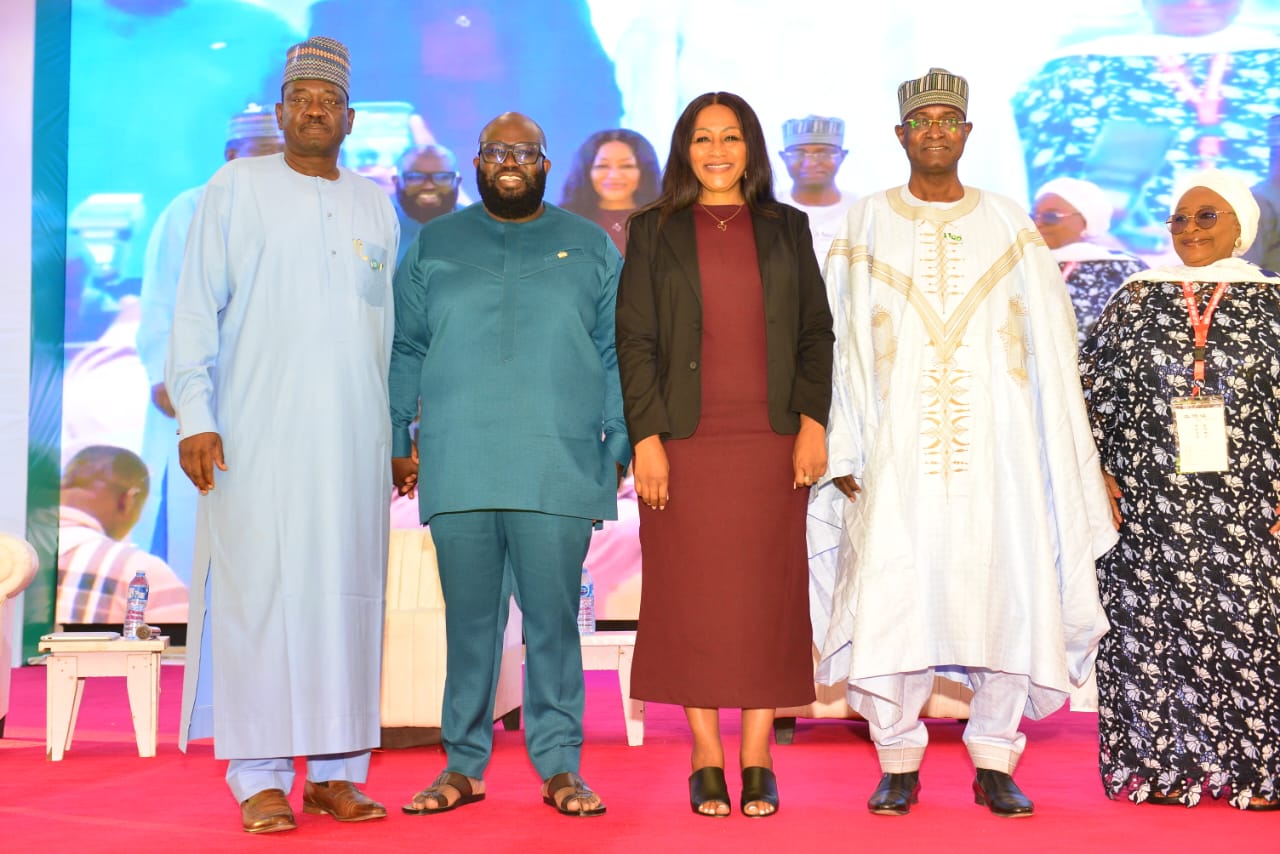
At the just concluded Nigerian Institute of Public Relations (NIPR) Week 2026, leading food security expert, Professor Demo Kalla, delivered a compelling plenary address on the “Politics of Food Security,” calling for a paradigm shift from food security to food sovereignty as a foundation for national stability and economic transformation.
Professor Kalla, Director of the TETFund Centre of Excellence on Food Security at Abubakar Tafawa Balewa University, emphasized that access to quality and affordable food must be treated not merely as a development goal, but as a critical instrument of national security.

“Wars fought thousands of kilometres away often arrive quietly in the fields of farmers who never heard the first gunshot,” he noted.
Earlier in the day, Kalla also served as a high-level panelist at the ministerial roundtable during the conference. The panel discussion, anchored by veteran broadcaster Moju Makojola, highlighted the Federal Government’s intensified efforts to unlock livestock’s economic potential and improve national nutrition outcomes.
This position was reinforced by the Minister of Livestock Development, Idi Mukhtar Maiha, during his participation at Nigeria Public Relations Week 2026, where stakeholders examined how strategic communication can accelerate food systems transformation across Africa.
The high-level forum, held in Kaduna, brought together policymakers, communication experts, and industry leaders to address the intersection of food security, policy advancement, and agricultural branding. The event also featured the unveiling of the Kaduna State Banquet Hall by Vice President Kashim Shettima, underscoring the government’s commitment to institutional engagement and sectoral development.
Speaking during the panel session, Maiha stated that the establishment of the Federal Ministry of Livestock Development represents a structural shift aimed at integrating the livestock sector into the formal economy after decades of underutilisation. He noted that the government is targeting a multi-billion-dollar opportunity within the sector, focusing on delivering value across the production chain.
He explained that ongoing reforms are designed to boost productivity through improved animal health systems, better feeding practices, expanded market access, and increased value addition. According to him, the broader goal is to address Nigeria’s low consumption of animal-source protein and ensure improved access to balanced nutrition.
The Minister also challenged prevailing perceptions about agriculture, describing livestock farming as a viable and profitable enterprise capable of generating consistent economic returns. He emphasized that the sector offers continuous value creation across dairy, meat, eggs, and leather production.
Other panelists echoed the need for practical, results-driven approaches. H.E. Amb. Brylyne Chitsunge stressed the importance of aligning policy with field realities, particularly in disease control, feed systems, and productivity. Dr. Arik Karani highlighted the need to reshape public perception through strategic communication, urging professionals to reposition agriculture as a respected and economically viable sector.
Similarly, Professor Kalla called for curriculum reforms and the integration of innovation and data-driven practices into modern agriculture, noting that sustainable growth depends on research and technology adoption.
In a key development, NIPR President Ike Neliaku committed to deepening the national food security conversation beyond the conference by announcing plans to establish an Agriculture and Food Security Hub. The initiative, to be driven in collaboration with Professor Kalla and other experts, is expected to strengthen communication strategies, stakeholder engagement, and knowledge exchange in support of Nigeria’s agricultural agenda.
Using the plenary platform, Kalla challenged policymakers, communication professionals, and stakeholders to rethink prevailing narratives around food insecurity, setting the tone for further discussions involving Commissioners of Agriculture and Information from Kaduna and Bauchi states, as well as a representative of the Nasarawa State Governor.
Food Security Beyond Agriculture: A Political Imperative
Kalla argued that Africa’s dominant narrative—characterized by food insecurity, climate change, poverty, and conflict—must be critically reassessed.
“Food and nutritional insecurities, climate change, entrenched poverty, weak governance, political instability, and violent conflict are not isolated realities; they are symptoms of complex political and economic systems that shape who has access to food, how it is produced, and whose voices are heard,” he said.
He reiterated the Food and Agriculture Organization’s definition of food security, noting its four pillars: availability, access, utilization, and stability—explaining that it ultimately means reliable access to adequate and nutritious food at all times.
From Blame to Responsibility
Setting the tone early, Kalla clarified that his remarks were not aimed at criticizing any government but at encouraging collective responsibility.
“From the onset, I want to be clear that I am not here to criticize any government, past or present, but rather to reflect on what we must do collectively to become all that we can be within the global comity of nations,” he stated.
He emphasized that the politics of food security must be driven by vision, accountability, and collective action rather than rhetoric.
PR Practitioners as Drivers of National Resolve
Addressing communication professionals directly, Kalla underscored their strategic importance.
“In the politics of food security, public relations practitioners are not bystanders—they are custodians of narrative and catalysts of national resolve. For in shaping what a nation talks about, they ultimately help shape what a nation chooses to do,” he said.
He called for deliberate communication strategies to counter negative narratives, encourage citizen engagement, and translate policies into tangible outcomes.
Global Shocks, Local Consequences
Drawing lessons from global disruptions such as the COVID-19 pandemic, the Russia-Ukraine conflict, and tensions in the Middle East, Kalla warned against Nigeria’s dependence on food imports.
He noted that these global events have disrupted supply chains, increased energy and fertilizer costs, and deepened vulnerabilities, even in remote communities.

“Nigeria cannot depend on food imports even in areas where we have global competitive advantage,” he cautioned.
Policy Exists—Execution Is the Gap
While acknowledging government efforts to reposition agriculture, Kalla stressed that implementation remains the key challenge.
He referenced the African Union’s Comprehensive Africa Agriculture Development Programme, which recommends allocating at least 10 percent of national budgets to agriculture—an obligation Nigeria has yet to fully meet.
“Policies are not lacking. The real question is whether governance, institutional priorities, and political will can translate vision into results,” he said.
Security, Youth, and the Rural Economy
Kalla linked rising insecurity to rural poverty and economic exclusion, warning of the consequences of neglecting agriculture.
He called for urgent measures to create decent jobs across agricultural value chains, particularly for young people.
“The time for blame game is over. We must find creative ways of creating decent jobs from the farms for our teeming youth,” he stated.
Regional Cooperation and Strategic Positioning
On a broader scale, Kalla advocated for stronger regional collaboration within West Africa, urging countries to leverage their comparative advantages and deepen trade integration.
He described agriculture as “a vehicle—not an immovable station—that embodies and facilitates economic transformation, wealth, and wellbeing.”
A Defining Test of Leadership
In his concluding remarks, Kalla framed food security as a key measure of governance.
“At its essence, food security is a test of governance—of whether leadership can translate vision into nourishment for all. Where we fall short, hunger persists not by fate, but by design,” he said.
He added, “The true measure of leadership lies in its ability to ensure that no citizen is left behind at the table of national prosperity.”
Conclusion
Professor Kalla’s address at NIPR Week 2026 stands as a strong call for Nigeria and Africa to move beyond fragmented approaches and adopt a coherent, inclusive, and politically grounded strategy for food security.
His message was clear: achieving food security is not just about production—it is about power, policy, purpose, and ultimately, the political will to act.