
General News
How Sule Ahmed Abdulaziz’s Second Tenure Could Transform Nigeria’s Power Sector

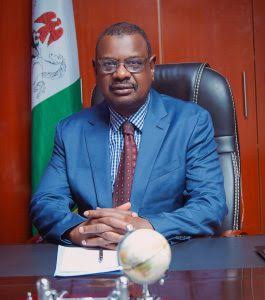
The reappointment of Engr. (Dr.) Sule Ahmed Abdulaziz as Managing Director/CEO of the Transmission Company of Nigeria has sparked fresh optimism about the future of Nigeria’s electricity sector, with stakeholders viewing the move as a chance to consolidate reforms and accelerate progress in the country’s fragile power value chain.
Abdulaziz, a career engineer with over two decades of experience spanning the defunct National Electric Power Authority, Power Holding Company of Nigeria and TCN, returns to the helm at a time when transmission remains the weakest but most critical link in the Nigerian Electricity Supply Industry.
Having previously served as Acting Managing Director in 2020 before his substantive appointment in 2022, his first tenure recorded notable gains, including improved grid stability, expansion of transmission infrastructure, and enhanced coordination with generation and distribution companies.

Industry observers say his second term presents an opportunity to transition from incremental improvements to more systemic transformation.
Central to expectations is the deepening of grid stability and expansion of transmission capacity. Under his leadership, TCN has achieved transmission levels of up to 6,000 megawatts, with projections indicating further growth as infrastructure upgrades continue.
Experts believe sustained investment in substations, transmission lines, and modern grid technologies could significantly reduce losses and improve load management nationwide.

Equally important is the modernization of aging infrastructure. Abdulaziz has previously overseen key projects funded by international partners, including the World Bank and the African Development Bank, aimed at strengthening Nigeria’s transmission backbone.
Analysts say fast-tracking these projects and deploying real-time monitoring systems will be crucial to improving efficiency and attracting investment into the broader power sector.
His collaborative leadership style is also expected to play a key role in strengthening coordination across the industry.
By fostering closer ties between generation companies, distribution companies, and regulators, TCN has improved the flow of bulk electricity. Further alignment across the value chain, stakeholders say, could reduce bottlenecks that often result in stranded power.
Beyond infrastructure, Abdulaziz’s focus on human capital development and industrial harmony has been highlighted as a key strength.
His emphasis on staff training, capacity building, and stable labour relations has contributed to uninterrupted operations within TCN. Observers believe that expanding technical training and leadership development will be vital for sustaining long-term reforms.
At the regional level, TCN’s role in the West African Power Pool positions Nigeria as a potential energy hub in West Africa.
Under Abdulaziz, cross-border electricity projects have gained traction, including efforts to synchronize Nigeria’s grid with neighboring countries. This development is expected to boost electricity trade, enhance regional integration, and generate foreign exchange earnings.
Perhaps the most significant advantage of his reappointment is policy continuity. Nigeria’s power sector has historically been hampered by frequent leadership changes and inconsistent policies. Stakeholders argue that maintaining a steady leadership structure will ensure the completion of ongoing projects and sustain momentum in critical reforms.
Experts agree that while generation capacity often dominates public discourse, transmission remains the true enabler of reliable electricity supply. Without a robust transmission network, increased power generation cannot translate into improved access for consumers.
As Abdulaziz begins his second tenure, expectations are high that TCN will evolve into a stronger catalyst for growth—unlocking stranded electricity, stabilizing the national grid, and supporting economic development.
However, analysts caution that the ultimate measure of success will lie in execution—translating reforms into measurable improvements in power supply for millions of Nigerians at homes and industries across the country.

