General News
INEC Moves to Protect 2027 Polls, Challenges Court Verdicts as Political Parties Demand Electoral Reforms

By Iyojo Ameh
The Independent National Electoral Commission (INEC) has taken its battle over the legal framework for the 2027 General Election to the appellate courts, warning that conflicting judicial rulings on its election timetable could jeopardize the orderly conduct of the nation’s electoral process.
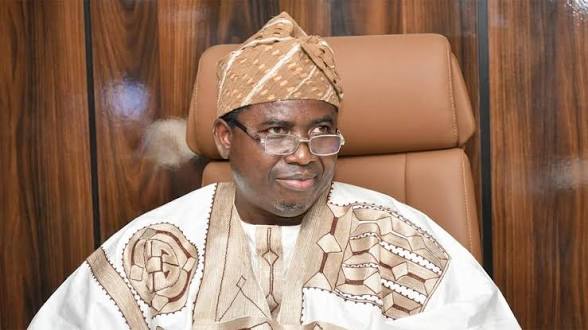
INEC Chairman, Prof. Joash Amupitan (SAN), disclosed this on Tuesday during the Commission’s Second Quarterly Consultative Meeting with leaders of political parties in Abuja, where he reaffirmed the electoral body’s determination to safeguard the integrity of preparations for the 2027 polls.
The development comes as political parties, under the umbrella of the Inter-Party Advisory Council (IPAC), called for urgent amendments to the Electoral Act 2026, citing challenges encountered during recently concluded party primaries.
Amupitan said INEC had appealed two Federal High Court judgments that delivered differing interpretations of the Commission’s powers to fix timelines for critical electoral activities ahead of the general election.
According to him, while one court questioned aspects of the Commission’s timetable, another upheld INEC’s authority to issue an electoral calendar but invalidated certain timelines relating to candidate nominations and substitutions.

“To ensure certainty, stability and legal clarity in preparations for the 2027 General Election, the Commission has filed appeals and taken the necessary legal steps to obtain definitive pronouncements from the appellate courts,” he said.
The INEC chairman argued that electoral planning involves a chain of interconnected activities that cannot be effectively executed without clearly defined timelines.
He noted that processes such as verification of party membership registers, monitoring of primaries, candidate nominations, ballot production, deployment of election materials, voter education, training of personnel, and configuration of BVAS devices require a coordinated framework to guarantee successful elections.
“Without a coherent timetable, there would be uncertainty, operational disruptions and challenges to the Commission’s constitutional mandate to conduct credible elections,” he stated.
Ekiti Poll: INEC Declares Readiness
Amupitan also announced that INEC was fully prepared for the June 20 governorship election in Ekiti State, revealing that 1,059,360 registered voters would participate in the exercise.
He said the figure includes 66,664 new voters added through the Continuous Voter Registration exercise, while 2,103 cases of double registration were detected and removed from the register.
The chairman assured political parties and voters that logistics, technology deployment, training of ad hoc staff and stakeholder engagements had been completed according to schedule.
He added that all 2,445 polling units across the state’s 16 local government areas would open simultaneously at 8:30 a.m. on election day.
Amupitan commended political parties for signing a peace accord ahead of the election and urged them to ensure compliance by their candidates and supporters.
Six Bye-Elections Scheduled
The Commission also confirmed that six bye-elections would be conducted on the same day as the Ekiti governorship poll.
The affected constituencies are Enugu North, Nasarawa North, Rivers South East and Ondo South Senatorial Districts, as well as Dawakin Kudu/Warawa Federal Constituency in Kano State and Zuru State Constituency in Kebbi State.
INEC said the elections would be conducted under the same operational and security arrangements planned for Ekiti.
Osun Election Next on INEC Radar
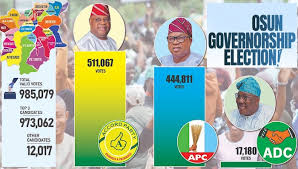
While final preparations continue for Ekiti, the Commission said implementation of the timetable for the August 15, 2026 Osun State Governorship Election is already underway.
Amupitan urged political parties to adhere strictly to all deadlines and regulatory requirements, stressing that lessons from Ekiti would further improve preparations for Osun.
IPAC Pushes for Electoral Act Amendment
In his remarks, IPAC National Chairman, Dr. Yusuf Mamman Dantalle, urged lawmakers to revisit key provisions of the Electoral Act 2026, arguing that restrictions on the conduct of party primaries created serious challenges for political parties.
Dantalle said the removal of indirect primaries left parties with only direct primaries or consensus arrangements, leading to disputes, logistical difficulties and financial burdens.
He noted that some aspirants felt unfairly excluded after parties adopted consensus candidates, resulting in litigation and internal crises.
“The events surrounding the recently concluded primaries have unfortunately validated many of the concerns previously raised by the Council,” he said.
The IPAC chairman further expressed concern over conflicting court decisions on INEC’s powers, warning that uncertainty over electoral regulations could weaken public confidence in the democratic process.
He called on the National Assembly to work with stakeholders to review aspects of the Electoral Act that have proven difficult to implement.
Concern Over Growing Court Cases
Amupitan also expressed concern over the increasing number of court cases involving leadership disputes within political parties, describing them as distractions capable of undermining political stability and electoral preparations.
Despite the legal controversies, the INEC chairman assured Nigerians that the Commission would remain independent, impartial and committed to conducting free, fair and credible elections.
He called on political parties to strengthen internal democracy, respect the rule of law, discourage violence, vote-buying and hate speech, and embrace issue-based campaigns ahead of the 2027 General Election.
The consultative meeting ended with both INEC and political parties agreeing on the need for stronger collaboration to ensure peaceful and credible elections as preparations for 2027 gather momentum.