
General News
Compete or concede: Bakrin maps out Nigeria’s industrial comeback.

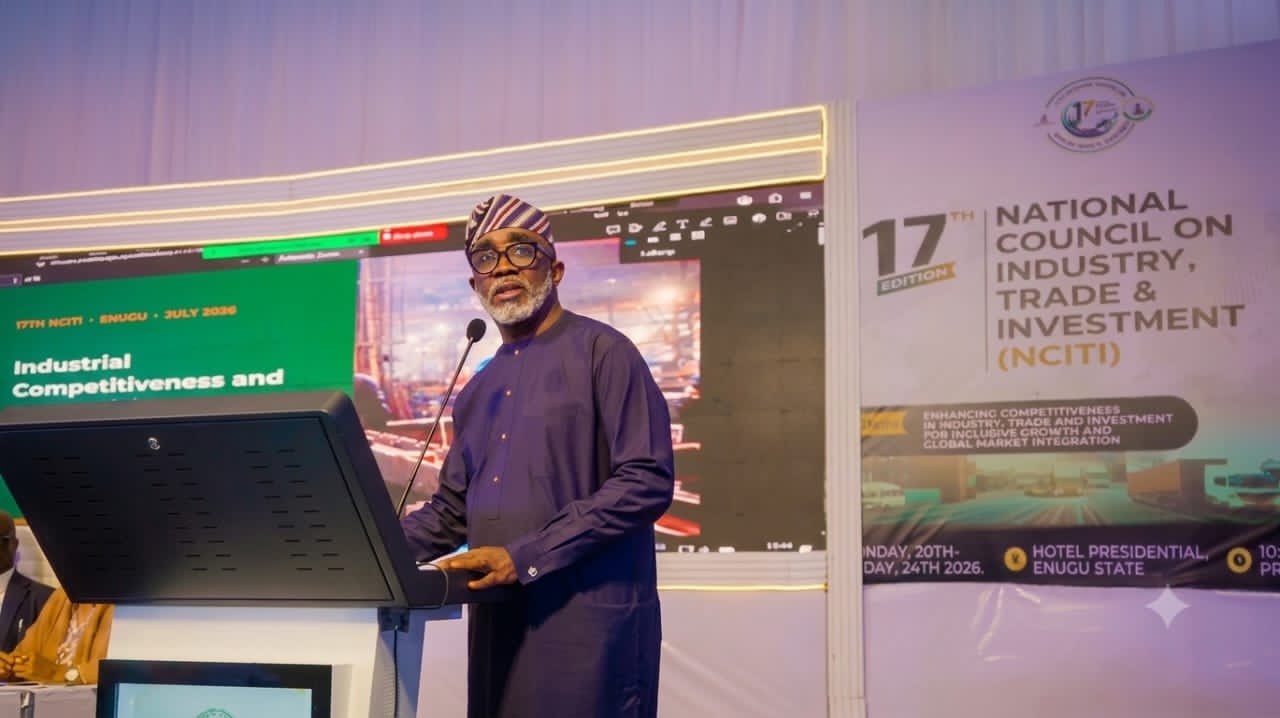
The Executive Secretary of the National Sugar Development Council (NSDC), Mr. Kamar Bakrin, has called on Nigeria to urgently reduce the cost of production or risk losing the African market to more competitive economies.




Speaking during the technical session of the 17th National Council on Industry, Trade and Investment (NCITI), Bakrin said Nigeria faces a critical choice between competing under the African Continental Free Trade Area (AfCFTA) or conceding its market to foreign producers.

According to him, industrial electricity costs Nigerian manufacturers between 15 and 30 US cents per kilowatt-hour, compared with about 8 cents in Vietnam and 10 cents in China. He noted that businesses spent an estimated ₦1.34 trillion generating their own electricity last year, while working capital costs range from 27 to 35 percent in Nigeria, far above the single-digit rates available in competing economies. He also highlighted Nigeria’s poor logistics ranking, which has contributed to manufacturing accounting for only about eight percent of GDP, with capacity utilisation dropping to 57.7 percent.
Bakrin stressed that the challenge is not a lack of demand but the high cost of production, adding that recent macroeconomic reforms, improved foreign reserves and lower inflation have created an opportunity for industrial expansion. He cited Nigeria’s transformation into a top global exporter of urea as evidence that the right industrial policies can deliver results, noting that success came after natural gas was priced as an industrial input rather than a revenue source.
To improve competitiveness, Bakrin proposed four key resolutions: establishing dedicated power arrangements for industrial clusters in every state within one year; harmonising levies and removing illegal checkpoints along industrial corridors through federal-state collaboration; introducing an annual State Industrial Competitiveness Index to rank states on power, land, levies and logistics; and enforcing Nigeria First procurement policies with quarterly compliance reports.
He further advocated performance-based government support, insisting that tax incentives, subsidised power and public procurement should be tied to measurable outcomes. He urged states to develop electricity markets under the Electricity Act 2023, secure industrial land for investors, streamline levies and align technical education with industrial needs.
Bakrin said improving competitiveness would create jobs for the four million Nigerians entering the workforce annually, lower the cost of locally produced goods, strengthen the naira through increased exports and reduced imports, and help curb the growing trend of emigration. He concluded by urging the Council to monitor measurable industrial targets annually, including increasing manufacturing’s contribution to GDP to 15 percent, reducing industrial power costs to about 10 cents per kilowatt-hour, lowering lending rates below 10 percent and cutting port clearance time to less than seven days. He maintained that while Nigeria’s economic reforms have begun, lasting industrial growth will depend on lowering production costs and sustaining competitiveness.
Continue Reading