
General News
Veterinary Leaders Seek Stronger Livestock Health, Productivity at ARUVIN Conference

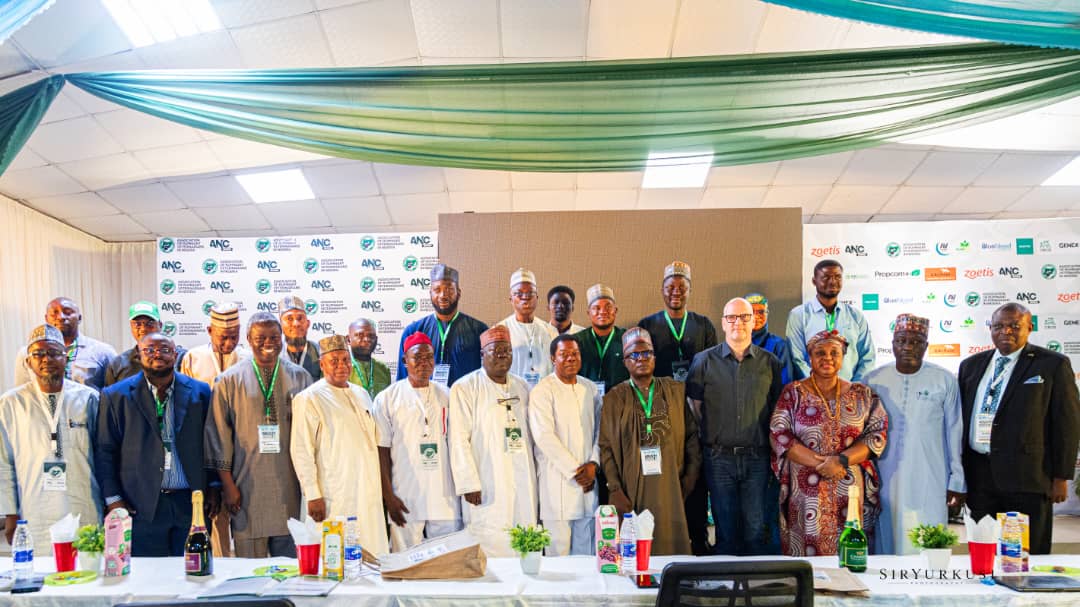
Veterinary leaders and professionals have called for stronger animal health services, improved productivity, better market systems and climate-resilient practices to unlock the potential of Nigeria’s livestock sector.
The call was made at the maiden National Conference of the Association of Ruminant Veterinarians in Nigeria (ARUVIN), held at the Agricultural and Rural Management Training Institute (ARMTI), Abuja, from September 14 to 17, 2026.
The conference has the theme: “Enhancing Ruminant Productivity: Health, Market Systems and Climate Resilience.”
Delivering his address at the conference, the Chief Veterinary Officer of Nigeria, Dr Samuel A. Anzaku described the gathering as a historic initiative and congratulated ARUVIN for establishing a professional platform specifically focused on ruminant veterinary practice.

He said the conference theme was timely because sustainable increases in livestock production and productivity could not be achieved without placing animal health at the centre of the equation.
According to him, cattle, sheep and goats remain central to Nigeria’s livestock economy and the livelihoods of millions of Nigerians, contributing to food and nutrition security, household income, employment, trade and the resilience of rural communities.

However, he identified animal diseases, inadequate preventive health services, poor production practices, limited access to veterinary care, feed and water constraints, weak market linkages and increasing climate variability as major constraints to the sector.

Anzaku noted that the challenges were interconnected, stressing that poor nutrition could increase susceptibility to disease, while climate stress could heighten disease risks and reduce access to pasture and water.
He said animal health, production, nutrition, markets, environmental sustainability and climate resilience must therefore be addressed together.
Government’s Commitment to Animal Health
The Chief Veterinary Officer said the Federal Ministry of Livestock Development was committed to strengthening animal health services as part of its broader livestock development agenda under the leadership of the Honourable Minister, Hon. Idi Mukhtar Maiha.
He said the ministry was working to strengthen the systems, institutions and partnerships needed to build a more productive, resilient and commercially viable livestock sector.
He identified the control of Peste des Petits Ruminants (PPR) as one of the ministry’s major priorities in ruminant production.
According to him, PPR continues to cause significant economic losses in sheep and goat production, particularly among smallholder farmers whose livelihoods depend heavily on the animals.
He stressed that PPR control was therefore not only a veterinary concern but also a livelihoods, food security and economic development issue.
Anzaku said the ministry had continued to strengthen PPR surveillance and control activities, including serosurveillance and sero-monitoring across states of the federation.
He added that effective disease control must increasingly be driven by reliable epidemiological evidence, with greater emphasis on anticipating disease risks, early detection and preventing the spread of diseases.
Strengthening Surveillance and Veterinary Services
Anzaku said the government was also investing in Nigeria’s animal health surveillance architecture, including the continued improvement and automation of the National Animal Disease Information System (NADIS).
He said timely and accurate disease information was essential for effective decision-making, resource allocation and rapid response to outbreaks.
However, he stressed that technology alone could not resolve surveillance challenges.
According to him, veterinarians and animal health professionals who operate in the field remain a critical component of surveillance because they understand production systems, recognise unusual disease events and report them promptly.
He described ruminant veterinarians as an important link between livestock owners and the animal health system.
From Treatment to Production Medicine
The Chief Veterinary Officer welcomed the conference’s focus on production medicine, herd management, calf mortality, mastitis, technology adoption and the economics of veterinary interventions.
He said the veterinary profession must move beyond treating individual sick animals to helping farmers prevent disease, improve herd performance, reduce mortality, optimise reproduction, improve feed efficiency and make economically sound production decisions.
He said veterinarians must increasingly ask not only how to treat a sick animal, but why animals in a production system are becoming sick, what is reducing their productivity and how such losses can be prevented.
Anzaku also highlighted the importance of climate resilience, noting that climate change was already affecting livestock production through changes in pasture availability, water resources, heat stress, animal movement patterns and the epidemiology of infectious diseases.
He called for improved pasture and fodder systems, better water management, climate-smart production practices, appropriate husbandry systems and stronger disease surveillance.
He added that the ministry was increasingly viewing livestock development through a resilience lens, with the need to build systems capable of withstanding drought, heat, changing rainfall patterns, feed shortages and emerging disease risks.
He also stressed the importance of the One Health approach, noting that zoonotic diseases, antimicrobial resistance, food safety, environmental health and climate change require collaboration across professional and institutional boundaries.
ARUVIN Urged to Strengthen Professional Practice
Anzaku encouraged ARUVIN to go beyond being a professional networking platform and contribute actively to strengthening standards of ruminant veterinary practice, promoting evidence-based disease prevention and production medicine, supporting continuing professional development and generating field-based evidence.
He also urged the association to promote responsible antimicrobial use, strengthen collaboration between private and public veterinary services, support livestock farmers with practical and affordable animal-health solutions and provide technical expertise for national livestock policies and programmes.
He said ARUVIN could also help ensure that policies affecting ruminant production were informed by sound veterinary science and practical field realities.
He called for a transformation in veterinary practice, urging professionals to become more preventive, data-driven, economically conscious and responsive to climate change while remaining focused on the farmer.
According to him, farmers should see veterinarians not only as professionals who respond when animals become sick, but as trusted partners in improving the productivity and profitability of their enterprises.
In his opening address, the President of ARUVIN, Dr Adah Ogwuche, described the maiden National Conference as a major milestone for the association.
Dr Ogwuche recalled that the idea of establishing ARUVIN began in 2019 and required courage, patience and persistence before evolving into a professional association.
Ogwuche acknowledged the contributions of mentors and colleagues who supported the initiative, while also remembering the late Dr Faruku Bande, whose contribution she said remained significant to the association’s journey.
He said the conference came at a time when the work of ruminant veterinarians had become increasingly important, given the role of cattle, sheep and goats in providing food, income and supporting Nigeria’s economy.
According to him the burden of diseases such as PPR, calf mortality and mastitis, alongside the effects of climate change on grazing, water and animal welfare and difficulties in accessing fair markets, remained major challenges.
He said ARUVIN was established to build bridges between academia, industry, practice and government.
Ogwuche noted that the association was aligned with the World Association for Buiatrics and had been represented at the World Buiatrics Congress in Cancun, Mexico, in 2024.
He said the conference programme was designed to address contemporary challenges facing ruminant veterinarians, including disease control, calf survival, veterinary economics, herd management, value chains and climate pressures.
He urged delegates to actively participate in the sessions, ask questions, share practical experiences and build relationships that could translate into action after the conference.
Ogwuche also expressed appreciation to the association’s Board of Trustees, Planning Committee under Dr Muiz Bakare, Scientific Committee under Dr Mohammed Babashani and Local Organising Committee.
He acknowledged the support of the Nigerian Veterinary Medical Association, Veterinary Council of Nigeria, Federal Ministry of Livestock Development, Office of the Chief Veterinary Officer, sponsors and partners, including headline sponsor Zoetis, Propcom Plus and GALVmed.
NVMA Calls for Livestock Sector Transformation
The President of the Nigerian Veterinary Medical Association (NVMA), Dr Moses Arokoyo, in his goodwill message to the congress, described the gathering as timely for Nigeria’s livestock sector and the veterinary profession.
Arokoyo said Nigeria’s livestock industry should be viewed as an asset to be unlocked rather than a problem to be fixed.
He cited AU-IBAR estimates that Africa is home to about 268 million pastoralists and agro-pastoralists, serving an integrated continental market of approximately 1.4 billion consumers under AfCFTA.
He also cited FAO estimates that about 306 million Africans remain undernourished, describing the situation as a contradiction that highlights the enormous opportunity before the continent.
According to him, with Nigeria’s large population of cattle, sheep and goats, the fundamental challenge is not a shortage of livestock resources but productivity, animal health, market access and value capture.
He said strategic investment across the livestock value chain could become one of the fastest pathways for government to change the narrative for the 133 million Nigerians living in multidimensional poverty, as highlighted by national and international development assessments.
Arokoyo challenged ARUVIN to help reduce the disease burden affecting livestock productivity and household incomes while promoting innovative approaches to disease surveillance, vaccination, digital technology, genetics, biosecurity and veterinary service delivery.
He also called for continued advocacy for food security, poverty reduction, economic diversification and national prosperity.
The NVMA president urged stakeholders to study what counterparts in Kenya and Botswana had done within their respective limitations to transform their livestock industries.
He warned that the cost of inaction could leave the country in a cycle of dependency, stressing the need to innovate, change and harness Nigeria’s livestock potential.

He called on stakeholders to make animal health a cornerstone of Nigeria’s economic transformation and wished the congress fruitful deliberations and renewed commitment to action.