
General News
ARUVIN Conference: Experts Seek Stronger Animal Health, Markets and Climate Resilience

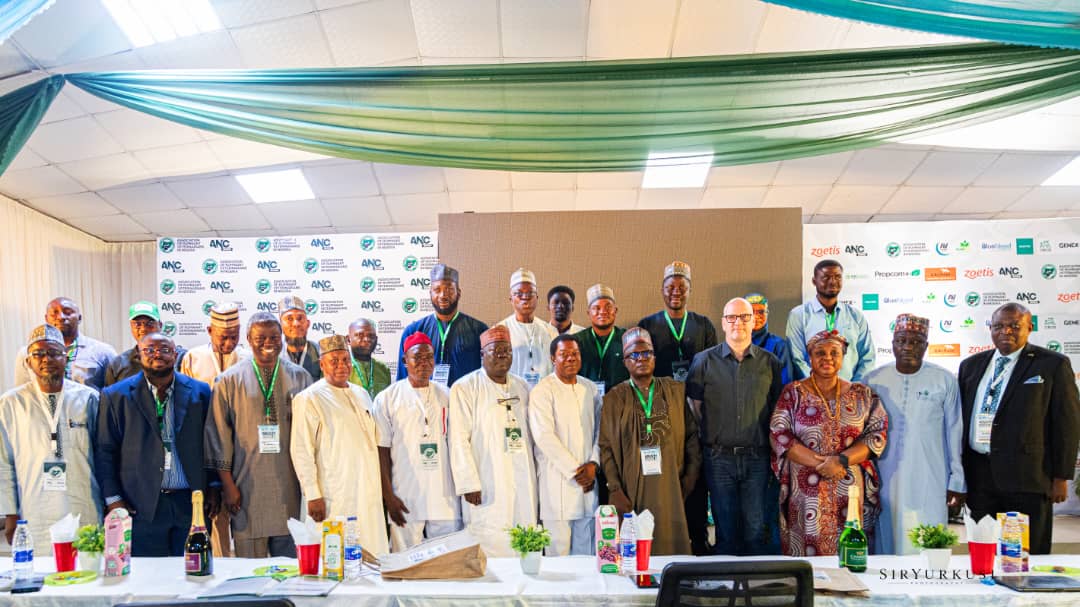
The Chief Veterinary Officer of Nigeria, Dr Samuel A. Anzaky, has called for a more integrated approach to improving Nigeria’s ruminant livestock sector, stressing the need to place animal health at the centre of efforts to boost productivity, strengthen markets and build climate resilience.
Anzaky made the call in his address at the maiden National Conference of the Association of Ruminant Veterinarians in Nigeria (ARUVIN), held at the Agricultural and Rural Management Training Institute (ARMTI), Abuja.
The conference had the theme: “Enhancing Ruminant Productivity, Health, Market Systems and Climate Resilience.”

He congratulated the leadership and members of ARUVIN for establishing a professional platform specifically dedicated to ruminant veterinary practice, describing the initiative as timely for the development of Nigeria’s livestock sector.
According to him, cattle, sheep and goats remain central to Nigeria’s livestock economy and contribute significantly to food and nutrition security, household income, employment, trade and the resilience of rural communities.

He, however, noted that the productivity of the ruminant sector remains constrained by interconnected challenges, including animal diseases, inadequate preventive health services, poor production practices, limited access to veterinary care, feed and water constraints, weak market linkages and the growing effects of climate variability.

“These challenges reinforce one another. A sick animal does not grow efficiently. Poor nutrition increases susceptibility to disease. Climate stress can increase disease risks and reduce the availability of pasture and water. Weak market systems reduce incentives for farmers to invest in better production and animal health,” he said.
Anzaky stressed that animal health, production, nutrition, markets, environmental sustainability and climate resilience must be addressed together.
Government’s Commitment to Animal Health
The Chief Veterinary Officer said the Federal Ministry of Livestock Development considers the strengthening of animal health services a critical component of its broader livestock development agenda.
He said the Ministry, under the leadership of the Honourable Minister, Hon. Idi Mukhtar Maiha, is working to strengthen the systems, institutions and partnerships needed to build a more productive, resilient and commercially viable livestock sector.
He identified the control of Peste des Petits Ruminants (PPR) as one of the Ministry’s major priorities in ruminant production.
According to him, PPR continues to cause significant economic losses in sheep and goat production, particularly among smallholder farmers whose livelihoods depend heavily on the animals.
He said PPR control is therefore not only a veterinary concern but also a livelihoods, food security and economic development issue.
The Ministry, he added, has continued to strengthen PPR surveillance and control activities, including serosurveillance and sero-monitoring across states of the federation.
Anzaky said effective disease control must increasingly be driven by reliable epidemiological evidence, with greater emphasis on anticipating disease risks, detecting them early and preventing their spread.
He identified stronger community-level surveillance, improved laboratory capacity, effective disease reporting, timely response and sustained vaccination where appropriate as key requirements.
Strengthening Surveillance and Veterinary Services
Anzaky also disclosed that efforts are being made to strengthen Nigeria’s animal health surveillance architecture.
He said the continued improvement and automation of the National Animal Disease Information System (NADIS) is part of the effort, noting that timely and accurate disease information is essential for effective decision-making, resource allocation and rapid response to outbreaks.
He, however, stressed that technology alone cannot address Nigeria’s surveillance challenges.
According to him, the veterinarian and animal health professional in the field remain the most important component of surveillance because they understand production systems, recognise unusual disease events and can promptly report them.

“This is why the work of ruminant veterinarians is so important. You are often the first professional interface between the livestock owner and the animal health system,” he said.
From Treatment to Production Medicine
The Chief Veterinary Officer welcomed the conference’s focus beyond conventional clinical practice to areas such as production medicine, herd management, calf mortality, mastitis, technology adoption and the economics of veterinary interventions.
He said the future of veterinary practice in livestock production must go beyond treating individual sick animals to helping farmers prevent disease, improve herd performance, reduce mortality, optimise reproduction, improve feed efficiency and make economically sound production decisions.
He said veterinarians must move from asking only how to treat a sick animal to examining why animals within a production system are becoming sick, what is reducing their productivity and how such losses can be prevented.
Anzaky also stressed the importance of climate resilience, noting that climate change is affecting livestock production through changes in pasture availability, water resources, heat stress, animal movement patterns and the epidemiology of infectious diseases.
He called for improved pasture and fodder systems, better water management, climate-smart production practices, appropriate husbandry systems and stronger disease surveillance.
He said the Ministry is increasingly approaching livestock development through a resilience lens, with the goal of developing production systems capable of withstanding drought, heat, changing rainfall patterns, feed shortages and emerging disease risks.
He further emphasised the importance of the One Health approach, noting that zoonotic diseases, antimicrobial resistance, food safety, environmental health and climate change require collaboration across professional and institutional boundaries.
ARUVIN’s Role
Anzaky urged ARUVIN to go beyond being a professional networking platform and actively contribute to strengthening standards of ruminant veterinary practice, promoting evidence-based disease prevention and production medicine, supporting continuing professional development and generating and sharing field-based evidence.
He also called on the association to promote responsible antimicrobial use, strengthen collaboration between private and public veterinary services, support livestock farmers with practical and affordable animal-health solutions and contribute technical expertise to national livestock policies and programmes.
He said ARUVIN could become an important voice in ensuring that policies affecting ruminant production are informed by sound veterinary science and practical field realities.
He urged veterinarians to become more preventive, data-driven, economically conscious and responsive to climate change, while remaining focused on the farmer.
According to him, farmers should see veterinarians not only as professionals who attend to sick animals but as trusted partners in improving the productivity and profitability of their entire enterprises.
He said reducing disease losses, improving survival and reproduction, optimising nutrition, strengthening biosecurity and connecting producers to better markets would have broader effects on household incomes, food availability, employment, national productivity and the resilience of rural communities.
Anzaky expressed confidence that discussions on PPR, production medicine, calf mortality, mastitis, value-chain development and technology adoption would generate practical ideas capable of contributing to farmers’ livelihoods and the growth of Nigeria’s ruminant sector.
He reaffirmed the Federal Ministry of Livestock Development’s commitment to working with professional associations, academia, research institutions, development partners and livestock producers to strengthen animal health services and create an enabling environment for sustainable livestock development.
In a goodwill message delivered at the Congress of the Association of Ruminant Veterinarians ,the President of the Nigerian Veterinary Medical Association, Dr Moses Arokoyo, said Nigeria’s livestock industry should be viewed as an asset to be unlocked rather than a problem to be fixed.
Arokoyo said the gathering came at a defining moment for Nigeria’s livestock sector and the veterinary profession.
He cited estimates from AU-IBAR that Africa is home to about 268 million pastoralists and agro-pastoralists serving an integrated continental market of approximately 1.4 billion consumers under AfCFTA, while FAO estimates that about 306 million Africans remain undernourished.
He said the situation highlights the opportunity available to the livestock sector.
According to him, with Nigeria’s large population of cattle, sheep and goats, the fundamental challenges are productivity, animal health, market access and value capture.
He said strategic investment across the livestock value chain could become one of the fastest pathways for Government to change the narrative for the 133 million Nigerians living in multidimensional poverty, as highlighted by national and international development assessments.
Arokoyo urged ARUVIN to help reduce the disease burden undermining livestock productivity and household incomes while championing innovative solutions in disease surveillance, vaccination, digital technology, genetics, biosecurity and improved veterinary service delivery.
He also called for continued advocacy for food security, poverty reduction, economic diversification and national prosperity.
He urged Nigerian veterinarians to study measures adopted by their counterparts in Kenya and Botswana to develop their livestock industries and seek to achieve similar or greater progress.
“The cost of inaction places our future in constant dependency mode and this is not acceptable, we must innovate, we must change, we must harness our livestock potential and progress,” he said.
Arokoyo called for the potential of Nigeria’s livestock sector to be unlocked and for animal health to become a cornerstone of the country’s economic transformation.