
Opinion
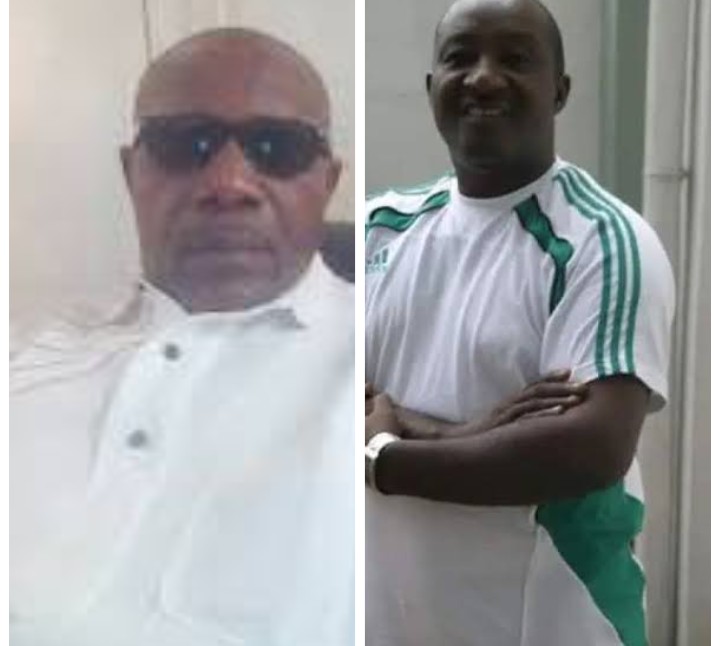
Tribute: Mike Odiakose and Dan Ocholi — Victims of Unregulated Media Practice in Nigeria

By Abdullateef Bamgbose
While the tears in our eyes have not yet dried, another tragedy has struck again, claiming the lives of two gentlemen, Mike Odiakose and Dan Ocholi, both former staff members of The Pilot Newspapers.
Their deaths are not only painful personal losses; they also provide another opportunity to reflect on the harsh realities confronting journalists who spend their productive years serving the media industry without adequate protection, job security or financial stability.

While Mike was sick for only five days before his death, those who came across Ocholi in his final days said he had been “dying by instalment”. His passing therefore raises painful questions about the circumstances under which many journalists live and work in Nigeria.
Dan Ocholi, a former Sports Editor of Champion Newspaper in the early 1990s before joining The Pilot Newspapers, could be described as a victim of a profession that has, for too long, failed to guarantee regular and decent remuneration for many of its practitioners.
After leaving The Pilot, Ocholi found himself working with Daily Assets Newspaper, moving from one media organisation to another in search of a means of livelihood. It was a painful journey for a man who had devoted his professional life to journalism.
Incidentally, it was in the same media environment that Mike built part of his career before his demise last week.
Ocholi was a renowned sports writer.

Throughout his career, he was not a journalist who depended on the streets. He was a newsroom man — a desk journalist who understood his profession and devoted himself to the craft.
My path crossed with that of Mike and Ocholi at The Pilot Newspapers, where I worked for almost three years as an Assistant Editor under the supervision of Ocholi, who was the Editor of Newsworld Magazine, the sister publication of The Pilot.
I therefore write this tribute not only as a journalist who knew them, but as a colleague who witnessed, at close range, the realities of working in an industry that has produced generations of talented professionals while failing, in many cases, to adequately protect them.
Many media houses have become intellectual graveyards.
Instead of nurturing intellectuals and professionals, some have destroyed careers and reduced talented journalists to a life of uncertainty, leaving them dependent on politicians, friends and relatives for survival.
Ocholi, until he gave up the ghost, became one of the victims of this exploitative system of journalism in Abuja. He moved from one media house to another in search of what to feed on, despite the wealth of experience and professional knowledge he had accumulated over the years.
There are many Ocholis in the journalism profession today.
They are alive, but in many respects, they are living dead — professionals who have given the best years of their lives to journalism but are unable to afford decent accommodation, quality education for their children or adequate healthcare.
The tragedy is that journalists routinely report when the salaries of lecturers or civil servants are delayed for one month. They report strikes and industrial disputes arising from unpaid wages. Yet, there is often little attention paid to the fact that many media houses themselves fail to pay journalists regularly.
Very few media organisations can today boast of paying what can reasonably be described as a decent salary to their workers. In some cases, what journalists receive monthly is nothing more than a stipend.
The irony is painful.
The journalist who reports the suffering of workers may himself be unable to pay his rent. The journalist who reports on the education sector may be unable to send his own children to a good school. The journalist who reports on poor healthcare may not be able to afford adequate medical treatment.
This is the contradiction that defines the lives of many Nigerian journalists.
The media industry requires stronger professional regulation and effective mechanisms for protecting the welfare and rights of practitioners. Journalists cannot continue to be expected to hold governments, institutions and individuals accountable while the conditions of their own employment remain largely unregulated.
The deaths of Mike Odiakose and Dan Ocholi should therefore not be treated merely as two unfortunate deaths in a profession already accustomed to losing its practitioners.
Their passing should remind media owners, professional associations, journalists and policymakers of the urgent need to address the conditions under which journalists work and live.
Mike and Ocholi gave their productive years to journalism. They served the profession, informed the public and contributed to the development of the Nigerian media.
They deserved better.
Their deaths should become a solemn reminder that behind every newspaper story, television report, radio bulletin and digital publication is a human being — a journalist with a family, responsibilities, dreams and the right to a dignified life.
May the souls of Mike Odiakose and Dan Ocholi rest in perfect peace.
May their memories continue to inspire those still practising journalism.
And may their deaths awaken the conscience of an industry that must do more to protect the people who dedicate their lives to informing and holding society accountable.
Abdullateef Bambgose
Associate editor with Aljazira, Abuja
lateefbamgbose@gmail.com