
General News
Bamidele: Gender Inclusion Is Investment, Not Favour

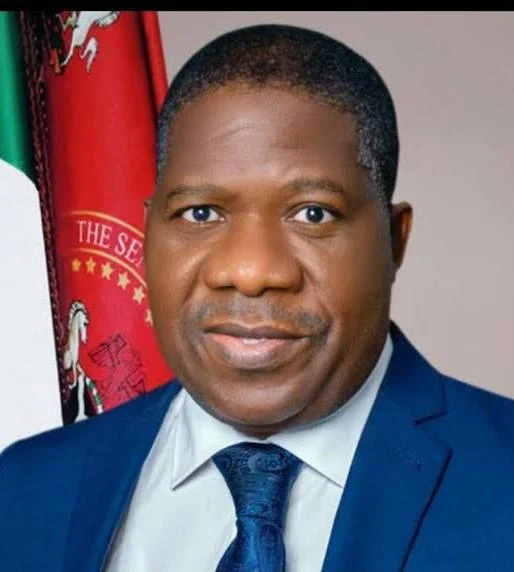
Leader of the Senate, Senator Opeyemi Bamidele, on Thursday observed that no nation could meaningfully realise its full potential when a significant proportion of its population “is unable to contribute fully to governance, diplomacy, economic development and public leadership.”
Bamidele, therefore, said the inclusion of women in public governance and leadership “is never an act of favour, but indeed a strategic investment in Nigeria’s human capital and institutional strength.”
He emphasised the centrality of gender inclusion to the future of Nigeria and the world in the 21st century.

He made the remarks at the presentation of the book, “The Female Diplomat: Navigating Power, Ambition and Identity,” held at Nigeria House, New York, United States, on Thursday, where he reflected on the significance of gender inclusion in the country’s national life.
The book presentation brought together prominent dignitaries and diplomats, including the Deputy Secretary-General of the United Nations, Ms. Amina Mohammed; Minister of Foreign Affairs, Amb. Bianca Odumegwu-Ojukwu; Nigeria’s Permanent Representative to the United Nations, Amb. Jimoh Ibrahim; Nigeria’s Ambassador to the United States, Amb. Kayode Are; and President/CEO, Montefiore Einstein.
Apart from the book presentation, Bamidele also participated in the Nigeria Investment Forum 2026, designed to bring together government representatives, international investors, development finance institutions, multinational corporations, business leaders and strategic partners to explore viable investment opportunities across Nigeria.
Bamidele, who chaired the book presentation at Nigeria House in the United States, noted that Nigeria’s democracy could only be strengthened when all citizens “are adequately represented in the institutions established to serve them.”
He disclosed that President Bola Ahmed Tinubu, through the Renewed Hope Agenda, recognised that Nigeria’s development must draw on the abilities and contributions of all its citizens.
He added that President Tinubu had consistently affirmed that women and young people must not be relegated to the background in the political, economic and national life of the country.
According to him, this commitment “is important because meaningful inclusion goes beyond the presence of women in institutions. It requires genuine opportunities to participate in decision-making, exercise responsibility and contribute to the formulation and implementation of public policy.”
“Gender inclusion is not an act of favour. It is a strategic investment in Nigeria’s human capital and institutional strength.
No nation can realise its full potential if a significant proportion of its population is unable to contribute fully to governance, diplomacy, economic development and public leadership.
“Our democracy is strengthened when citizens see themselves represented in the institutions established to serve them. Our foreign relations are also enriched when Nigeria is represented by capable professionals whose knowledge, judgement and experience reflect the breadth of our national talent.”
Bamidele explained the vital role of the National Assembly in deepening gender inclusion, noting that the parliament “will continue to promote institutions that are fair, accessible and responsive through legislation, representation and oversight.”
The Senate Leader further emphasised that the National Assembly should help establish an environment in which competence is recognised, opportunity is broadened, and leadership is strengthened through the participation of qualified women.
“This is not a responsibility for the government alone. Political institutions, the diplomatic service, the private sector, academic institutions and civil society all have roles to play.
Progress will require deliberate policies, supportive institutions and a collective willingness to recognise talent wherever it is found.
“Today’s occasion contributes to that broader national conversation.
It offers leaders, diplomats, scholars and members of the public an opportunity to engage with ideas relevant to Nigeria’s ongoing development and its engagement with the international community,” Bamidele observed at the book presentation.
Directorate of Media and Public Affairs,
Office of the Leader of the Senate,
Federal Republic of Nigeria.
24th September 2026.