
General News
Accra Reset Unveils 10-Point Plan To Overhaul Global Health System

By Iyojo Ameh
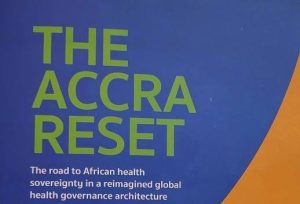
The Accra Reset Presidential Council has unveiled a 10-point reform agenda aimed at changing how global health priorities are determined, financed and delivered, with greater emphasis on domestic resources, regional institutions and country ownership.
The blueprint was presented on Monday in New York by the Accra Reset High-Level Panel as Heads of State and global leaders gathered to mark one year since the initiative was launched on the sidelines of the United Nations General Assembly.

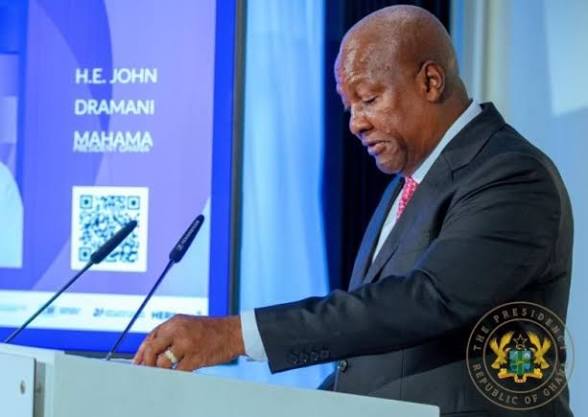
The reform plan emerged from a health sovereignty summit convened by Ghanaian President John Mahama in August 2025 and was developed amid major reductions in international aid and growing calls for countries to assume greater ownership of their health systems.
At the centre of the proposal is a one-stop country compact that would bring together a single plan, budget and implementation platform within 12 months. The panel also recommended that domestic resources form the foundation of health financing, while external funding is redirected to support national priorities.
Other recommendations include strengthening regional institutions through delegated mandates and member-state financing, establishing regional innovation and clinical trial platforms, increasing investment in local manufacturing and technology transfer, and creating procurement coalitions to give countries greater collective bargaining power.
The panel further called for collective financing of global public goods, the establishment of national health emergency operations centres within 12 months, reforms to global health institutions and an independent accountability mechanism that would publicly track delivery on commitments.
The report was presented alongside proposed mechanisms known as HINGE, designed to finance implementation of the reforms, and RIO, intended to strengthen global accountability and track results.
The New York gathering, titled “Full Circle: Resetting Global Development,” brought together serving and former Heads of State and Government from four continents, alongside leaders of the World Health Organization, OECD, Commonwealth, AfCFTA Secretariat and International Finance Corporation.
The meeting also launched the Global Reset Dialogues, a platform for cooperation between the Global South and Global North, with migration, critical minerals and trade finance identified as early priorities.
According to the initiative, the dialogues are intended to give governments a forum to negotiate around shared economic interests and global public goods while developing new forms of cooperation based on mutual interests and sovereign priorities.
Maternal and child health was identified as an early test of the proposed model, with Tanzanian President Samia Suluhu Hassan championing the Mother Africa call to action.
The initiative will bring together political leaders, health systems and the private sector to address maternal health, particularly in sub-Saharan Africa, where approximately seven in 10 global maternal deaths occur. The statement said about 260,000 women die globally each year from causes associated with pregnancy and childbirth.
Another initiative, Masterkey, championed by Kenyan President William Ruto, will focus on human mobility by seeking to remove barriers that prevent skills and talent from moving to areas where they are most needed.
The gathering also marked the opening in Kigali of SIGN, an institute for sovereign negotiators established with the G7’s CONNEX initiative and African School of Governance as strategic partners. It is intended to strengthen governments’ capacity to negotiate complex international economic and development agreements in line with their national priorities.
The Accra Reset was launched during the 80th session of the UN General Assembly in September 2025, following a health sovereignty summit convened by President Mahama in Accra on August 5, 2025.