General News
African Journalists Hail China’s Development Progress, Seek Stronger Media Cooperation


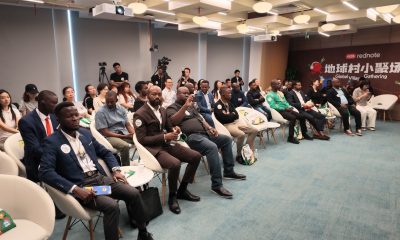
A delegation of 19 journalists from seven African countries has commended China’s achievements in poverty reduction, rural development and Africa-China cooperation, while calling for stronger partnerships between African media organisations and Chinese institutions.
The delegation made the remarks during a farewell visit to Vice Minister Ma Hui of the International Department of the Communist Party of China (IDCPC), following the conclusion of a 10-day media exchange programme that took participants from Ningxia to Beijing.
Speaking on behalf of the delegation, its leader and Chairman of the Diplomatic Correspondents’ Association of Nigeria (DICAN), Frederick Idehai, described the programme as enlightening and transformative.
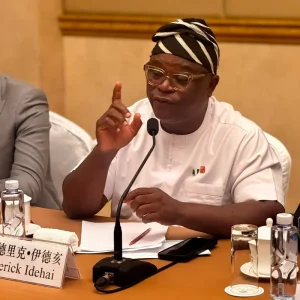
The delegation, comprising journalists from Nigeria, South Africa, Zambia, Zimbabwe, Tanzania, Kenya and Ethiopia, expressed appreciation to the Chinese government for its hospitality and the opportunity to gain firsthand insight into the country’s development experience.
Idehai said the exchange enabled participants to observe China’s development model directly, rather than relying solely on external narratives.
According to him, one of the programme’s highlights was a visit to Ningxia, where the delegation witnessed China’s poverty alleviation initiatives, including the development of goji berry farming into a sustainable source of income through government support, technology and cooperative business models.
He noted that the experience demonstrated how consistent public policies, accountability and long-term planning could significantly improve the living standards of citizens.
“The fact that China lifted more than 800 million people out of poverty is more than just a statistic. It represents an important lesson for countries across the Global South,” Idehai said.
He also highlighted seminars on Xi Jinping Thought on Socialism with Chinese Characteristics and the Forum on China-Africa Cooperation (FOCAC), describing them as valuable opportunities to better understand China’s governance approach and its expanding partnership with African nations.
According to him, China-Africa cooperation has evolved beyond infrastructure and trade to include media, culture, technology and people-to-people exchanges.
Idehai urged African journalists to provide more balanced, contextual and fact-based reporting on China-Africa relations.
“For a long time, many news reports about China in Africa were shaped largely by narratives from Western media. Today, we have had the opportunity to see many realities for ourselves,” he said.
He added that members of the delegation would return to their respective countries with renewed commitment to promoting greater public understanding of China-Africa relations and reporting stories that support development cooperation.
The delegation also called for the continuation of media exchange programmes and deeper collaboration between Chinese institutions and African media organisations, noting that such initiatives would strengthen mutual understanding and professional engagement.
Idehai expressed gratitude to the Communist Party of China, the International Department and officials who facilitated the exchange programme, expressing optimism that media cooperation between China and Africa would continue to deepen in the years ahead.