
General News
Africa’s Water Crisis Deepens as Investors Flee Over Policy Uncertainty, Regulatory Failures — OPS-WASH

By Iyojo Ameh
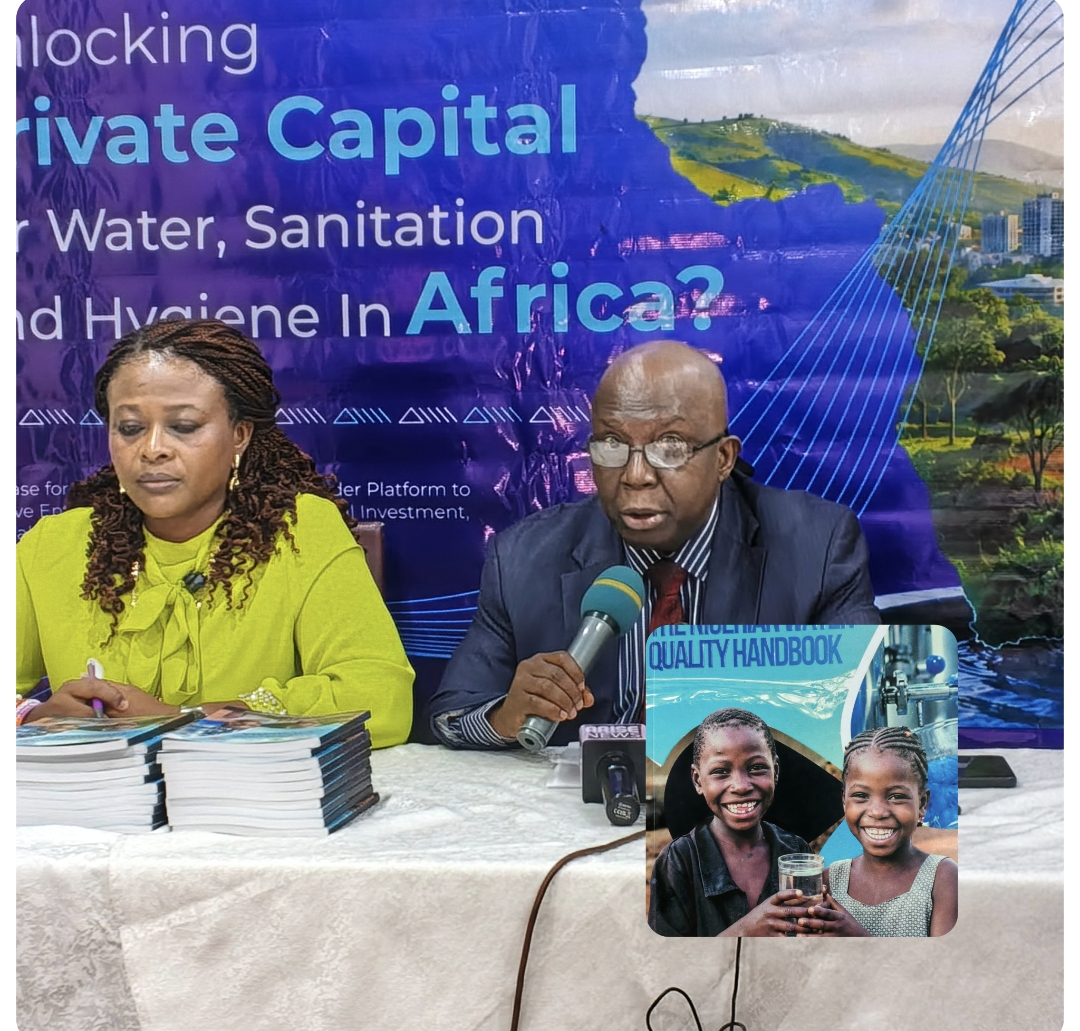
The Organized Private Sector in Water, Sanitation and Hygiene (OPS-WASH) has blamed weak institutions, policy inconsistency and regulatory failures for the persistent reluctance of private investors to commit funds to Africa’s water and sanitation sector, warning that the continent risks missing global development targets unless urgent reforms are implemented.
Speaking at a press conference in Abuja, the Global Head and National Coordinator of OPS-WASH, Dr. Nicholas Igwe, said the challenge confronting the Water, Sanitation and Hygiene (WASH) sector is not a shortage of capital but the lack of credible systems capable of attracting and protecting long-term investments.
According to him, investors remain wary of committing resources to the sector due to policy reversals, political interference, weak regulatory institutions and uncertainty surrounding contract enforcement.
“When regulators are controlled politically and policies change with governments, investors become afraid to commit long-term funds into the sector,” Igwe said.
He identified six major obstacles discouraging private sector participation in Africa’s water industry: weak revenue models, poor risk-sharing mechanisms, lengthy investment recovery periods, regulatory instability, inadequate project preparation and the absence of standard legal frameworks.
The OPS-WASH coordinator noted that sectors such as telecommunications and energy witnessed rapid growth after governments introduced reforms and liberalisation policies that encouraged private investment.
“The telecom sector changed after liberalisation allowed companies like MTN and Globacom to invest billions. The same thing happened in the energy sector after reforms. But the WASH sector still lacks that enabling environment,” he said.
Igwe argued that despite growing global interest in infrastructure financing, the water sector continues to rely heavily on donor agencies and development partners because governments have failed to create commercially sustainable structures that guarantee returns on investment.
He pointed to countries including Kenya, Rwanda, South Africa and Uganda, where institutional reforms have helped attract private capital into critical sectors, saying similar measures are urgently needed across Africa’s water and sanitation landscape.
The organisation further warned that achieving the United Nations’ Sustainable Development Goal 6, which seeks universal access to safe water and sanitation by 2030, may remain out of reach without significant private sector involvement.
According to OPS-WASH, meeting the target requires an estimated $114 billion annually worldwide, far exceeding the level of funding currently provided through Official Development Assistance and public budgets.
Igwe maintained that Africa possesses the technology, engineering expertise, political commitments and investor appetite necessary to transform the sector.
“What is missing is the architecture — the institutional structure that allows all these elements to work together in a stable and scalable way,” he said.
He called on governments to establish independent regulatory bodies, strengthen legal protections for investors and deepen public-private partnerships to unlock the billions of dollars needed to close the continent’s water and sanitation financing gap.
The organisation stressed that unless governments move beyond donor-dependent approaches and implement investor-friendly reforms, millions of Africans could remain without access to safe water and adequate sanitation despite growing global investment opportunities.