
General News
APIN, Partners Push Stronger Support Network for GBV Survivors in Benue

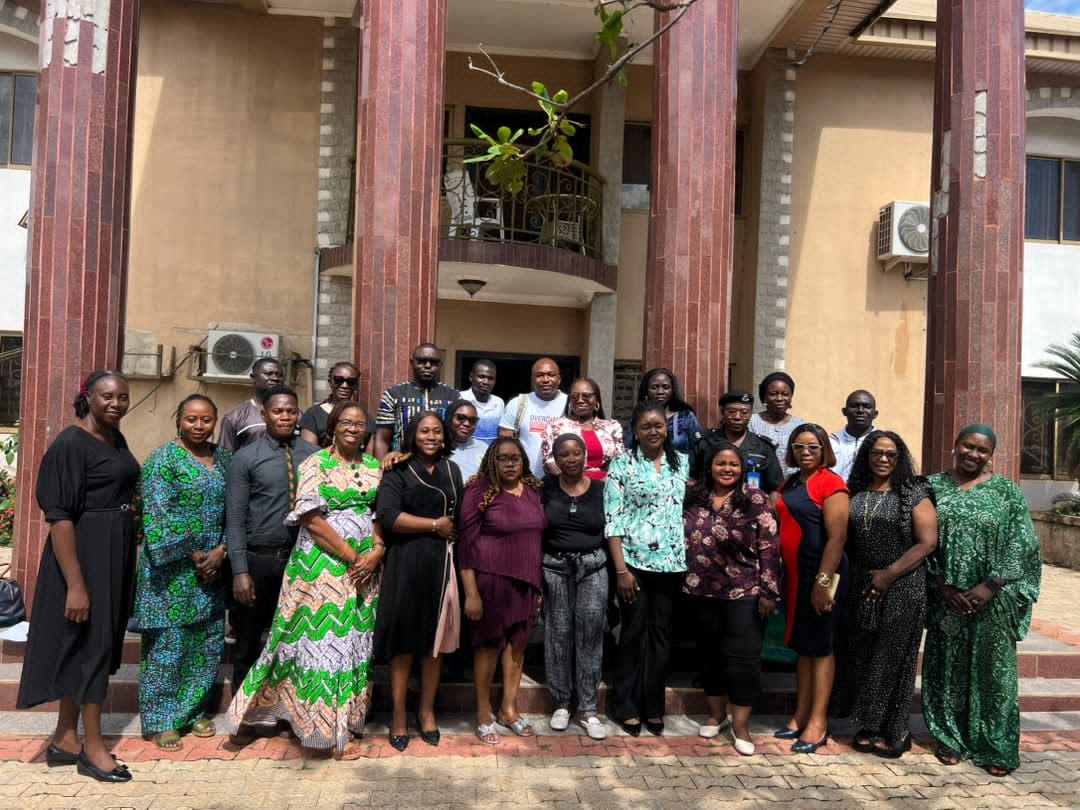
From Dooshima Terkura, Makurdi
APIN Public Health Initiatives, in collaboration with the Benue State Ministry of Women Affairs and Social Welfare and other partners, has called for stronger referral mechanisms to ensure that survivors of violence receive comprehensive and timely clinical and non-clinical support across the state.
The call was made on Tuesday during a Post-Violence Care (PVC) stakeholders’ meeting held in Makurdi, the Benue State capital.

The meeting brought together stakeholders from the health, justice, security and civil society sectors and was aimed at strengthening bidirectional referrals to clinical and non-clinical services for survivors of sexual, physical and emotional violence.
The meeting focused on improving linkages between clinical and non-clinical services, identifying gaps in existing referral pathways and ensuring that survivors can access appropriate medical, psychosocial, legal and protection services.
It also aimed at strengthening reporting on the National GBV Reporting Dashboard to enhance data availability for decision-making.

Stakeholders included representatives of the Ministry of Women Affairs and Social Welfare, Benue State Sexual Assault Referral Centre (BENSARC), Benue State Action Committee on AIDS (BENSACA), Ministry of Justice, Nigerian Police Force, Lawyers Alert, House of Hilkiah Foundation, CCCRN, OWACHDO, FIDA, the media and other organisations.
Presenting an overview of Post-Violence Care and the linkage between violence and HIV, as well as key achievements of APIN as of the third quarter of the 2026 Financial Year, the Senior Technical Officer, APIN Public Health Initiative, Mrs Lucia Torjir, highlighted the link between violence and HIV.
She stated that Sexual, Physical and Emotional Violence (SPEV) can increase the risk of HIV infection while also increasing survivors’ vulnerability to HIV prevention, treatment, continuum care and other health and psychosocial challenges.
Explaining the reasons for their intervention, Mrs Torjir said roughly 31.6 per cent of women, representing about 840 million women globally, have experienced physical or sexual partner or non-partner violence.
According to her presentation, about 25.8 per cent of ever-partnered women aged 15 to 49 have experienced physical or sexual violence by an intimate partner, while about eight per cent of women aged 15 and above have experienced non-partner sexual violence.
She also disclosed that young women remain particularly vulnerable, with more than one in five ever-partnered girls aged 15 to 19 experiencing partner violence
She further stated that men and boys also experience violence, with rigid social expectations around masculinity identified as factors that can discourage them from seeking healthcare or support.
She added that such norms may also expose them to harmful behaviours and contribute to both the perpetration and experience of violence.
In Benue, Torjir said APIN is supporting 165 out of 264 supported health facilities to provide Sexual, Physical and Emotional Violence (SPEV) services.
She noted that as of July 2026, the state had recorded 3,874 survivors provided with the minimum post-violence care package against a target of 2,131, representing 181.8 per cent achievement.
The data further showed that 3,734 survivors, representing 96.3 per cent, received post-violence physical or emotional care, while 140, representing 3.6 per cent, received post-rape care for sexual violence.
Of the 88 survivors who started post-exposure prophylaxis (PEP), 75, representing 85.2 per cent, completed the treatment.
To address gaps in PEP completion, she said APIN proposed structured telehealth and active follow-up systems, including telephone contact within 24 to 72 hours after treatment initiation and subsequent follow-ups at seven, 14 and 28 days, six weeks, three months and six months.
The approach, she said, is intended to help health workers identify missed doses, manage side effects and provide reassurance to survivors.
The meeting also emphasised the need for trauma-informed and culturally respectful care, including establishing safety and trust, addressing the emotional burden associated with medication after a traumatic experience, and preparing survivors for possible side effects.
For the 2027 programme year, APIN will sustain support to respective facilities to enhance screening and identification of incidences of violence, improve PEP completion, STI screening and treatment, and tracking of referrals made and completed as priority areas, alongside stronger collaboration among government, Benue Sexual Assault Referral Centre (SARC) and other stakeholders.
The Permanent Secretary at the Benue State Ministry of Women Affairs and Social Welfare, Mrs Martha Edor, appreciated participants, explaining that the ministry recognises the importance of addressing GBV.
Edor, who was represented by the Director, Planning, Research and Statistics, Vivien Torbunde, commended the active participation of government agencies, UNFPA, civil society organisations, law enforcement agencies and other partners, assuring them that their contributions and recommendations would be acted upon.
She acknowledged key issues raised, including the need for functional Sexual Assault Referral Centres (SARCs) and comprehensive shelters, continuous training and retraining of stakeholders, and sustained awareness and sensitisation on GBV.
She called on all partners to extend sensitisation to schools and communities to reach children and young people who may not be in school.
She also stressed the importance of political will and an enabling environment for effective laws and policies, noting that harmful traditional beliefs and outdated norms among some decision-makers can hinder the mainstreaming of gender-based violence and human rights across government institutions.
The Head of the Sexual Assault Referral Centre (SARC), Benue State, Mrs Magdalene Andor, commended APIN for the good work it has been doing in the state.
Mrs Andor said APIN’s thematic area aligns with that of SARC and expressed readiness to work with the organisation and all other partners through collaboration.
She said, “We have been advocating for a SARC, and we thank God that we now have one in Makurdi. This is not limited to Makurdi, as plans are underway for more centres across the three senatorial zones, and potentially at some of the PHCs across the state.”
She noted that through the ongoing Technical Working Group, stakeholders have already commenced continuous awareness creation and sensitisation, and called on experts from APIN and development partners to guide them in the process.
Earlier, the Health System Strengthening Focal Person for APIN Benue State, Dr Kenneth Okpala, welcomed participants to the meeting and encouraged them to contribute ideas and engage in meaningful discussions that would lead to achieving the objectives, identifying key findings and agreeing on clear next steps.