
General News
APRI, NCCC Push Nigeria to Add Value to Solid Minerals

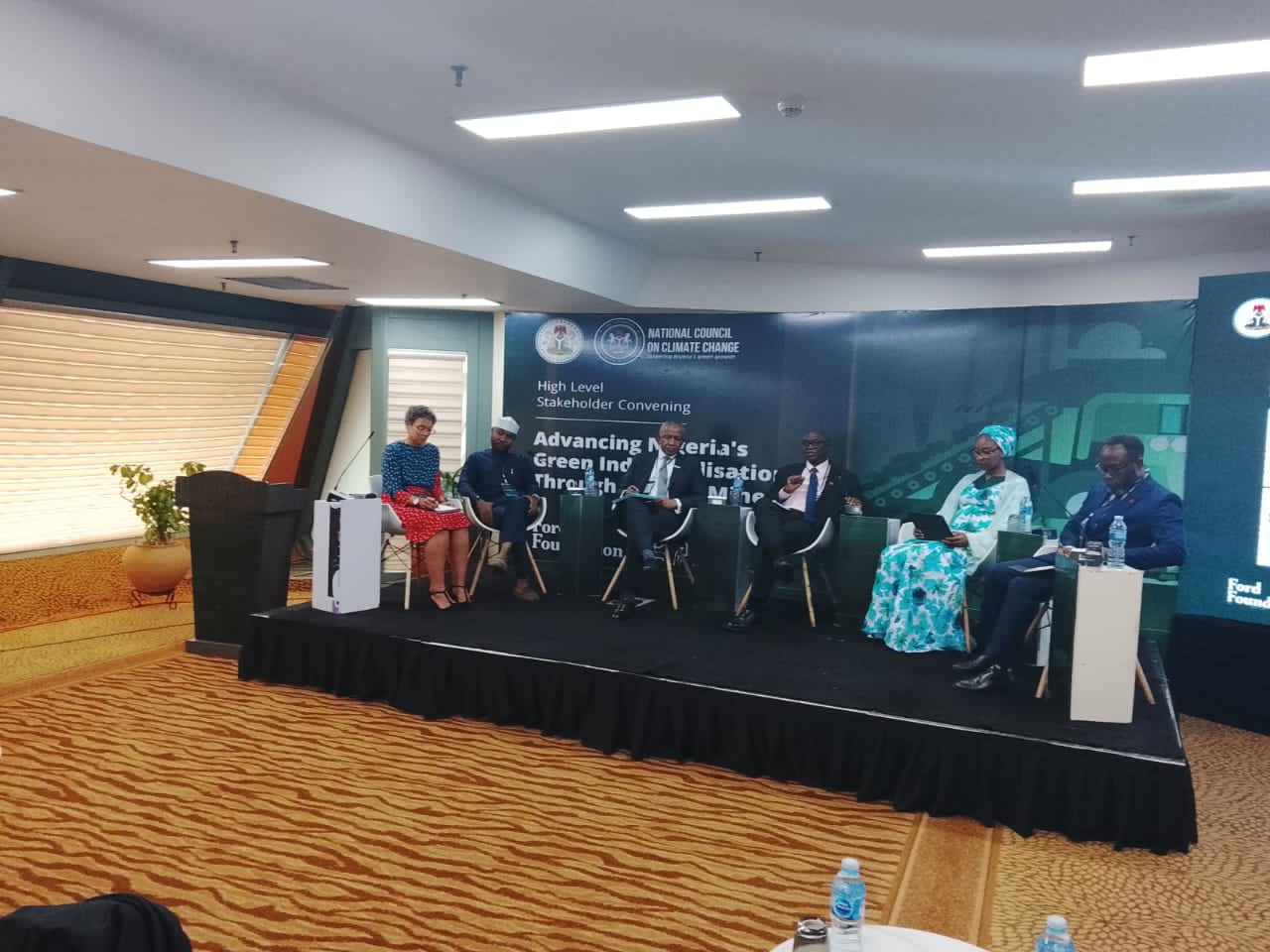
The Executive Director of the Africa Policy Research Institute (APRI), Dr. Olumide Abimbola, has called on Nigeria to move beyond the export of raw minerals by building industries and creating jobs through investments in critical solid minerals.
Abimbola made the call on Wednesday in Abuja at the opening of a High-Level Stakeholders Conference on “Advancing Nigeria’s Green Industrialisation Through Critical Minerals.”
The conference was organised by APRI in partnership with the National Council on Climate Change (NCCC) and the Ford Foundation.
He said the conference was timely, noting that global energy and digital transitions had created enormous demand for minerals such as copper, lithium, cobalt, nickel, graphite and rare earth elements.
According to him, geopolitical tensions and supply-chain concerns had also made access to critical minerals a matter of economic and national security.
Abimbola said governments across Europe, North America, Asia and the Gulf were developing critical mineral strategies and negotiating new partnerships.
He disclosed that APRI’s mapping of Africa’s green mineral partnerships had identified nearly 100 agreements involving African countries and international partners, with most signed within the past decade.
He stressed that the focus should be on the kind of economy Nigeria could build around its minerals, including whether they could support new industries, create decent jobs and strengthen technological capabilities.
He said greater attention should be given to attracting investment in power, infrastructure and manufacturing, while Nigerian businesses must participate meaningfully in the value chains.
Abimbola also said communities where minerals are found must experience tangible improvements in their lives as a result of the investments.
“If we do not get the institutions, policies, financing, infrastructure and governance right, we risk simply replacing one extractive model with another.
“We could move from exporting crude oil to exporting raw minerals, while most of the processing, technology, manufacturing and economic value continue to be created elsewhere; that cannot be our ambition,” he said.
He said APRI’s work on critical minerals was aimed at supporting African countries to industrialise based on their resources.
He cited the institute’s flagship Africa’s Development Agenda for its Green Minerals Project and its roadmap for Nigeria’s Critical Minerals Strategy Project, which had engaged stakeholders in five mineral-rich states.
Abimbola said the conference was structured around three key areas: Nigeria’s minerals in a shifting global order, the domestic ecosystem for green industrialisation, and community and environmental rights.
He stressed that mining communities must not bear the environmental and social costs while value is created elsewhere.
The APRI executive director also
acknowledged the leadership of the ministries and MDAs and thanked the Ford Foundation for its partnership.
The Director-General of the National Council on Climate Change (NCCC), Dr. Omotenioye Majekodunmi, said Nigeria must be deliberate in identifying areas where it has competitive advantage and building domestic capacity around them.
She said the objective should not simply be increased mining but greater Nigerian value created from mining.
Majekodunmi stressed that green minerals must actually be green, pointing to the contradiction of producing minerals for clean technologies through highly polluting extraction processes.
She said as global players increasingly scrutinised carbon footprints and traceability, responsible production would become a matter of market access and competitiveness.
According to her, Nigeria has an opportunity to build differently from the beginning by using cleaner power, stronger environmental safeguards and credible standards.
She said climate ambition must be connected to capital, as processing plants, clean power infrastructure and manufacturing facilities required significant investments that government alone could not finance.
She explained that NCCC’s role was to provide certainty on capital flows by aligning climate commitments with investment opportunities and strengthening frameworks for climate finance and carbon markets.
On communities, Majekodunmi said people must see tangible benefits from the transition, citing lessons from the UNCCD conference in Mongolia.
“We cannot build a green economy that looks impressive in Abuja but leaves communities around mining and industrial sites.”
She said a just transition meant communities could point to skilled jobs, better roads, improved power and increased incomes.
Majekodunmi urged international partners to see Nigeria as a place to build processing and manufacturing facilities, rather than merely a source of raw materials.
She also called on Nigerian businesses to own meaningful parts of the green industrial economy and move from conversations to bankable projects.
Majekodunmi thanked APRI and all partners for bringing government, industry, development partners and civil society together around the agenda.
“The minerals beneath our soil are an opportunity but the real measure of success will be what we build above ground with them.
“The industries, the businesses, the skills, the jobs and the prosperity, that is the green industrialisation Nigeria should pursue.”
The Regional Director of the Ford Foundation, Dr. Chichi Aniagolu-Okoye, said Nigeria stood at a historical moment to redefine its economy through critical minerals.
She said the Nigerian economy had for decades relied heavily on hydrocarbons, but the global shift towards clean energy was no longer a distant projection but an active reality reshaping global trade.
Aniagolu-Okoye said Nigeria was uniquely positioned for the shift because its soil held vast, largely untapped deposits of lithium, copper, magnesium and bauxite.
“The exact minerals required to power electric vehicle batteries and renewable energy storage, Nigeria’s vision must extend beyond supplying raw materials.”
She said policies must now strictly prioritise domestic value addition through processing, beneficiation and manufacturing within Nigeria’s borders.
She identified key priorities as building local lithium processing plants, using advanced satellite mapping for precision exploration and enforcing local content laws.
“Nigeria can create a sustainable industrial ecosystem that generates high-scale jobs and retains economic wealth at home,” she said.