General News
Beyond Football, Jollof Wars, Ghana Envoy Highlights Deep Nigeria-Ghana Bond

By Iyojo Ameh
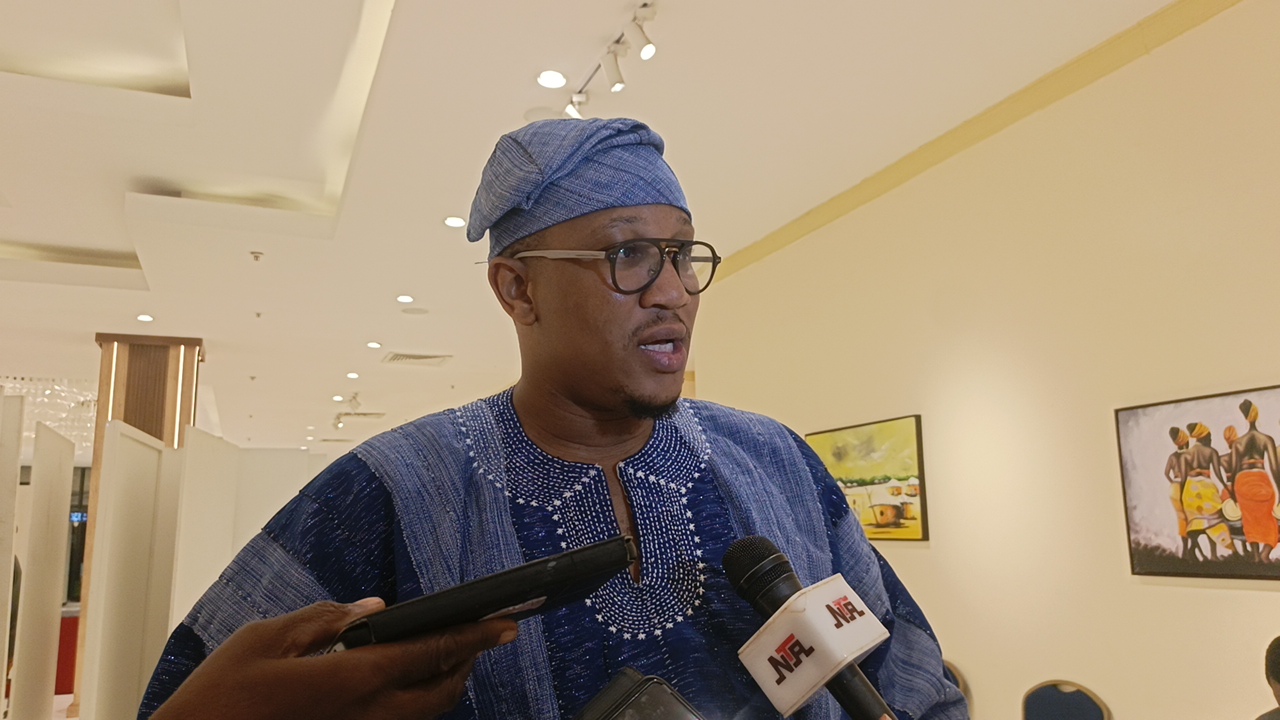
Ghana’s High Commissioner to Nigeria, Baba Sadiq Abdulai Abu, has described the relationship between Nigeria and Ghana as one that goes beyond their popular football rivalry and social media “Jollof Wars”, saying both countries share deep cultural, economic and diplomatic ties.
Abu stated this while speaking with journalists during a diplomatic function in Abuja, where he highlighted the longstanding relationship between the two West African countries and the need to further deepen bilateral cooperation.

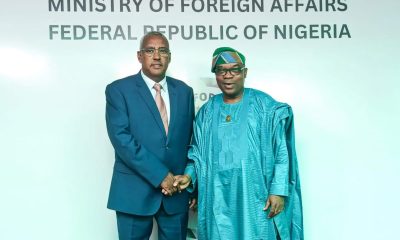
Earlier, the High Commissioner and members of his diplomatic team had presented an anniversary cake to the Honourable Minister of State for Foreign Affairs, Ambassador Sola Enikolaiye, at his office in Abuja to commemorate Nigeria’s 66th Independence Anniversary.
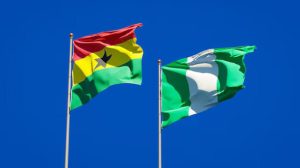
Abu said the gesture was a symbol of the friendship between Ghana and Nigeria and reflected the strong ties that had developed between both countries through trade, investment, culture, diplomacy and regional cooperation.
He said Nigeria had remained a major investment partner for Ghana, noting that Nigeria was the third-largest source of investment into Ghana in the past year.
“Ghana and Nigeria culturally and socially share a lot in common. Beyond that, on the economic side as well, Nigeria happens to be the third top-sourced country of investment to Ghana in the last one year,” Abu said.
He added that Ghanaian investors also maintained significant business interests in Nigeria, stressing the need for both countries to create more opportunities for cross-border investment and trade.
The High Commissioner traced the historical roots of the relationship to Ghana’s first President, Dr Kwame Nkrumah, who visited Nigeria in February 1959 and met with prominent Nigerian leaders, including Prime Minister Abubakar Tafawa Balewa and Dr Nnamdi Azikiwe.
He said the relationship established during that period had continued to grow, with both countries collaborating on economic, diplomatic and regional issues.
Abu said his administration was promoting what he described as the “Ghana-Nigeria philosophy”, with emphasis on strengthening trade and investment between both countries.
“Most importantly, we want to emphasise trade, investment and so on and so forth. Nigeria continues to be a very major investor in Ghana, and Ghanaians also continue to be very major investors in Nigeria,” he said.
Beyond the economic relationship, the envoy highlighted the strong cultural connections between citizens of both countries, citing music, football and social media interactions as evidence of their close bond.
He said the playful rivalry over jollof rice and football had become part of the relationship between Nigerians and Ghanaians but should not overshadow the deeper ties between both countries.
“You see Ghanaians and Nigerians continue to be fond of each other,” he said.
Abu also pointed to cooperation between Ghana and Nigeria on regional and international issues, including Nigeria’s support for Ghana in making a case before the African Union over xenophobic attacks in South Africa.
He further cited Nigeria’s support for Ghana on issues relating to health investment and reparations, saying such cooperation demonstrated how both countries could work together to advance shared interests.
The envoy stressed the importance of Ghana and Nigeria’s roles within the Economic Community of West African States, saying both countries must continue to contribute to regional coexistence, trade and integration.
He urged young Nigerians and Ghanaians to build on the foundation established by previous generations and develop new areas of cooperation.
“As young people, we need to forge ahead positively. These are the things that we can use as reference points in forging ahead,” he said.
Abu also highlighted a personal symbol of the historical connection between the two countries, noting that the street where he lives in Ghana is named Tafawa Balewa Avenue after Nigeria’s first Prime Minister.
The diplomatic engagement also featured a lighter exchange over football, with the High Commissioner presenting a Ghanaian football jersey to the Nigerian Minister of State.
Asked whether the gesture amounted to Ghana surrendering to Nigeria as a football superpower, Abu responded humorously that the Nigerian Minister of State had already accepted the jersey.