General News
Nigeria, Indonesia Seek Bigger Share of $3bn Trade Through Investment, Technology Transfer

By Iyojo Ameh
Nigeria and Indonesia are exploring new ways to expand their more than $3 billion annual trade by boosting investment, technology transfer, local manufacturing and private sector partnerships.
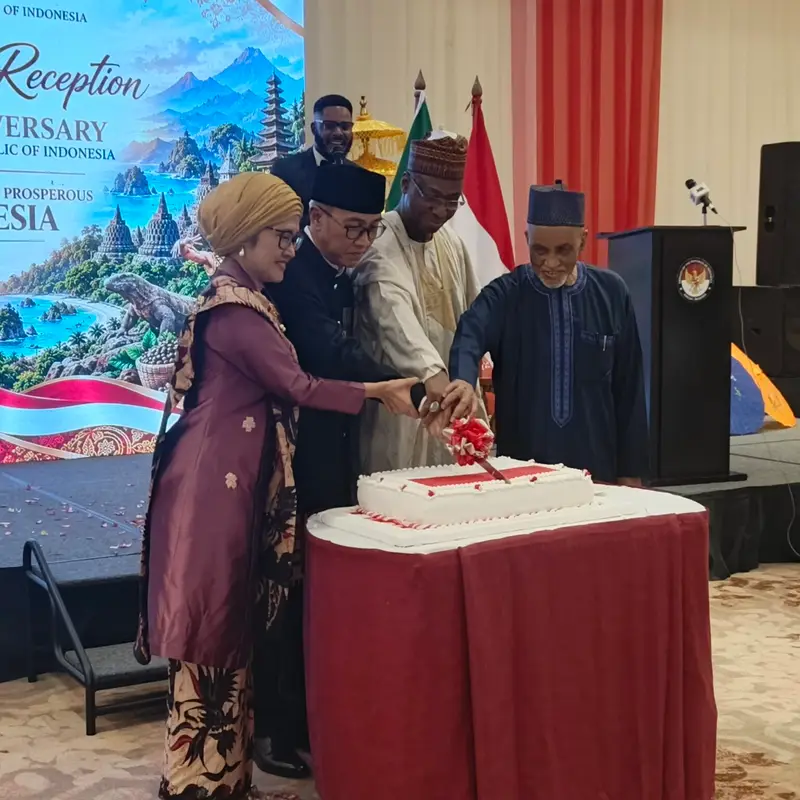
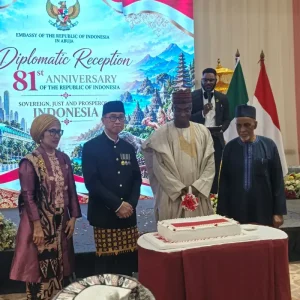
The Indonesian Ambassador to Nigeria, Bambang Suharto, disclosed this in Abuja at a reception hosted by the Indonesian Embassy to mark Indonesia’s 81st Independence Anniversary.

Suharto said Nigeria remained one of Indonesia’s leading trading partners in Africa, stressing that the existing volume of commerce presented opportunities for both countries to deepen their economic relationship.
“Our bilateral trade has consistently surpassed USD 3 billion annually, cementing Nigeria’s position as one of Indonesia’s foremost trading partners in Africa,” he said.
He said the relationship was already reflected in the daily lives of citizens in both countries, with Nigeria supplying energy to Indonesia while Indonesian products continued to find markets among Nigerian consumers and businesses.
According to him, the presence of Indonesian-linked products manufactured in Nigeria also demonstrated the potential for local production, job creation and industrial development.
Suharto said the combined population of more than 550 million people, alongside their young populations, growing businesses and extensive natural and human resources, provided a strong basis for expanding economic cooperation.
“These elements provide a powerful foundation for expanding trade, investment, technological exchange, and employment opportunities,” he said.
The ambassador said Indonesian companies operating in Nigeria had contributed not only through investment and employment but also through corporate social responsibility initiatives.
He specifically commended Dufil Prima Foods Ltd, Primera Food Nigeria Ltd, Tempo Scan Pacific, Glorious Dexa Mandaya Ltd and Orange Kalbe Ltd for their contributions to bilateral relations and support for the anniversary celebration.
Suharto said the focus of the relationship should extend beyond the volume of trade to ensuring that businesses, local industries and communities in both countries derived tangible benefits from the partnership.
“Our ultimate ambition is not simply to trade more, but to cultivate a resilient partnership in which businesses on both sides thrive, local industries develop, and our people directly reap the benefits of the opportunities we create together,” he said.
He reaffirmed Indonesia’s commitment to closer engagement with Africa, citing the Indonesia-Africa Forum and other platforms as opportunities to advance cooperation in energy, agriculture, healthcare, infrastructure and human-resource development.
He also highlighted educational and cultural exchanges between the two countries, including Indonesian scholarship opportunities for Nigerian students.
Representing the Federal Government, the Permanent Secretary, Ministry of Foreign Affairs, said Nigeria was ready to move its longstanding relationship with Indonesia towards a more comprehensive economic partnership.
He said Nigeria could benefit from Indonesia’s experience in industrialisation, manufacturing, digital transformation, infrastructure, agriculture, maritime development and small and medium-sized enterprise development.
“Nigeria is particularly interested in expanding cooperation that can support the development of local productive capacity, strengthen value chains, promote technology transfer, and attract sustainable investment,” he said.
The Permanent Secretary identified agriculture and agro-processing, manufacturing, energy, infrastructure, pharmaceuticals, the digital economy and creative industries as key areas for expanded cooperation.
He also called for stronger collaboration among businesses, chambers of commerce and financial institutions in Nigeria and Indonesia.
According to him, addressing challenges relating to market access, business information, connectivity and contract facilitation would help Nigerian and Indonesian businesses take greater advantage of existing trade opportunities.
He said bilateral cooperation could also extend beyond trade and investment to issues of shared interest to developing countries, including reform of the international financial system, sustainable development financing, climate action, food and energy security and global governance.
He called for greater coordination between Nigeria and Indonesia at the United Nations and other multilateral platforms on sustainable development, peace and security, climate change and international law.
On people-to-people relations, the Permanent Secretary advocated increased exchanges among universities, research institutions, cultural organisations and young professionals.
“People-to-people relations remain an essential pillar of sustainable bilateral cooperation,” he said, adding that education, skills development, science, technology and innovation offered further opportunities for collaboration.
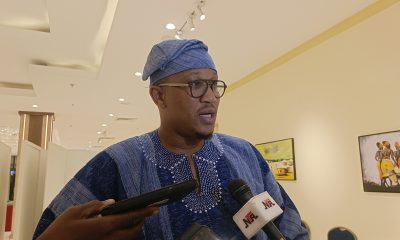
The Director-General of the Voice of Nigeria, Jibrin Baba Ndace, meanwhile, urged Nigerian journalists to devote more attention to Indonesia and help Nigerians better understand the country’s relationship with Nigeria.
Ndace said he had maintained relations with the Indonesian Embassy for about 15 to 20 years and had visited Jakarta, Bandung, Yogyakarta and Bali.
He recalled that he was nominated in 2014 as the only African journalist to cover the inauguration of former Indonesian President Joko Widodo.
“I have done quite a number of research on Indonesia-Nigeria relationship, looked at our unique areas of comparative advantage, even our politics, our economy, and even our political history,” he said.
Ndace said the reception provided an opportunity to reflect on the historical ties between Nigeria and Indonesia as well as emerging areas of cooperation.
He urged journalists, particularly foreign affairs correspondents, to report more extensively on Indonesia’s development experience and the opportunities available for Nigeria through stronger bilateral relations.
“As reporters, as journalists, we must do all to help in shaping positive narrative about Nigeria and Indonesia, and indeed the Global South relationship,” he said.
The event highlighted efforts by both countries to move their relationship beyond conventional diplomatic ties towards stronger trade, investment, technology, education and people-to-people cooperation.