
International
BREAKING: U.S. Department of War’s RQ-4B Global Hawk Spy Drone Enters Nigeria’s Airspace Undetected, Conducts Covert Surveillance on ISWAP and Boko Haram Hideouts in Borno

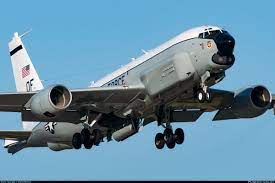
END of the road may finally be approaching for terrorists operating in Africa’s most populated Black nation, as the United States Department of War, led by Secretary Pete Hegseth, has authorised the U.S. Air Force to deploy the RQ-4B Global Hawk spy plane into Nigeria’s airspace. The covert mission occurred on Saturday, November 29, 2025, under the cover of darkness, during which the drone carried out reconnaissance operations on Islamic State of West Africa Province (ISWAP) and Jama’at Ahl al-Sunna li al-Da’wa wa al-Jihad (Boko Haram) hideouts in Borno State, North-East Nigeria.
The highly classified operation was meticulously planned at the United States Africa Command (AFRICOM) Headquarters and supervised directly by Lt. Gen. Dagvin Anderson, newly confirmed by the U.S. Senate as AFRICOM Commander, succeeding General Michael Langley. The spy aircraft began its mission from a discreet location in Accra, Ghana, with no public awareness to prevent any possible information leak.
Within a 24-hour window, the RQ-4B Global Hawk reportedly entered and exited Nigeria’s airspace three separate times undetected. During its mission, it captured images and videos of militants’ huts and lifestyle, recorded all audio movements within the forest, and activated uninterrupted, round-the-clock surveillance.
According to available records, a Nigeria–U.S. security agreement signed in Washington, D.C., permits direct UAV-led airstrikes from an unmanned aircraft based in Ghana under AFRICOM supervision. A separate undisclosed launchpad in Nigeria will also support operations targeted at eliminating terrorist threats.
Investigations by Naija Standard Newspaper Inc., USA, confirmed through reliable sources within the White House and the Department of War that the wider strategy includes deploying undercover agents into bandits’ enclaves and extending surveillance to hot spots and troubled regions across Nigeria.
To strengthen AFRICOM’s operational autonomy, Lt. Gen. Dagvin Anderson’s confirmation marks the beginning of an independent AFRICOM no longer subordinate to U.S. Army Europe and Africa (USAREUR-AF). This restructuring aims to improve America’s responsiveness and collaboration in Africa, especially amid growing geopolitical pressure from China and Russia. Anderson becomes the first Air Force officer to command AFRICOM.

Security analyst and Sahel-focused jihadist expert, Brant Phillip, reinforced these developments. He confirmed that the U.S. has commenced operations within Nigeria as part of a confidential agreement with the Nigerian government to address intensifying terrorism. According to him, the U.S. is already conducting reconnaissance from its Ghana base without any publicly announced approval from Nigeria, suggesting undisclosed bilateral agreements.
Phillip revealed that a U.S. aircraft executed an operation in Borno State after taking off from Accra.
He wrote on X:
“Confirming my earlier reports, a manned U.S. ISR aircraft was conducting reconnaissance over ISWAP territory in southwestern Lake Chad, Borno State, northeast Nigeria. It originally took off from Accra, Ghana and is now on its way back.”
On Thursday, he stated, “The U.S. Department of War is already conducting reconnaissance operations in western Nigeria from their base in Ghana, without (any public) permission announced by the Nigerian government, possible agreements being signed behind closed doors.”
He added that under a confidential defense arrangement, the U.S. will be permitted to conduct UAV airstrikes on terrorist targets in Nigeria. The agreement covers unmanned aircraft operations only—excluding fighter jets or bombers.
The U.S. is expected to support Nigeria by filling intelligence-surveillance-reconnaissance (ISR) gaps with both manned and unmanned aircraft, potentially using Kainji Air Base in Niger State as a launchpad.
On Sunday, Phillip confirmed another operation, stating that the U.S. ISR aircraft had returned:
“The U.S. Air Force ISR aircraft returned for the third day in a row to spy over ISWAP’s ‘Mantiqah Krinwa’ in Borno State on the fringes of Lake Chad. The aircraft is currently circling over the area and took off from Accra, Ghana, as usual.”
Reacting to Phillip’s posts, former presidential aide Bashir Ahmad cautioned him, saying:
“Stop exposing this vital information to ISWAP please.”
Background
Following Nigeria’s classification by former U.S. President Donald Trump as a “Country of Particular Concern” over alleged genocide against Christians, Nigeria rejected the designation and sent a high-level delegation to the U.S.
A statement from the U.S. War Department, released by Sean Parnell, Assistant to the Secretary of War for Public Affairs, outlined the discussions between Secretary Pete Hegseth and Nigeria’s National Security Adviser Mallam Nuhu Ribadu at the Pentagon on November 20.
Both parties discussed strategies for ending violence against Christians in Nigeria and tackling jihadist threats in West Africa. Secretary Hegseth stressed the need for Nigeria to demonstrate commitment in combating anti-Christian violence and reiterated America’s readiness to support Nigeria in deterring and degrading terrorist networks threatening the U.S.
The Nigerian delegation included Minister of State for Foreign Affairs Bianca Ojukwu; Inspector-General of Police Kayode Egbetokun; Attorney-General Lateef Fagbemi; Chief of Defence Staff Lt. Gen. Olufemi Oluyede; Chief of Defence Intelligence Lt. Gen. E.A.P. Undiendeye; and other senior officials.
Before the meeting, Donald Trump had threatened military action in Nigeria to eliminate “Islamic terrorists”—a stance widely criticised by the Nigerian government and across the nation.
Despite efforts to combat insurgency, kidnappings, banditry, and killings remain rampant, leaving Nigerians trapped in widespread insecurity.
AFRICOM’s current headquarters remain in Stuttgart, Germany, but plans are underway to relocate its independent command to Africa, with Morocco emerging as the leading candidate due to its strategic position, stable political climate, advanced military infrastructure, and strong security ties with the U.S. Other locations previously considered include Ethiopia, Botswana, Liberia, and even sites within the United States.
The planned reorganisation reflects U.S. efforts to counter increasing Russian and Chinese influence on the continent and strengthen its military posture in Africa.
(Source: Naija Standard Newspaper USA)