
Crime
Mambilla Trial Twist: EFCC Witness Fails to Prove Agunloye Defied Presidential Order

By our Correspondent
The high-profile trial of former Minister of Power, Dr. Olu Agunloye, took a dramatic turn on Thursday after the prosecution’s star witness failed to establish that the former minister disobeyed a presidential directive in the controversial Mambilla Power Project contract.
The witness, Deputy Commissioner of Police Umar Babangida, a ten-year veteran of the Economic and Financial Crimes Commission (EFCC), returned to the Federal Capital Territory High Court, Abuja, after recovering from an illness that had delayed proceedings last month.
Under cross-examination by the defence team led by Adeola Adedipe (SAN), Babangida—identified in court as Prosecution Witness 3 (PW3)—admitted that there was no record showing that any directive was issued by the President to Agunloye concerning the Mambilla Hydroelectric Power Project.
The revelation came during a tense exchange over the minutes of the Federal Executive Council (FEC) meeting of May 21, 2003, which the EFCC had relied upon to allege that Agunloye disobeyed a presidential order.
Defence: “Tell the court how the directive of the President to the Defendant was given — in writing, by phone, or verbally?”
PW3: “It was in the Minutes of the FEC meeting of May 21, 2003.”
Defence: “Show the court where in the Minutes it is written that the President gave a directive to the Defendant.”
PW3: “It is not there.”
Defence: “Therefore, if no directive was given, there cannot be a case of disobedience.”
PW3: “Correct.”

A hush reportedly fell over the courtroom as the witness admitted that the alleged presidential directive — a key pillar of the EFCC’s case — did not exist in any documented form.
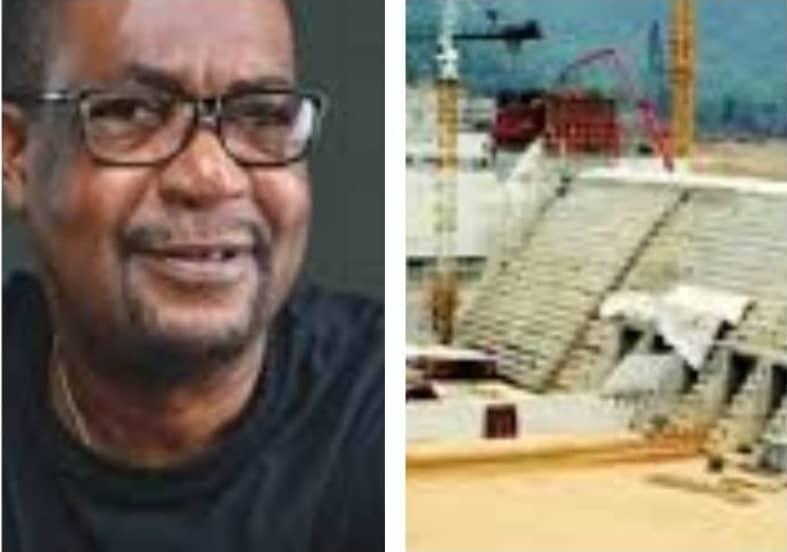
Agunloye, who served as Minister of Power and Steel between 2002 and 2003, is standing trial for allegedly awarding the multi-billion-dollar Mambilla Hydroelectric Power Project to Sunrise Power and Transmission Company Limited on a Build, Operate and Transfer (BOT) basis without due approval.
The defence further punctured another EFCC claim — that Agunloye was a “close associate” of Mr. Leno Adesanya, owner of Sunrise Power.
Babangida initially repeated the claim but was confronted with Exhibit E3, his own investigative report, which contained Agunloye’s statement asserting that he first met Adesanya in November 2002 and only twice thereafter — in 2014 and 2018, long after leaving office.
When directed by the court to read the relevant sections aloud, the witness confirmed the discrepancy, further weakening the prosecution’s position.
Legal observers described Thursday’s proceedings as a significant setback for the EFCC, as its lead witness appeared to undercut two of its central allegations.
The Mambilla Hydroelectric Power Project, conceived in the early 1980s as a 3,050-megawatt facility, was envisioned to revolutionize Nigeria’s energy sector.
Decades later, the project remains mired in controversy — locked in arbitration and contractual disputes between the Federal Government and Sunrise Power — a legal quagmire that has cost Nigeria billions in potential liabilities.
The case — Federal Republic of Nigeria vs. Olu Agunloye (CR/617/2023) — was adjourned to November 3, 10, and 12, and December 1, 2025, for continuation of cross-examination.