General News
Monarch Honours UN Women Chief, Rallies Traditional Institutions Against Harmful Practices

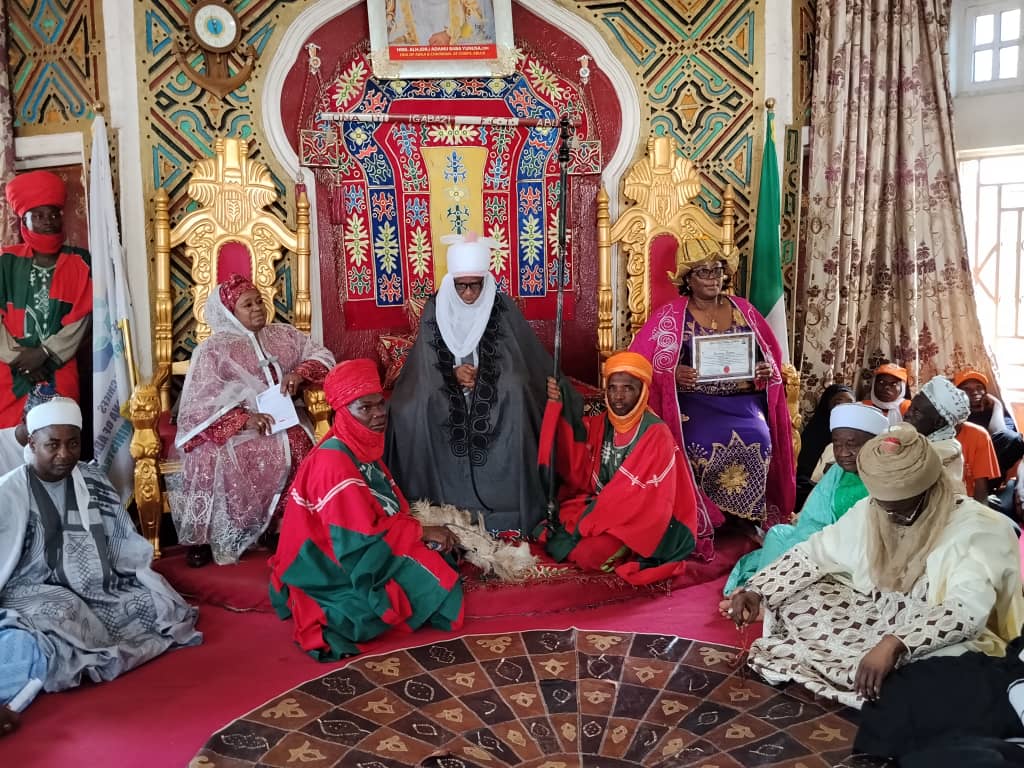
The campaign to eliminate harmful traditional practices and gender-based violence in the Federal Capital Territory gained fresh momentum as Beatrice Eyong, Country Representative of UN Women in Nigeria and ECOWAS, paid an advocacy visit to the Ona of Abaji, Adamu Baba Yunusa.
The royal father, who also chairs the FCT Traditional Council, reaffirmed the commitment of traditional institutions to ending sexual and gender-based violence (SGBV) and all forms of discrimination against women and girls across communities in the FCT.
Speaking during the visit, the monarch praised Eyong for her dedication to advancing the welfare of women and girls, especially at the grassroots.
He noted that despite her global exposure and professional accomplishments, she has remained deeply connected to vulnerable communities.
In recognition of her contributions, the Ona of Abaji conferred on her the traditional title of Yar Amana FCT, followed by a colourful turbaning ceremony.
Accepting the honour, Eyong expressed gratitude and reaffirmed her commitment to strengthening advocacy for gender equality.

“The reward for hard work is to do more. This recognition from the traditional institution is deeply meaningful. Our struggle for women’s inclusion begins at the grassroots, where harmful practices are most prevalent. We will not relent until SGBV and all forms of gender discrimination are eliminated,” she said.
Also speaking, the Mandate Secretary of the FCT Women Affairs Secretariat, Adedayo Benjamin Laniyi, described the recognition as well-deserved, noting that it reflects the growing impact of collaboration between traditional institutions and development partners.
She added that honouring a woman, a Christian, and a non-indigene in Abaji underscores the community’s rising profile as a model for peaceful coexistence and inclusive development.
In her remarks, Hauwa Ibrahim Adamu, President of the Association of Wives of FCT Traditional Rulers, said the honour was unsurprising, citing the visible impact of partnerships between traditional institutions and UN Women across the 17 chiefdoms in the FCT.
She expressed optimism that the recognition would deepen collaboration and attract broader support in the fight against harmful practices and gender discrimination.
The event attracted a wide range of stakeholders, including representatives from the Cameroon Embassy, UN Women staff, women-led organisations, religious and market groups, adolescent representatives, the National Council of Women Societies, and persons living with disabilities.
The highlight of the ceremony was the decoration of Eyong as Yar Amana FCT, marked by a symbolic horse-riding procession welcoming her into the traditional institution.