General News
Musawa Visits Millennium Tower, Pledges Completion as National Cultural Landmark


By Iyojo Ameh
The Minister of Art, Culture, Tourism and Creative Economy, Hon. Hannatu Musa Musawa, has reaffirmed the Federal Government’s commitment to completing the long-abandoned Millennium Tower project in Abuja, describing it as a symbol of Nigeria’s cultural pride and tourism potential.
Musawa made this known during a working visit to the Nigerian Cultural Centre and Millennium Tower on Thursday, where she was accompanied by senior officials and directors from her ministry. The inspection tour was aimed at exploring viable strategies to complete the edifice and ensure its sustainability as a hub for arts, culture, and creative expression.
The Millennium Tower, conceived in 2005 under the Abuja Central Area Master Plan, was designed to stand at 170 metres, making it the tallest building in Nigeria upon completion. The ambitious project, which also houses the Nigerian Cultural Centre, was envisioned as a world-class facility with an observation deck, cultural exhibition halls, galleries, restaurants, and recreational spaces intended to position Abuja as a cultural and tourism destination.

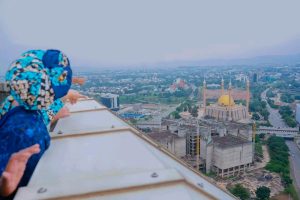
However, nearly two decades later, the project remains incomplete due to funding constraints and shifting government priorities. Experts have estimated that billions of naira would still be required to bring the tower to operational status.
Speaking during the visit, Musawa described the structure as “too important to be left as a monument of abandonment,” stressing that its completion would unlock vast opportunities for the creative economy, generate jobs, and boost Nigeria’s global image.
“The Millennium Tower is more than just concrete and steel—it is a beacon of our cultural identity and a symbol of what Nigeria can achieve,” the minister said. “We are determined to work with stakeholders, private investors, and development partners to bring this vision to life.”
She further noted that the ministry would conduct a feasibility review to explore public-private partnerships (PPP) as a sustainable financing model for the project.
The minister’s visit reignited conversations around Abuja’s urban development and Nigeria’s readiness to invest in cultural infrastructure. Stakeholders present at the site emphasized that completing the tower would not only enhance the city’s skyline but also expand Nigeria’s tourism revenue base.
When completed, the Millennium Tower is expected to rival iconic cultural monuments across Africa, such as South Africa’s Apartheid Museum and Ghana’s Kwame Nkrumah Mausoleum, by serving as a centerpiece for Nigeria’s cultural diplomacy and creative economy.