
Crime
Ningi Cautions Against Normalising Foreign Military Strikes on Nigerian Soil

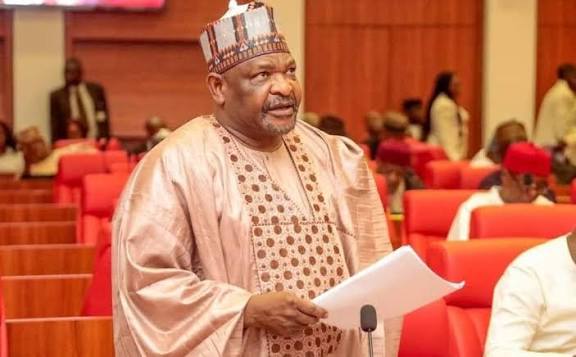
Senator Abdul Ningi, who represents Bauchi Central, has warned that Nigeria stands the risk of losing its sovereignty if foreign military operations are allowed to take place within the country without the knowledge and approval of the National Assembly.
Raising the matter under Order 9 of the Senate Standing Orders, the senator said reports of a United States military strike against bandits on Nigerian territory go beyond counterterrorism efforts and strike at the core of Nigeria’s sovereignty. He described the development as one that touches “the very soul of the Nigerian state.”
Speaking to journalists after plenary, Ningi stressed that the most critical issue was the violation of Nigeria’s territorial integrity. According to him, the nation’s airspace was breached, and such an action should never be normalised or justified under any circumstance.
The lawmaker made it clear that his position was not borne out of sympathy for terrorists or criminal elements. He stated that he detests banditry and wants criminals decisively dealt with wherever they are found, but insisted that illegality cannot be justified by another illegality.
He argued that neither the President nor any arm of government has constitutional powers to authorise foreign nations to carry out military strikes in Nigeria without legislative input. While acknowledging that the Constitution mandates the President to protect Nigeria’s territorial integrity, Ningi maintained that even the President cannot lawfully direct a foreign power to strike Nigeria from outside its borders.
Describing Nigeria as a fully sovereign state, the senator said the country is not a colony or dependent of the United States or any other nation, but an independent nation with clearly defined boundaries.
Ningi also expressed concern that the National Assembly was not briefed before or after the alleged operation, despite being a co-equal arm of government. He noted that democracy thrives on co-governance, shared responsibility and accountability, warning that excluding the legislature from such grave security decisions signals a serious breakdown in governance.
He cautioned that tolerating such actions could expose Nigeria to similar violations by other global powers in the future. According to him, if Nigeria takes a position that conflicts with the interests of powerful nations, it could open the door to further infringements on its sovereignty.
Referring to international law, Ningi said the reported strike raises serious questions under the United Nations Charter, which prohibits any country from violating the airspace of another sovereign nation without due process.
Reacting to comments by the Senate President commending U.S.–Nigeria military cooperation, the senator clarified that he supports international collaboration, but only when it is conducted transparently and in line with constitutional provisions. He stressed that such cooperation must take place within Nigeria and involve Nigerian security forces fully.
He warned that lack of transparency undermines public trust and sends a wrong signal to citizens by suggesting that foreign intervention is normal or that Nigeria’s armed forces are incapable.
Rejecting claims that his stance weakens the fight against insecurity, Ningi shared a personal experience, revealing that he is a victim of Boko Haram violence. He recounted the killing of his maternal uncle, a retired Deputy Inspector-General of Police, on his farm in Kano, stressing that this personal loss underscores his firm opposition to terrorism and banditry.
The senator added that his legislative history shows consistent advocacy against violence across several states, including Plateau, Kaduna and Makurdi.
On the way forward, Ningi urged the Senate to reassert its constitutional role, insisting that the Senate President must be adequately briefed on all security arrangements. Drawing from his experience as House Leader between 2003 and 2007, he recalled that the National Security Adviser used to brief the Speaker regularly, a practice he said contributed to better security coordination at the time.
He emphasized that since the legislature approves security funding and is accountable to citizens who bear the brunt of insecurity, it cannot be sidelined in critical decisions.
While acknowledging the immense pressure on the President, Ningi maintained that leadership must remain firm and operate strictly within constitutional limits. He concluded by saying that Nigeria must not allow external forces to govern the country, stressing that the President must fully exercise his mandate in the best interest of the nation.