
General News
One SARC, No Govt Shelter: Benue Tackles SGBV Gaps

From Dooshima Terkura, Makurdi
Benue State is facing significant gaps in its response to Sexual and Gender-Based Violence (SGBV), with only one Sexual Assault Referral Centre (SARC) in the state and no government-owned shelter for survivors.
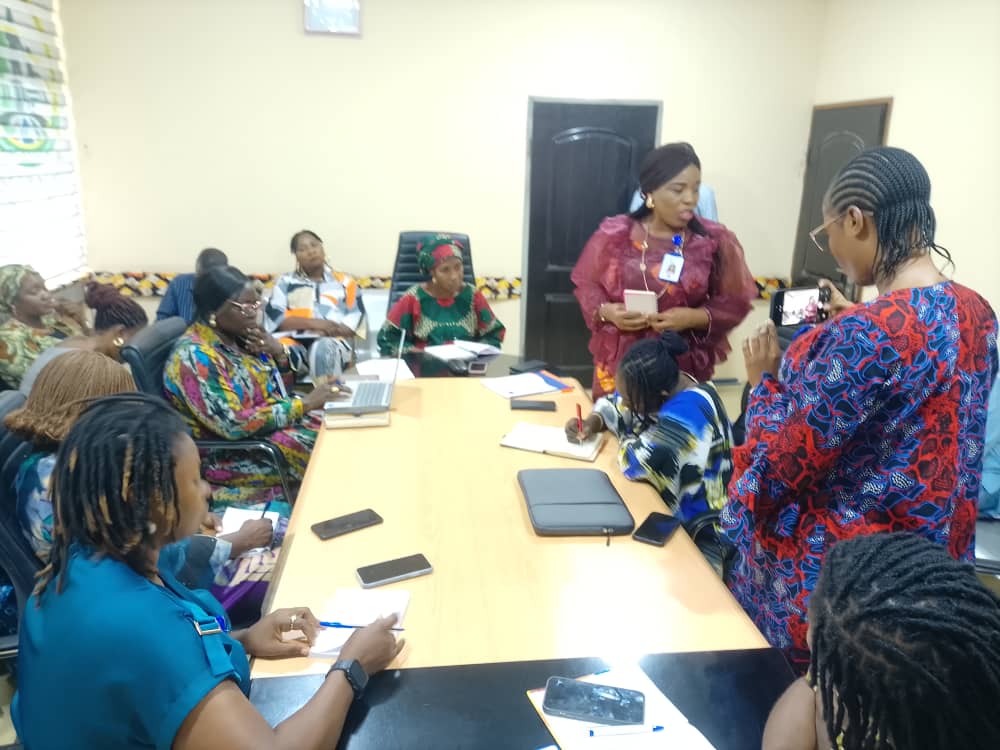
The disclosure was made on Monday in Makurdi when the International Institute for Democracy and Electoral Assistance (International IDEA) paid a courtesy visit to the Commissioner for Women Affairs and Social Welfare, Mrs Theresa Ikwue.

Juliet Olumuyiwa-Rufai, GBV Cross-Sector Service Provision and Protection Specialist at International IDEA and Lead, Component Two of the European Union-funded Support to End Sexual and Gender-Based Violence (ESGBV) Programme, called for stronger collaboration between the organisation and the state government to address the identified gaps.
Olumuyiwa-Rufai said the ESGBV programme was designed to prevent SGBV, strengthen institutional responses and improve access to essential services for survivors.
She noted that SGBV affected people across different age and gender groups, adding that the programme had encountered cases involving children, elderly women and male survivors.
According to her, the programme has three components focused on strengthening legislation, improving survivor services and promoting positive social norms to prevent SGBV.

She explained that Component Two, which she leads, focuses on healthcare, psychosocial support, justice, referral pathways, shelters and protection services for survivors.
Olumuyiwa-Rufai said although Nigeria had about 52 SARCs, the priority should be to ensure that existing centres were functional, adequately equipped and accessible to survivors.
She assured that International IDEA would work with the Benue Government to strengthen leadership and coordination of the state’s SGBV response without taking ownership of government institutions.
She added that the programme would support improved GBV data collection, referral pathways, shelters, psychosocial services and community-based interventions, particularly in hard-to-reach communities and Internally Displaced Persons (IDPs) camps.
The specialist also advocated GBV-responsive budgeting and capacity building for service providers, including measures to address vicarious trauma and secondary traumatisation among professionals working with survivors.
She said the programme, expected to run for about four years, would provide an opportunity for sustained collaboration and institutionalisation of SGBV interventions in the state.
The Benue State Coordinator of the ESGBV Programme, Mrs Gloria Bai, identified inadequate shelters and non-functional survivor service facilities as major gaps in the state’s SGBV response.
Bai called for the establishment of a dedicated SGBV unit within the Ministry of Women Affairs, saying the facility could be supported and equipped under Component Two of the programme.
She also called for an assessment of the existing SARC to determine whether it had adequate doctors, counsellors, social welfare personnel, medical services and functional forensic equipment.
Bai stressed the importance of proper collection and preservation of forensic evidence, particularly in rape cases, saying this could strengthen survivors’ pursuit of justice.
The Permanent Secretary of the Ministry of Women Affairs and Social Welfare, Mrs Martha Edor, confirmed that Benue currently had only one SARC, describing it as inadequate to cater for survivors across the state.
Edor appealed to International IDEA and other development partners to support the establishment of additional SARCs and shelters to strengthen the capacity of service providers.
She said government could not tackle SGBV alone and appreciated development partners for their continued support and collaboration.
The Permanent Secretary further disclosed that Benue had no government-owned shelter for SGBV survivors, explaining that the existing shelters were operated by Civil Society Organisations (CSOs).
She described the absence of a government-owned shelter as a major gap requiring urgent intervention and expressed the ministry’s readiness to partner with International IDEA to ensure that SGBV survivors in Benue receive the necessary protection and support.