
International
Russian Court Seizes 123 Jehovah’s Witnesses Properties in Major Crackdown on Religious Group

By Iyojo Ameh
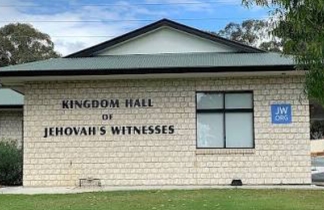
A Russian court has ordered the confiscation of 123 real estate assets belonging to Jehovah’s Witnesses, transferring the properties to state ownership in what is regarded as one of the largest seizures of the religious group’s assets since it was banned in Russia nearly a decade ago.
The ruling represents the latest escalation in the Kremlin’s sustained crackdown on Jehovah’s Witnesses, which Russian authorities designated an extremist organization in 2017—a classification the denomination strongly rejects and one that has drawn widespread condemnation from international human rights organizations.

According to Moscow’s court service, the confiscated assets comprise 63 residential and commercial buildings covering more than 11,000 square metres, alongside 60 parcels of land spanning approximately 5.6 hectares in different parts of the country.
The properties had been registered under the Swedish branch of Jehovah’s Witnesses before being transferred to the Russian state.
The court’s decision is rooted in the 2017 ruling of Russia’s Supreme Court, which outlawed all activities of Jehovah’s Witnesses nationwide under the country’s anti-extremism legislation.

Since the ban, Russian authorities have shut down Kingdom Halls, frozen bank accounts, confiscated religious literature and prosecuted hundreds of members for activities as simple as attending worship services or organizing Bible study meetings. Numerous adherents have also received prison sentences.
The crackdown has continued despite growing international criticism.
In 2022, the European Court of Human Rights ruled that Russia’s prohibition of Jehovah’s Witnesses violated the rights to freedom of religion and association guaranteed under the European Convention on Human Rights.
The court directed Russia to halt criminal prosecutions, release imprisoned members and compensate victims.
However, Russian authorities have dismissed the judgment and continued enforcing the ban.
Human rights advocates describe Jehovah’s Witnesses as a peaceful Christian denomination known for its refusal to participate in military service, political activities or state ceremonies—beliefs that have frequently brought the group into conflict with governments.
Russian officials, however, maintain that the organization promotes religious exclusivity and therefore falls within the scope of the country’s anti-extremism laws.
Court officials said the confiscated portfolio represents one of the most significant property transfers involving Jehovah’s Witnesses since the organization was outlawed.
The properties have now officially become state assets, although authorities have not disclosed how they intend to use the buildings and land.
Jehovah’s Witnesses have consistently denied allegations of extremism, insisting that their faith is centred on peaceful Bible-based worship and non-violence. The organization argues that its members have endured years of raids, arrests, imprisonment and property seizures solely because of their religious beliefs.
The latest confiscation is expected to heighten international concerns over religious freedom in Russia.
Rights organizations have repeatedly warned that Russia’s anti-extremism legislation is increasingly being used to target religious minorities, civil society groups and dissenting voices, raising broader concerns about restrictions on freedom of religion and expression in the country.