International
AI-Powered Gadgets Drive China’s Holiday Shopping Boom

By Iyojo Ameh
China’s artificial intelligence (AI) industry is gaining ground in the consumer market, as shoppers flocked to stores during the week-long National Day holiday to purchase smart devices, including AI companion robots, intelligent glasses and 3D printers.
The growing demand for AI-powered products reflects a shift from curiosity about emerging technology to wider consumer adoption, with retailers reporting increased store traffic and rising sales of smart home appliances.

At Z·Pilot, an AI experience store in Shanghai, an AI-powered pet robot attracted considerable attention from shoppers during the holiday.
The furry robot responds to voice commands and physical touch, while its long-term memory enables it to gradually adapt its personality to its owner’s preferences.
A store employee said companion-style AI products were performing well, as consumers increasingly sought interactive devices that provide companionship without the responsibilities associated with keeping traditional pets.

AI glasses also drew interest, particularly among travellers seeking convenient access to real-time language translation, navigation and hands-free photography.
The devices also offer video recording and teleprompting functions, allowing users to perform several tasks without constantly reaching for their mobile phones.
At a JD.com shopping mall in Shanghai’s Qibao area, 3D printers attracted families who experimented with producing model boats and cars.
Some parents said they intended to purchase the devices to help their children apply lessons learnt in school through practical design and printing activities.
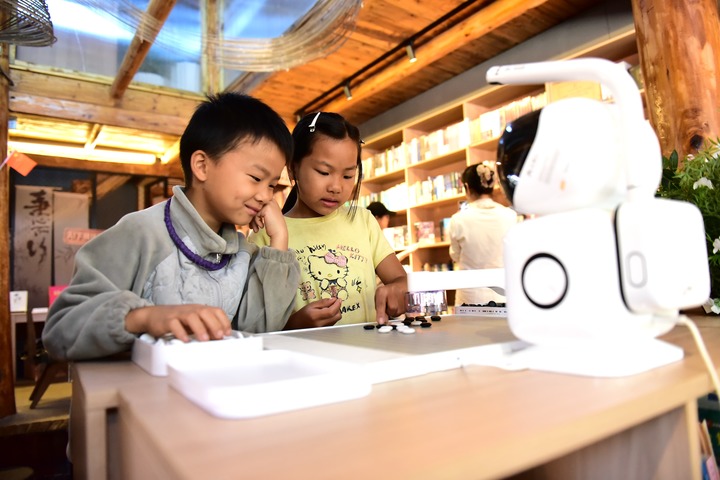
Qi, a parent who visited a robotics store in Shanghai with her child, said early exposure to the technology would help children understand its potential impact on their future.
She encouraged children to explore the technology practically and develop an understanding of how AI could influence their lives, education and careers.
The trend extended beyond Shanghai, with technology retailers in other Chinese cities reporting strong interest in AI products during the holiday.
In Hangzhou, Zhejiang Province, the Wensan technology mall attracted residents and tourists with more than 700 smart products, including AI companion robots, smart glasses, smart rings and exoskeletons.
Meanwhile, a robotics and AI experience brand operated by Shoucheng Holdings in Beijing recorded significant customer interest across its eight stores, which offered more than 200 robotics and AI hardware products.
A representative of the brand said customer feedback indicated particularly strong demand for AI companion products, entertainment-focused smart devices and interactive robots.
RETAILERS REPORT RISING SALES
Data released by Chinese retailer Suning.com showed that customer traffic at its flagship stores increased by 50 per cent year-on-year between October 1 and 7.
Sales of AI-equipped household appliances also rose by more than 40 per cent, while smartwatches, AI glasses and action cameras recorded solid growth.
The figures highlight the growing influence of AI on China’s consumer market, supported by the increasing popularity of domestically developed AI models and applications.
Tools such as DeepSeek, Kimi and Doubao have become part of everyday life for millions of Chinese users, expanding public familiarity with AI-powered services.
The country’s AI industry has also continued to expand, with the number of AI enterprises exceeding 6,000 in 2025, according to the report.
China had more than 140 humanoid robot developers in 2025, while shipments of humanoid robots reached 14,400 units, representing 84.7 per cent of the global market, an industry research report showed.
GOVERNMENT POLICIES SUPPORT AI CONSUMPTION
Government initiatives are also contributing to the integration of AI into consumer products and services.
In June, eight Chinese government departments, including the Ministry of Commerce, issued guidelines aimed at promoting AI-enabled consumption.
The guidelines called for the development of more AI-powered products and the expansion of services driven by artificial intelligence.
A subsequent action plan on smart home consumption further strengthened the initiative by allowing local authorities to determine eligible subsidy categories and standards under China’s 2026 trade-in policy.
The policy also provides for support for purchases involving integrated smart home systems.
Fan Chunyan, vice president of Suning.com, said consumer adoption of AI products was moving beyond the novelty stage towards broader market acceptance.
She predicted continued growth in demand for smart devices, immersive experiences and related services.
The holiday shopping trend underscores China’s efforts to translate advances in artificial intelligence into everyday consumer applications, as retailers, technology developers and policymakers seek to expand the market for smart products.