Features
China’s New Media Diplomacy: What Nigerian Journalists Are Seeing Beyond The Headlines

By Caroline Ameh
For a group of Nigerian journalists who travelled to China this year, the experience offered something that cannot easily be obtained from press releases, diplomatic statements or television reports: an opportunity to see the country for themselves.
From Beijing’s rapidly expanding infrastructure to its universities, technology centres, transport systems and industrial projects, the journalists were exposed to a country that has become increasingly important to Nigeria’s economic and diplomatic calculations.

But the significance of the exchanges extends beyond the journalists’ travel experience.
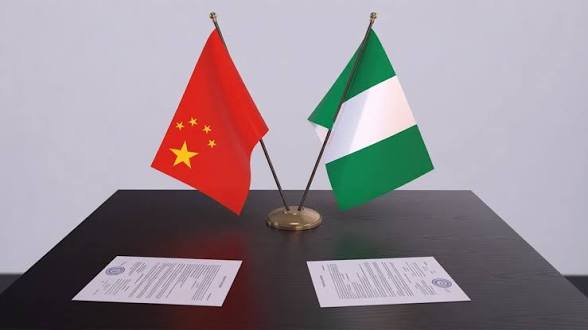
China is increasingly using media engagement as a bridge between its society and the rest of the world, particularly countries in the Global South. And Nigeria, Africa’s most populous country and one of China’s major partners on the continent, occupies an important place in that strategy.

In May 2026, two separate Chinese-backed programmes brought journalists from developing countries to Beijing.

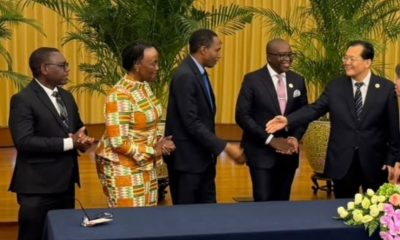
One was the China International Press Communication Centre (CIPCC) fellowship, which brought together 98 journalists from 90 countries for a three-month programme combining classroom sessions, newsroom attachments, field visits and reporting tours.
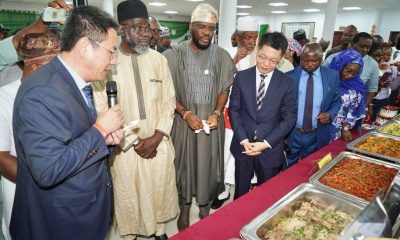
The other was a China International Communications Group (CICG) media seminar that specifically brought together more than 20 Nigerian journalists and media aides to examine China-Nigeria relations, development and international communication.
Taken together, the programmes point to a changing form of diplomacy in which journalists are not simply reporting international relations. They are increasingly being brought into the relationships themselves.
Seeing China First-Hand
One of the strongest arguments behind journalist exchanges is simple: direct experience can complicate assumptions.
A country as large and diverse as China cannot easily be understood through a handful of news reports. Its economic model, political system, technological development and social transformation are too complex to be reduced to either praise or criticism.

That is why exposure matters.
During the CIPCC programme, participating journalists travelled beyond Beijing to different parts of the country and were introduced to China’s governance, economic reforms, science and technology, environmental policies, culture and foreign relations.
The objective was not simply to provide lectures.
Participants were given opportunities to observe projects and institutions directly and engage with Chinese officials, academics, media organisations and other professionals.
For journalists from countries such as Nigeria, where development challenges often dominate public discourse, such exposure can provide material for comparative reporting.
What works in China?
What does not?
Which aspects of China’s experience can be adapted elsewhere?
And which are rooted so deeply in China’s political, cultural and economic circumstances that they cannot simply be replicated?
Those are more useful journalistic questions than whether China should simply be praised or criticised.
Why Nigeria Matters To China
Nigeria’s importance to China goes beyond population.
The two countries have developed extensive economic relations involving infrastructure, trade, education, energy, transportation and technology.
Major projects such as the Lagos Light Rail, Abuja Rail Mass Transit, Lekki Deep Sea Port and Zungeru Hydropower Station have become visible symbols of the relationship.
China’s interest in Nigeria therefore creates a need for greater mutual understanding.
Chinese officials increasingly want Nigerians to understand what their country is doing in Nigeria.
Nigerians, meanwhile, need accurate information about Chinese companies, investments, financing arrangements and the broader implications of the relationship.
Journalists sit directly in the middle of that conversation.
They can explain the projects, investigate them, question them and, importantly, give citizens information with which to judge their value.
That makes journalist-to-journalist engagement strategically important.
From Infrastructure To Information
For years, China-Nigeria relations were largely discussed in terms of roads, railways, ports, loans and trade.
That conversation is changing.
Information is becoming another important component of the relationship.
At the CICG programme in Beijing, Chinese officials emphasised the role of journalism in building mutual understanding between the two countries.
Li Hengtian, Deputy Director of CICG’s Education and Training Centre, invoked Nigerian writer Chimamanda Ngozi Adichie’s warning about “the danger of a single story”, arguing that China and Nigeria need more diverse narratives about one another.
The argument deserves attention.
Nigeria is often presented internationally through stories of insecurity, corruption, poverty and political instability.
China, too, is frequently portrayed through sharply contrasting narratives: either as an extraordinary development success or as an increasingly assertive global power.
Neither approach necessarily captures the full picture.
For journalists, the challenge is to move beyond simplified narratives.
What Nigerian Journalists Can Gain
For participating journalists, such programmes offer practical benefits.
They provide access to officials who might otherwise be difficult to reach, opportunities to visit institutions and infrastructure projects, exposure to new technologies and professional connections with journalists from other countries.
They also offer a chance to compare experiences.
A Nigerian journalist examining China’s high-speed rail system, for example, can return home with questions about transport planning, financing, technology transfer and infrastructure maintenance.
A journalist visiting a Chinese technology company can examine how innovation is being integrated into manufacturing and public services.
A visit to a university can generate stories about scholarships, research partnerships and the growing movement of Nigerian students to China.
The value therefore does not necessarily lie in reproducing China’s story.
It can lie in asking what Nigeria can learn from it.
The Question Of Influence
Yet there is another side that cannot be ignored.
Government-sponsored journalist exchanges are also instruments of public diplomacy.
China is not unique in this respect.
Western governments, international organisations and universities have for decades sponsored journalism fellowships, exchanges and training programmes.
The difference is that China’s media diplomacy is expanding at a time when Beijing is playing a much larger role in global affairs.
Its engagement with journalists therefore deserves scrutiny.
Exposure can create understanding, but it can also create favourable perceptions.
The responsibility of journalists is to recognise that distinction.
A journalist who visits China should neither become an automatic advocate for Beijing nor reject everything encountered simply because the programme was government-supported.
The professional response is independence.
Verify claims.
Ask difficult questions.
Seek alternative perspectives.
Talk to ordinary citizens as well as officials.
Examine both successes and shortcomings.
And disclose relevant conflicts or programme sponsorship when appropriate.
The Journalist As A Bridge
This may ultimately be the most important dimension of China’s engagement with journalists.
In an increasingly polarised world, journalists can serve as bridges between societies that often understand one another through stereotypes.
Nigeria and China have extensive economic relations, but economic partnerships cannot thrive indefinitely without public understanding.
Nigerians need to understand China’s interests.
Chinese citizens need to understand Nigeria’s realities.
Businesses need reliable information.
Students need opportunities to learn from one another.
Policymakers need informed public debate.
Journalists can help provide that bridge.
But a bridge does not belong to either side.
Its value lies in allowing traffic to move in both directions.
A New Generation Of Media Diplomacy
The traditional tools of diplomacy remain important: embassies, trade agreements, state visits and bilateral negotiations.
But international influence increasingly operates through information.
Countries now compete for attention, credibility and public trust.
China appears to understand this shift.
Its engagement with journalists through CIPCC, CICG and other programmes demonstrates an effort to establish relationships that go beyond official diplomatic channels.
The approach is particularly significant in the Global South, where countries such as Nigeria are seeking development partnerships while also attempting to maintain strategic autonomy in a changing international system.
For Nigeria, the answer should not be to choose between Chinese and Western narratives.
It should be to develop stronger Nigerian narratives based on evidence, professional journalism and independent reporting.
That means Nigerian journalists should be willing to learn from China, question China, report on China and compare China’s experience with Nigeria’s own realities.
The objective should not be to decide in advance whether China is a friend or a threat.
It should be to understand China well enough to report its influence accurately.
Beyond The Exchange
China’s media engagement with Nigerian journalists is unlikely to end with a flight home.
The relationships established through these programmes can lead to further exchanges, collaborative reporting, academic partnerships and professional networks.
That is precisely why they matter.
China is building relationships not only with governments and businesses, but also with the people who explain international affairs to the public.
For Nigerian journalists, the opportunity comes with an equally important responsibility.
They must look beyond the carefully organised tours and official presentations.
They must ask what lies behind the projects, who benefits from them, how they are financed, what challenges accompany them and whether lessons from China can realistically work in Nigeria.
That is where journalism begins.
China may open the door.
But Nigerian journalists must decide what they see when they walk through it.
And, ultimately, their responsibility is not to tell China’s story or anyone else’s story for them.
It is to tell the story as accurately as they can.