
Judiciary
SDP Says Supreme Court Judgment Ends Gabam Dispute

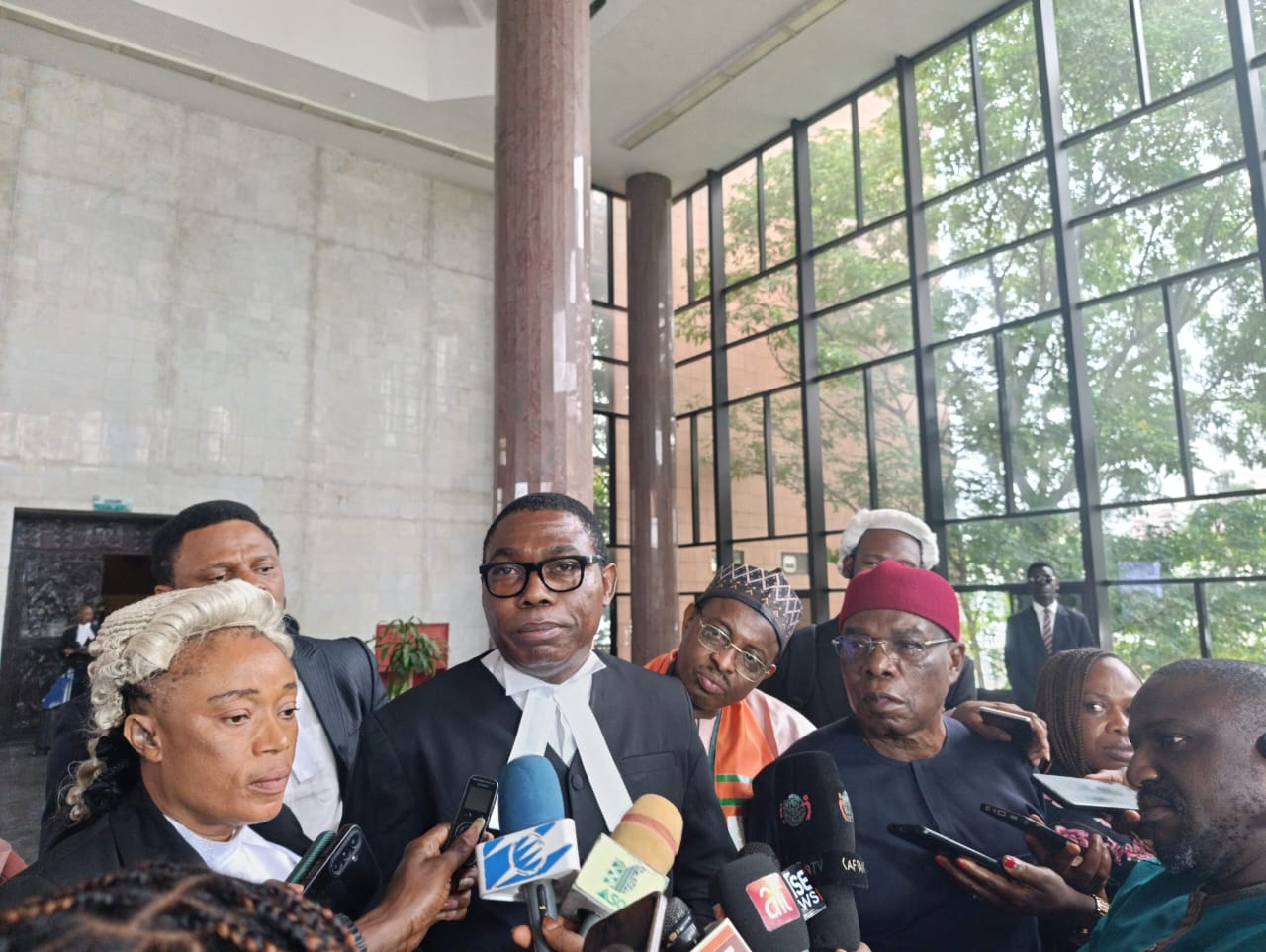
The Supreme Court has dismissed an appeal arising from the prolonged legal dispute over the leadership of the Social Democratic Party, SDP, bringing the litigation concerning expelled former National Chairman, Shehu Gabam, to an end.
Counsel to the SDP, Prince Adewole Adebayo, stated this while speaking with journalists after judgment at the Supreme Court in Abuja.
Adebayo who is also the party presidential candidate said the case followed a Federal High Court judgment directing the Independent National Electoral Commission (INEC) to recognise Gabam, a decision which the SDP challenged at the Court of Appeal.

According to him, the Court of Appeal subsequently set aside the Federal High Court judgment, prompting the plaintiff in the original case to appeal the decision at the Supreme Court.

He said the apex court, however, determined that there was no longer a live issue before it and consequently dismissed the appeal.

Adebayo said the decision had effectively brought to a close the litigation relating to Gabam and the SDP leadership dispute.

He explained that Gabam had previously been removed from the party and that the original case was instituted by another party member who sought recognition of Gabam’s position.
The counsel said the SDP challenged the Federal High Court decision because it considered the ruling inconsistent with the party’s position and subsequently secured the setting aside of the judgment at the Court of Appeal.
He added that the subsequent appeal to the Supreme Court was dismissed after the court found that there was no live issue requiring further determination.
Meanwhile, Adebayo said two other cases involving the SDP and INEC remained before the Supreme Court, concerning the electoral commission’s timetable for political parties.
He said the cases challenge INEC’s authority to shorten statutory periods available to political parties to nominate and substitute candidates ahead of elections.
A Federal High Court had earlier held that INEC has the constitutional authority to issue election timetables but must exercise that power within the timelines prescribed by the Electoral Act 2026.
The court specifically ruled that INEC could not abridge the statutory 120-day period for submission of candidates’ names or the 90-day period for candidate substitution.
Adebayo said the SDP instituted the cases not because it was unable to comply with INEC’s timetable, but to seek judicial clarification on the commission’s powers and ensure compliance with the law.
He argued that adherence to statutory timelines would help create a level playing field for political parties and reduce the scope for arbitrary restrictions in the electoral process.
The SDP counsel further said the party viewed its litigation as part of a broader effort to ensure that INEC operates within the powers conferred on it by law.
He said the party would await the Supreme Court’s decisions on the remaining cases while continuing to pursue what it described as the protection of the democratic process.
Reacting to the judgment, SDP National Chairman, Professor Sadiq Umar Gombe, described the outcome as a victory for the party and democracy.
Gombe said the dispute had passed through several stages of litigation, including proceedings at the Court of Appeal, before returning to the Supreme Court.
He said the SDP’s appearance before the courts was not solely about protecting the party’s interests but also about what he described as defending democratic principles and the rule of law.