
General News
South South Initiative Vows to Protect Oil Pipelines, Warns Against Misinformation on Niger Delta Security

By Iyojo Ameh
The South South Initiative has declared its resolve to protect Nigeria’s oil infrastructure, particularly pipelines in the Niger Delta, warning that national assets will not be allowed to fall victim to vandalism or criminal activities.
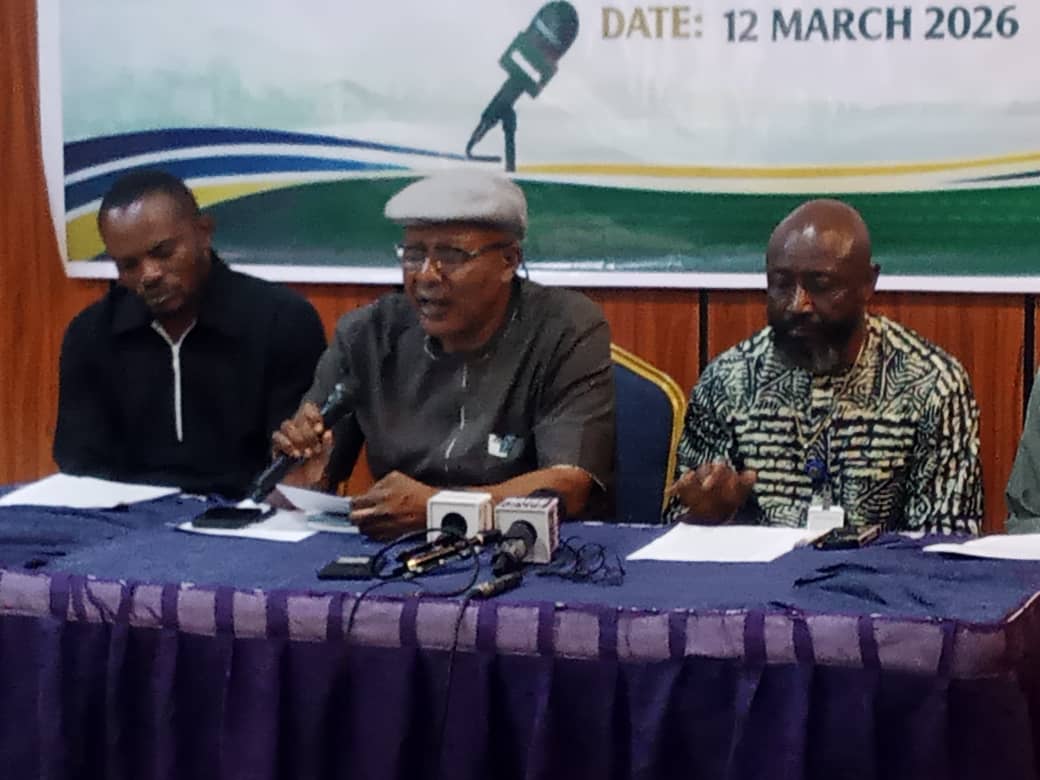
Speaking during a press briefing in Abuja on Thursday, the President of the South South Initiative, Comrade Emmanuel Iriogbe, said the group convened the meeting to address what it described as “disturbing misinformation” surrounding the protection of oil pipelines and the security framework that has helped restore stability in the Niger Delta.

According to Iriogbe, the briefing also comes amid ongoing scrutiny by the National Assembly over oil pipeline protection contracts in the region.
He described Nigeria’s crude oil infrastructure as the lifeline of the country’s economy, noting that for decades the nation lost enormous resources to pipeline vandalism, illegal bunkering, crude oil theft and organized criminal networks operating across the Niger Delta.
“Trillions of dollars that should have been used to fund development, education, healthcare and infrastructure were lost due to sabotage and systemic corruption,” he said.

Iriogbe explained that previous administrations struggled to tackle the menace using conventional approaches that relied solely on formal security agencies, which he said proved insufficient to curb the widespread destruction of pipelines.
However, he said a major shift occurred when the Federal Government adopted a community-driven security strategy that involved indigenous pipeline surveillance companies with strong knowledge of the terrain and local communities.
He noted that the policy began during the administration of former President Goodluck Jonathan and was sustained by subsequent governments.
Among the companies playing key roles in the surveillance system, he identified Tantita Security Services and Maton Engineering Services, alongside other indigenous surveillance organisations operating across the Niger Delta.
He said the strategy has produced significant improvements in the protection of oil infrastructure.
“Before the introduction of indigenous surveillance structures, pipelines were constantly attacked, illegal refineries operated openly, and crude oil was siphoned in massive quantities. At that time, the country could barely determine the exact volume of oil being produced or stolen,” he stated.
According to him, pipeline vandalism and illegal bunkering have now reduced drastically, enabling the Federal Government to make more reliable production projections and budgetary plans.
He added that many parts of the Niger Delta that were once plagued by sabotage and violence are now experiencing relative stability.
“These achievements were possible because local stakeholders were integrated into the security framework. Host communities now participate directly in protecting the pipelines, while youths who were previously vulnerable to criminal networks are engaged in legitimate economic activities,” he said.
Iriogbe further revealed that when the pipeline surveillance contract was awarded to the leadership of Tantita Security Services, its chairman convened a meeting in Oporoza, the traditional headquarters of the Gbaramatu Kingdom.
According to him, the meeting brought together community leaders from across the Niger Delta, including representatives from Ondo to Cross River states.
He explained that during the meeting it was agreed that pipeline protection responsibilities would not be dominated by a single ethnic group or community.
Instead, surveillance duties were distributed across different tribes and host communities, with coordinators and subcontractors appointed in various pipeline corridors.
“This inclusive arrangement ensured that every community became a stakeholder in protecting national assets,” he said.
The South South Initiative, however, expressed concern over what it described as a campaign of misinformation and propaganda allegedly aimed at discrediting the surveillance framework.
Iriogbe said individuals who previously benefited from illegal oil activities were uncomfortable with the improved accountability introduced by the surveillance system.
“Corruption in the oil bunkering sector is fighting back. Those who profited from pipeline vandalism and illegal refineries are naturally resisting a system that has reduced their illegal gains,” he stated.
He also warned against entrusting the region’s resources to individuals or groups allegedly involved in corrupt practices and collaboration with illegal refinery operators.
The group therefore urged the Federal Government and the Nigerian public to treat allegations against the surveillance structure with caution.
“We must not allow enemies of Nigeria’s progress to dismantle what has taken years to build,” Iriogbe said.
He noted that oil-producing nations across the world invest heavily in protecting their energy infrastructure.
Countries such as Saudi Arabia, Iraq, Russia, Algeria, China and Canada, he said, maintain strong technological and security frameworks to safeguard their oil pipelines.
“No serious nation leaves the protection of its primary economic resource to chance, and Nigeria should not be expected to do otherwise,” he added.
Iriogbe also highlighted the role of surveillance companies in community development, noting that several youth empowerment initiatives and other corporate social responsibility projects have been implemented across the Niger Delta.
He said such programmes have helped strengthen peace and encourage host communities to actively participate in safeguarding oil infrastructure.
The group warned that dismantling the current system without a carefully designed alternative could risk plunging the Niger Delta back into the era of militancy and instability.
“There was a time when the region was engulfed in violence. Militancy disrupted production, pipelines were destroyed and national revenues collapsed. The stability we see today was achieved through dialogue, inclusion and community participation,” he said.
The South South Initiative therefore called on President Bola Ahmed Tinubu to remain steadfast in protecting the gains recorded in the region and resist pressure from individuals whose motives may not align with the national interest.
The group also suggested that the Federal Government could establish an independent delegation to verify claims regarding the inclusiveness of the surveillance framework, the level of community participation, and the reduction in pipeline vandalism.
It emphasized that several surveillance contractors operate across the Niger Delta, dismissing claims that the system is monopolized by a single organisation.
“The current collaborative model has proven more effective than previous arrangements in protecting Nigeria’s oil infrastructure,” Iriogbe said.
He concluded by urging Nigerians to reject propaganda that could undermine the progress made in curbing oil theft and pipeline vandalism.
“Nigeria’s oil resources belong to all Nigerians, and their protection is a collective responsibility,” he said.