
Opinion
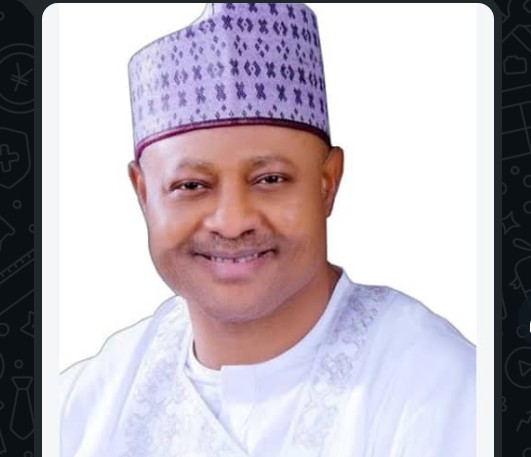
Uba Sani: An Apostle of Politics Without Bitterness and Violence

By Abdullateef Bamgbose
Since assuming office as Governor of Kaduna State, Uba Sani has consistently emphasised peace, dialogue and peaceful coexistence as essential ingredients for the development of the state.
For a state with a long history of ethno-religious tensions, communal conflicts and insecurity, the governor’s emphasis on dialogue and reconciliation has become one of the defining features of his administration.

Governor Sani belongs to the school of thought that believes that development cannot thrive in an atmosphere of fear and violence. His administration has therefore pursued a peacebuilding strategy that combines security operations with dialogue, community engagement, reconciliation and the involvement of traditional and religious leaders.

One of the notable features of this approach has been the administration’s sustained engagement with religious and traditional leaders. In August 2025, the governor said the state’s peace model was built around dialogue, trust-building and inclusion, with religious leaders, traditional rulers, communities and security agencies playing important roles. He also stressed that security interventions should involve prior engagement with affected communities.
The administration has also strengthened interfaith engagement through the Kaduna State Bureau of Interfaith, including the Inter-Religious Dialogue on Peace, Unity and Security. The initiative provides a platform for religious leaders to contribute to conflict prevention, reconciliation and social cohesion.

The importance attached to traditional institutions is equally significant. Rather than treating traditional rulers merely as ceremonial figures, the administration has sought to involve them in peacebuilding and community mobilisation. Their proximity to the people gives them an important role in identifying tensions early, resolving disputes and encouraging communities to embrace dialogue.

This approach has been particularly relevant in Southern Kaduna, where successive administrations have had to contend with deep-rooted communal and religious tensions.
By widening political engagement and reaching out to communities and traditional institutions across the state, the present administration has sought to reduce the perception of exclusion and encourage a greater sense of belonging.
Another aspect of the administration’s peace strategy has been its willingness to explore dialogue even in difficult security situations.
In 2024 and 2025, the government defended negotiations with armed groups, saying the objective was to save lives and secure the release of abducted persons. Governor Sani said traditional rulers and religious leaders played roles in the negotiations, which the government said contributed to the release of about 200 captives.
The governor has also repeatedly warned against politicising security.
In November 2025, he urged politicians to distinguish between legitimate criticism of government policies and actions that could undermine the security and corporate interests of the state.
These efforts suggest that Governor Sani’s conception of peace goes beyond the absence of violence. His administration has linked peace to inclusion, social justice, education, healthcare, employment and economic opportunity. In his interaction with religious leaders, the governor argued that sustainable peace also requires schools for children, hospitals for mothers and jobs for young people.
This philosophy is important as Kaduna approaches another electoral season.
Politics, by its nature, involves competition. Candidates and parties will disagree over policies, performance and leadership. Such disagreements are healthy in a democracy when conducted within the bounds of law and civility. What should concern every stakeholder, however, is any attempt to turn political competition into communal confrontation or violence.
Recent political exchanges in Kaduna have already shown signs of increasing tension, with rival political camps trading accusations and counter-accusations. It is therefore important for all political actors to exercise restraint and avoid statements or actions capable of inflaming ethnic, religious or communal sentiments.
The defection of former Chief of Staff Bashir Saidu and some political figures associated with the African Democratic Congress (ADC) has also added another dimension to the state’s evolving political landscape. Rather than viewing political realignments as threats, the larger question should be whether Kaduna can sustain an environment in which politicians from different tendencies are allowed to participate peacefully in the democratic process.
Governor Sani’s political philosophy, as demonstrated by his repeated emphasis on dialogue and peaceful coexistence, appears to favour a politics in which disagreements do not necessarily translate into hostility.
The ADC and other opposition parties have every right to criticise the government, challenge its policies and present alternative programmes to the people. Equally, the ruling party has the right to defend its record. But the contest should be about ideas, programmes, performance and the future of Kaduna—not about violence, intimidation or the exploitation of ethnic and religious differences.
There are also ongoing political and legal controversies surrounding the previous administration of former Governor Nasir El-Rufai. Those matters should be allowed to proceed through the appropriate judicial and investigative institutions rather than becoming instruments for inflaming political passions.
As the 2027 elections draw closer, Kaduna needs politicians who can disagree without becoming enemies and compete without turning their supporters against one another.
The state’s history provides sufficient warning about the consequences of political and communal violence. The responsibility therefore rests on the political class, religious leaders, traditional rulers, civil society and the media to ensure that the electoral contest does not reopen old wounds.
Governor Uba Sani’s emphasis on dialogue, interfaith engagement, community participation and peaceful political competition offers one approach to managing Kaduna’s longstanding divisions.
Whether the approach will deliver lasting peace will ultimately depend on sustained implementation, accountability and the willingness of all stakeholders to participate.
For Kaduna, the message should be clear: political competition is inevitable, but violence is not. Democracy permits disagreement; it does not require bitterness.
The state needs a politics in which opponents can compete today and still sit together tomorrow. That is the essence of politics without bitterness—and it is a principle Kaduna needs as the next electoral cycle approaches.
Abdullateef Bamgbose
Associate editor
Aljazira Newspaper
Abuja