
Opinion
Zion Ministry Seven Billion Naira: Teeny-Weeny Drop…

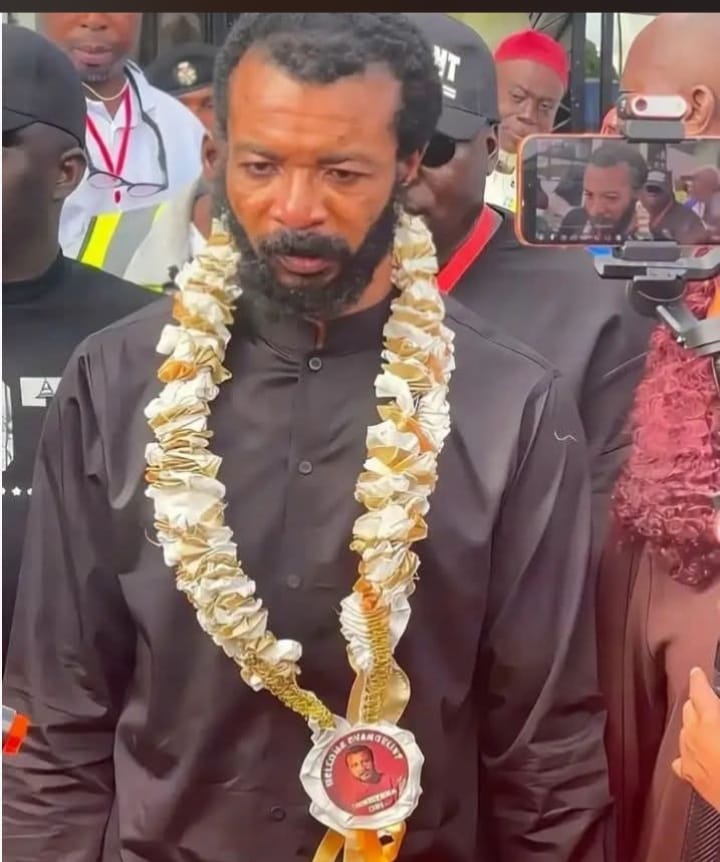
By Dr jalarth Uche Opara
The wave of Zion Ministry in the South-East, with particular emphasis on Imo State, is nothing short of phenomenal. It is a case of “You may hate it, disparage it, but you cannot ignore it.”
The wave is more than a tsunami, beyond a hurricane and certainly not a mere whirlwind. It is, in my estimation, a positively “Strange Wind of the East” blowing across boundaries and, strangely enough, creating new ones never seen before.
It takes a heart singed by the hottest iron of ingratitude, wickedness or envy to look at the phenomenal pace of infrastructural development at the Zion Ministry permanent site in Ngor Okpala, Imo State, and remain incapable of acknowledging that something extraordinary is happening there.

This, however, is not an argument that everything about Zion Ministry is beyond criticism. Far from it.
Ebuka Obi, founder of the ministry, has had a rough ride on social media, particularly Facebook. His critics have accused him of “tombom-tombom,” “arangee miracles,” inappropriate language and other excesses in his ministrations.
Some of these criticisms may deserve serious examination. Religious movements, like every human institution, should not be above scrutiny.
But criticism should not make us blind to reality. The testimonies of people who say they have found spiritual, emotional or material relief through the ministry cannot simply be wished away.
Their experiences may be debated, interpreted or questioned, but they remain non-fungible experiences to the people who lived them. And this is where the matter becomes delicate.
The crowd that gathered for the conclusion of the 100 days of prayer and fasting was enormous, more like a sea of humanity than an ordinary congregation. Whatever one’s theological position on Zion Ministry, such a gathering is a compelling indication that the movement has acquired enormous social energy.
You may dislike the movement. You may disagree with its methods. You may question its theology. But pretending it does not exist or imagining that social-media bullying alone can make it disappear is simply unrealistic.
Sometimes, wisdom is not found in trying to extinguish a phenomenon but in understanding it, engaging it responsibly and where necessary, regulating its excesses.
The uncomfortable truth is that Zion Ministry has become a social phenomenon that cannot simply be erased with hashtags, insults or online ridicule. More importantly, there is another uncomfortable comparison we must be willing to make.
Look at the infrastructural transformation taking place around the Zion permanent site in Ngor Okpala.
A once relatively obscure rural environment has suddenly become a destination of enormous religious and economic activity.
That transformation deserves examination.
If money raised from ordinary people is being converted into infrastructure, employment, businesses and economic opportunities, that is materially different from money disappearing into private accounts and luxurious lifestyles.
This is where our political class deserves a harder look. Reports surrounding the conclusion of the 100 days of fasting and prayer put the donations associated with the event at over ₦7 billion. Whether every figure being circulated is independently verifiable is another question, and proper transparency would only strengthen any institution handling money on that scale.
But even assuming the figure is approximately correct, there is a striking irony in the public discourse.
₦7 billion sounds enormous to the ordinary citizen. Yet compared with the resources that pass through government at federal, state and local levels, it can indeed look like a teeny-weensy drop in a very large ocean.
The difference is that citizens voluntarily donated this money to a religious movement.
Government revenue, on the other hand, is public money.
That distinction matters.
When billions of naira are voluntarily contributed by citizens and subsequently produce visible infrastructure and economic activity, we should ask legitimate questions about accountability, transparency and purpose on the part of our political class who defraud the masses daily.
But we should ask those questions with even greater intensity when billions of public funds are allocated to governments and the corresponding infrastructure, services and opportunities remain conspicuously absent.
Imagine what our states and local governments would look like if the resources allegedly siphoned away by corrupt political actors had instead been invested in roads, hospitals, schools, water systems, industries and employment. Imagine the transformation.
That is why I find it curious that some people expend enormous energy attacking a religious movement while showing comparatively little enthusiasm for interrogating the political structures that control vastly larger pools of public resources.
This is not a defence of everything Ebuka Obi says or does.
It is not an endorsement of every claim made by Zion Ministry.
It is certainly not an invitation to suspend critical thinking.
It is simply an appeal for intellectual consistency. If we demand accountability from religious organisations, let us demand it from government.
If we question how religious donations are used, let us question how public allocations are used.
If we scrutinise claims of miracles, let us also scrutinise claims of development.
If we are disturbed by the influence of religious leaders, let us be equally disturbed by the unchecked influence of politicians who control the commonwealth.
The argument should never be “Zion Ministry is good because politicians are bad.”That would be intellectually lazy.
The better argument is this:
Every institution should be judged by what it does with the power, money and influence entrusted to it.
Zion Ministry should therefore be open to scrutiny.
Ebuka Obi should be open to scrutiny.
Religious donations should be open to scrutiny.
But our political leaders who administer the collective wealth of millions of Nigerians—should face an even more rigorous standard of scrutiny.
I am not a member of Zion Ministry. I have no stake in defending its founder or massaging its image. I am simply looking at a phenomenon that has become too large to dismiss and asking that we examine it dispassionately.
Whether we like it or not, Zion is a movement.
It is surging like a flood.
It may evolve. It may attract criticism. It may encounter controversies. It may even make mistakes.
But it is not going away simply because its critics wish it would.
And perhaps the greater question is not whether Zion Ministry should exist.
The greater question is:
What does its phenomenal rise tell us about the spiritual, social, economic and political condition of the society that produced it?
That is the conversation worth having.Ebuka Obi and Zion Ministry may have their controversies.
But they are the least of our problems.
Our greater problem is a political class entrusted with the commonwealth that too often behaves as though the commonwealth belongs to them.
And until we learn to direct the same ferocity with which we attack religious movements toward those who control our public resources, we may simply be fighting the wrong battle.
Jarlath Uche Opara
jarlathuche@gmail.com