Opinion
2027: When The People Are Thirsty For CHANGE

By Kenneth Eze
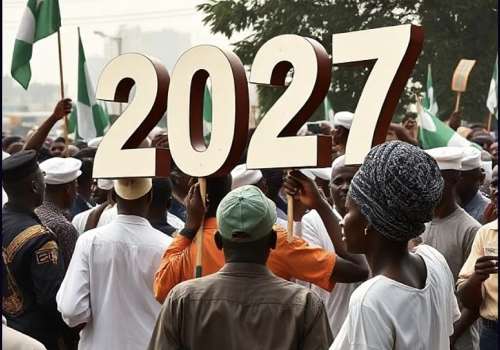
Nigeria approaches 2027 with a political climate unlike any in the last two decades. The conversations in markets, campuses, offices and online spaces are no longer about zoning or party loyalty alone.
They are about results, about daily survival, and about whether the next ballot can actually change anything. The hunger is not for slogans. It is for accountability, jobs, stable electricity, affordable food and security.
That is the “thirst for CHANGE” driving current politicking across the APC, ADC, PDP, NDC Party and newer coalitions. Party meetings now contend with citizens who ask for track records before applause, and politicians who once moved quietly are now forced to explain themselves in town halls and on social media.
The intrigues are visible. Defections, merger talks and new alliances are reshaping calculations ahead of 2027. Old political actors are regrouping, banking on structures and incumbency.
But the electorate has also regrouped. Data from afrobarometer in 2023 survey found that 70% of Nigerians were dissatisfied with the direction of the country, and trust in elected officials remained low.
The 2023 elections themselves, with their high youth turnout and disputes over transmission of results, taught millions of first-time voters how the process works and where it fails. That lesson has not been forgotten.
INEC sits at the center of the tension. Its introduction of BVAS and the IReV portal in 2023 was meant to build confidence. They worked in many places, but the failure to transmit presidential results in real time as promised by INEC itself damaged credibility.
The perception, fair or not, is that the umpire sometimes acts with caution toward the government of the day and less decisively when citizens demand transparency. INEC’s own post-election review admitted gaps in logistics and communication.
For 2027 to be different, INEC must close those gaps early: publish a detailed timeline, conduct independent audits of BVAS and IReV, open its servers to accredited observers, and sanction staff who violate procedure regardless of rank. The umpire cannot afford the luxury of ambiguity when citizens are watching every move.
The old politicians must also read the mood correctly. The politics of patronage, last-minute cash distribution and recycling of familiar faces still happens, but its yield is shrinking. Gen Z and millennial voters, who now make up over 37% of registered voters according to INEC’s 2023 figures, are less tied to party machines and more tied to performance.
They coordinate without godfathers, verify claims online, and will vote across party lines if the candidate matches their expectations.
The message to political actors is simple: it is no longer as usual. Candidates will be judged, not just nominated. Parties that impose unpopular choices risk losing elections even in their strongholds because the voter is now more independent than the structure.
To the Nigerian youth, the task is clear and unglamorous. Change will not come from trending hashtags alone. The Permanent Voter’s Card (PVC) is the only instrument that can convert frustration into power. INEC data from 2023 showed that over 7 million PVCs were never collected.
If 2027 must reflect the will of the people, that gap must close. *Register, collect your PVC, protect it, and show up on election day. Mobilize your friends, your siblings, your neighbors. Democracy rewards those who appear at the ballot, not those who shout after it.
To security agencies, neutrality is not optional. Nigerians remember when ballots were hijacked and when voters were intimidated. The 2023 elections recorded over 1,000 incidents of electoral violence according to the Nigeria Civil Society Situation Room.
Citizens are saying, plainly, that they will resist any attempt to subvert their vote, and they will do so with their numbers, not with arms.
Police, civil defence and military personnel must remember their oath is to the constitution and to Nigerians, not to any politician. Professionalism, early deployment and transparent handling of electoral offenses will protect both democracy and the reputation of the services.
2027 is not just another election cycle. It is a test of whether Nigeria can still correct itself through the ballot. The economy is under pressure, insecurity persists in many regions, and public trust is thin.
But the same conditions have sharpened political awareness. Citizens are more informed, more impatient, and more organized.
If INEC does its job transparently, if politicians present credible candidates and respect the voter, and if young people turn out in mass, then 2027 can retire failed political patterns and open space for new leadership. If not, the country loses another four years.
The choice, as always, rests with Nigerians. But this time, the people are thirsty for CHANGE, and they intend to drink from the ballot.
Kenneth Eze, is a civil society actor and public affairs analyst. You can reach him on engrchukeze2014@gmailcom