
News
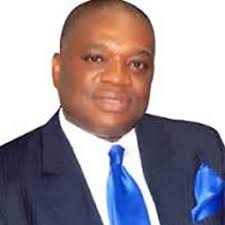
Abia’s Security Gains Under Orji Uzor Kalu: A Legacy Worth Remembering

By Prof. Okey Nwabuko
In Africa where insecurity has become the defining crisis of governance, it is important to look back at leaders who not only understood the problem but decisively tackled it. One such leader is Dr. Orji Uzor Kalu, the former Governor of Abia State. His approach to security during his time in office (1999–2007) remains one of the most remarkable case studies of governance in Nigeria’s Fourth Republic.
When Kalu assumed office in 1999, Abia State was overwhelmed by violent crimes like armed robbery, kidnapping, and cult-related killings. Markets were unsafe, roads were deadly at night, and ordinary citizens lived in constant fear. It was against this backdrop that Kalu introduced the now-famous Bakassi Boys, a vigilante security outfit that completely altered the trajectory of crime-fighting in Abia.

Unlike conventional policing, the Bakassi Boys were embedded in communities, driven by intelligence gathering and grassroots support. Traders, motorists, and residents who had suffered endless harassment by criminals suddenly found relief. Within months, the fearsome crime lords of Abia either fled the state or met their end. The likes of Osisikankwu, and many other dreaded kidnappers fled from Abia State. Their operations collapsed under Kalu’s zero-tolerance policy.
This singular move made Kalu a darling of the masses. He took bold risks where others dithered, and he restored dignity to a society that had been under siege.
Kalu was not merely a governor who sat in Government House. He was a hands-on leader who patrolled at night, checked on commissioners, and demanded accountability from local government chairmen. This unusual approach kept the machinery of government on its toes. One cannot forget the calibre of men and women he surrounded himself with competent and eminent personalities like Professor Chibuzor Ogbuagu, Chief Onyekwere Ogba, Ezebunwa Ubani, Moses Agu, Lambert Nmecha, Solomon Akuma SAN, Chris Uche SAN, Prof. Mkpa Agu Mkpa, Awa Kalu SAN, Dr. Ori Obasi, and Rt. Hon. Arua Arunsi, amongst others.

They were professionals of integrity who dared to speak truth to power. In a political culture dominated by sycophancy, this was revolutionary. Kalu also understood boundaries. When the Bakassi Boys once attempted to settle a marital dispute, he dismissed their leader immediately, emphasising that their role was security and nothing more. That clarity of vision ensured discipline within the system.
What happened after Kalu left office tells its own story. Almost immediately, the state relapsed into insecurity. Kidnapping became rampant, armed robbery returned, and many who had once fled crime began to desert Abia again. I, too, had to leave the state and later Nigeria because of insecurity.
The contrast between the Kalu years and what followed is stark proof that leadership makes all the difference. This is why I often ask: would the present insecurity ravaging the South East; unknown gunmen, killings, kidnappings have persisted if someone with Kalu’s willpower and ruthlessness against crime were at the helm? My answer is a resounding no.
Kalu’s governance was not merely about physical security. Corruption was drastically curtailed under his watch. Even church leaders, such as Bishop Lucius Ugorji, acknowledged this fact at the time. His later arrest and trial by the EFCC, in my view, was politically motivated. An attempt to stop his rising national profile and possible presidential ambition. History will judge this period more fairly than politics did.
Good governance is not just about building roads or commissioning projects. It is about building a safe, stable society where people can live and work without fear. Kalu understood this, and he executed it. As Nigeria battles today’s insecurity from Boko Haram in the North East, banditry in the North West, to separatist-linked violence in the South East, leaders at every level must remember that crime is not fought with half-measures. It takes vision, political will, and the courage to be unpopular with criminal elements.
President Bola Ahmed Tinubu, whose bold economic reforms I commend, must surround himself with competent, courageous, and principled people. Just as Tinubu once honoured Kalu at Enugwu Ukwu and Igbere, he should engage formidable Nigerians of goodwill after his reelection to consolidate on his achievements.
History will eventually vindicate Orji Uzor Kalu. He secured Abia in record time, restored the confidence of the masses, and built a model of governance rooted in courage and integrity.
The tragedy of Nigeria is that men like Kalu are often vilified instead of celebrated. But time, as always, will tell.
Prof. Okey Nwabuko, an indigine of Obingwa LGA, writes from Maryland, USA.