Health
Period Poverty: How Menstruation Is Silently Pushing Nigerian Girls Out of School

By Caroline Ameh
On the dusty roads of Yakawada in Giwa Local Government Area of Kaduna State, 15-year-old Maryam walks to school carrying dreams of a better future. Like many girls her age, she enjoys the laughter and companionship that come with school life. But every month, a natural biological process transforms her excitement into anxiety and uncertainty.
For Maryam, menstruation is not just a monthly experience. It is a reminder of the barriers that many adolescent girls across Nigeria continue to face — barriers created not by biology, but by poverty, stigma, inadequate sanitation facilities and limited access to menstrual hygiene products.

“I noticed that when I turned 13 something strange happened to me. I saw blood stains on my underwear and I was too scared to tell anyone about it. I thought I had injured myself but I kept seeing it until I had the boldness to tell my mother,” Maryam recalls.
Her mother later explained that what she experienced was menstruation, a natural sign of womanhood. But instead of becoming a moment of understanding and acceptance, it became the beginning of a monthly struggle.
“I sometimes wish there was nothing like menstruation,” Maryam admits. “The stress I go through whenever it comes is too much. Most times, getting water to wash and buying sanitary pads discourages me from going to school.”

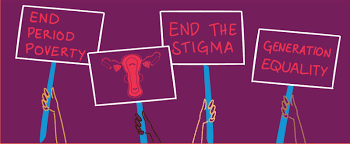
Maryam’s experience reflects the reality of thousands of girls across Nigeria who silently battle period poverty — a situation where girls and women cannot afford menstrual products or access the facilities needed to manage their periods safely and with dignity.
A Monthly Battle Against Education
In Ogam community, Agatu Local Government Area of Benue State, 16-year-old Helen shares a similar experience.
For her, menstruation often means staying away from school for several days because of fear, embarrassment and the inability to afford sanitary products.
“I stay back because I fear being mocked if I stain my uniform. Pads are expensive and when I can’t afford them, I use pieces of cloth.
Sometimes, I have infections and it makes me very uncomfortable,” Helen explains.
For Maryam and Helen, menstruation is not merely a health issue. It has become an educational challenge.
Across Nigeria, many adolescent girls miss school during their menstrual periods because they lack access to sanitary pads, clean water, private toilets and accurate information about menstrual hygiene.
A 2022 UNICEF report estimated that one in ten African girls misses school during menstruation. In Nigeria, studies have shown that many girls lose significant portions of their school time annually due to period-related challenges, with some eventually dropping out completely.
The consequence is a widening inequality gap between girls and boys, as girls lose valuable classroom time and opportunities because of a biological process they have no control over.
The Rising Cost of Dignity
Period poverty remains one of the most overlooked consequences of economic hardship in Nigeria.
With millions of families struggling with rising living costs, sanitary pads a basic necessity for menstrual health have become unaffordable for many households.
A pack of sanitary pads can cost between ₦500 and ₦2,500 depending on the brand and location, making it difficult for low-income families to consistently provide them for their daughters.
As a result, many girls rely on unsafe alternatives such as old clothes, rags or tissue paper. These coping mechanisms expose them to health risks, including infections and other reproductive health complications.
Beyond the physical consequences, the emotional impact is equally damaging. Shame, fear of being mocked and social isolation often affect girls’ confidence and participation in school activities.
The Nigeria Association of Women Journalists (NAWOJ), through its National Chairperson, Aisha Ibrahim, has repeatedly highlighted the link between menstrual health and girls’ education.
“If a girl misses a week of school every month due to menstruation, she is automatically disadvantaged compared to her male peers. Menstrual health is an education and equality issue, not just a health issue,” Ibrahim stated.
Beyond Sanitary Pads: Nigeria’s Sanitation Challenge
While access to menstrual products remains a major concern, experts warn that solving period poverty requires more than distributing sanitary pads.
Water, sanitation and hygiene facilities are equally important.
In many rural schools across Nigeria, girls have limited access to clean water, private toilets and safe spaces where they can manage their periods comfortably.
“Menstrual hygiene management is not just about providing pads. It is about ensuring girls have clean water, private toilets and the right information,” explains Dr. Grace Okonkwo, a public health expert.
“When these are missing, girls will continue to feel unsafe and embarrassed, and their education suffers.”
Reports from development organisations indicate that many rural schools in states such as Kaduna, Benue and Adamawa have inadequate or completely unavailable toilet facilities.
For some girls, managing menstruation means using bushes or unsafe spaces around schools, exposing them not only to infections but also to risks of harassment and gender-based violence.
The Burden of Silence and Cultural Stigma
Beyond poverty and infrastructure challenges, cultural attitudes surrounding menstruation continue to deepen the problem.
In some communities, menstruating girls are treated as though they are unclean. They may be restricted from cooking, fetching water or participating fully in family and community activities.
These beliefs create an environment where girls feel ashamed of a natural biological process and are discouraged from speaking openly about their challenges.
At the first Menstrual Health and Hygiene Management (MHHM) Summit in Abuja, a panelist noted that menstruation remains a subject often discussed in whispers despite affecting millions of women and girls.
“Menstruation is natural, yet in many Nigerian homes it is spoken of in whispers, if at all. Until we normalise the conversation, girls will continue to feel shame where they should feel pride,” the panelist said.
Community Solutions Offering Hope
Despite the challenges, some organisations and community groups are working to change the narrative.
In Kaduna and Benue states, some non-governmental organisations have introduced programmes that train girls to produce reusable sanitary pads using safe and washable materials.
Others provide dignity kits containing sanitary pads, soap and underwear to girls in underserved communities.
For Helen, learning how to make reusable pads brought relief.
“I was happy when they taught us how to make cloth pads. At least I don’t have to worry every month about money for pads,” she says.
Advocates also stress the importance of menstrual education in schools, arguing that boys must be included in conversations around menstrual health to reduce bullying and stigma.
The Need for Policy Intervention
Experts and rights advocates insist that Nigeria requires stronger policy measures to address menstrual inequality.
Among the recommendations are the removal or reduction of taxes on sanitary products, provision of gender-friendly toilets in schools, and integration of menstrual health education into national health and education programmes.
“Government must take menstrual hygiene as seriously as vaccination or malaria prevention,” an activist said during an Abuja policy dialogue.
“When girls drop out because of their periods, the country loses potential doctors, engineers and leaders.”
In 2023, the House of Representatives debated a motion calling for free sanitary pads for schoolgirls. However, implementation has remained limited, leaving many girls vulnerable.
A Global Crisis With Local Consequences
The challenge of period poverty extends beyond Nigeria.
Gender justice advocates and health campaigners estimate that about 500 million people worldwide experience period poverty every month, struggling to access menstrual products, clean water, sanitation facilities and accurate information.
At a global SHE & Rights session marking the 2026 International Day of Action for Women’s Health and Menstrual Hygiene, activists described menstrual dignity as a fundamental human rights issue.
Nepalese nurse and activist Radha Paudel, founder of the Global South Coalition for Dignified Menstruation, said menstrual needs are often ignored during humanitarian emergencies, including refugee crises and disasters.
“Dignified menstruation is rooted in the rights to dignity, freedom, equality and non-discrimination,” she said.
Climate disasters have also worsened the challenge, with women and girls in affected communities often losing access to essential menstrual supplies.
“When people lose everything during disasters, underwear and menstrual products become urgent needs,” said Joie Cortina of the Women’s Global Network for Reproductive Rights.
The Dreams Behind the Statistics
For Maryam and Helen, the statistics represent real lives and interrupted dreams.
Maryam wants to become a teacher. Helen dreams of becoming a nurse.
But every month, their education is threatened by a challenge that should never determine the future of any child.
“I want to finish my education and become a nurse,” Helen says softly. “But sometimes, it feels like my period is stronger than my dream.”
Menstrual health is not simply a women’s issue. It is a development, education and equality issue.
For Nigeria to achieve meaningful progress in gender equality and universal education, girls must be able to manage menstruation with dignity.
Breaking the silence, investing in water and sanitation, reducing the cost of menstrual products and normalising conversations around menstruation are not optional steps they are urgent priorities.
Until these measures become reality, girls like Maryam and Helen will continue to face a monthly choice between their education and a natural process of growing up.
Fast Facts: Period Poverty in Nigeria
• One in ten African girls misses school during menstruation (UNICEF).
• Nigerian girls lose significant school time annually due to period-related absenteeism.
• Sanitary pads remain unaffordable for many low-income families.
• Over 48 million Nigerian women and girls are of reproductive age, yet millions lack access to safe menstrual products and facilities.
• Many schools lack gender-segregated toilets with clean water.
• Unsafe menstrual practices contribute to infections, stigma and school dropout.
Did you like this feature?