
News
House of Representatives Emergency Sitting Ends in Betrayal of the People’s Will

By Sam Agogo
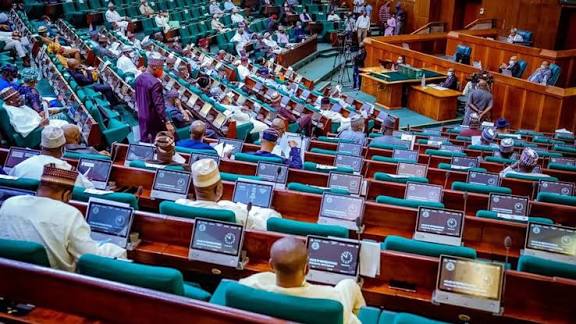
On February 17, 2026, Nigerians witnessed one of the most dramatic and divisive sittings in the history of the House of Representatives.




The sitting, presided over by Speaker Tajudeen Abbas, quickly spiraled into disorder. Francis Waive, Chairman of the House Committee on Rules and Business, moved a motion to rescind the earlier passage of December 2025, supported by Adebayo Balogun, Chairman of the House Committee on Electoral Matters. Opposition lawmakers resisted fiercely, staging dramatic protests and accusing the leadership of selling out democracy. Yet the ruling party majority prevailed, pushing through the clause despite the uproar. The chamber became a theatre of anger, with minority members openly questioning whether those who supported the amendment could ever proudly tell their children what they had done that day.
The Senate was no less turbulent. After rescinding its earlier passage, senators recommitted the bill for fresh consideration. The harmonised version retained the manual fallback, despite civil society pressure. The debate reached a climax when Senator Enyinnaya Abaribe (ADC, Abia South) demanded a division on Clause 60, exposing deep divisions among lawmakers. His intervention drew attention to the conspicuous absence of the official Minority Leader, Senator Abba Moro. Nigerians were left asking: why was Abaribe, not Moro, speaking for the opposition? Has the Minority Leader aligned with the ruling APC, or was he simply unavailable? The silence raised troubling questions about opposition unity at a decisive moment, leaving many Nigerians to wonder whether the opposition had fractured when it mattered most.
Outside the National Assembly, the people made their voices heard. Protesters gathered in large numbers, demanding that electronic transmission be made mandatory. Police fired teargas to disperse the crowds, but civil society groups condemned the amendment, warning that manual collation would erode trust in elections. Their chants echoed across Abuja, symbolizing the frustration of millions who see the amendment as a betrayal of democratic principles.
The amendment also shortened INEC’s timeline for conducting elections from 360 to 300 days, while adopting direct primaries and consensus as modes of candidate selection. Analysts warn that discretionary powers given to INEC over result transmission could be exploited, leaving the 2027 elections vulnerable to disputes and manipulation. Nigeria’s democracy, already fragile, risks sliding into deeper crisis.
Beyond the legal text lies a moral question: can lawmakers who supported this amendment defend their actions to future generations? For many Nigerians, the answer is no. The perception is that expediency triumphed over principle, leaving a stain on the conscience of the legislature.
The harmonised Electoral Act Amendment Bill now heads to President Tinubu for assent. Whether history judges this as a pragmatic compromise or a betrayal of democracy will depend on how leaders respond to the backlash. For now, the people’s verdict is clear: democracy has been wounded, and trust in the electoral process has been shaken.
For comments, reflections, and further conversation:
📧 Email: samuelagogo4one@yahoo.com
📞 Phone: +2347062760296