
News
Manufactured Displacement: How Electoral Greed Breeds Banditry

_By Sam Agogo_
Nigeria is facing a revelation that has unsettled its political and security landscape. A serving military officer, whose identity remains hidden, appeared in a viral video accusing politicians of deliberately manufacturing insecurity for electoral gain. His testimony, calm but piercing, has forced Nigerians to confront a painful truth: the insecurity ravaging communities is not only the work of bandits or foreign mercenaries, but also the product of political engineering.
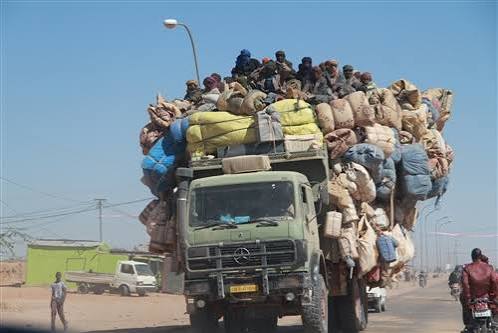
The officer explained that the scheme is not random but carefully planned. Months before elections, politicians or their agents cross into neighboring countries such as Niger, Chad, Cameroon, and Benin, as well as impoverished Nigerian communities. They target vulnerable people — undocumented, poor, and desperate for survival. These individuals are transported into Nigeria and placed in Internally Displaced Persons (IDP) camps. Instead of serving humanitarian purposes, the camps are transformed into electoral machinery. Migrants are registered, issued voter cards, and instructed on how to vote. On election day, they are mobilized with precision, casting ballots exactly as directed. Once the elections are over, they are abandoned, left without support, documentation, or a way home.
The officer’s chilling observation — “When these abandoned persons become hungry, they enter the bush” — captures the devastating cycle. With no livelihood or identity, many turn to crime. Petty theft escalates into robbery, robbery evolves into kidnapping, and others are absorbed into bandit groups operating from forests near the camps. Recruitment requires little persuasion when starvation is the alternative. These individuals are armed and deployed, becoming the very insecurity that communities endure daily.
Nigeria already faces a displacement crisis of immense proportions, with over three million IDPs and millions of children at risk of malnutrition and out of school. Into this fragile system, manufactured displacement injects chaos, overwhelming humanitarian agencies and providing armed groups with a renewable source of recruits. The manipulation of IDP infrastructure not only undermines humanitarian response but also deepens national instability.
Civil society organizations have demanded independent investigations, while legal experts point to existing laws — including the Trafficking in Persons Act, the Electoral Act, and the Immigration Act — under which culpable politicians could face prosecution. Yet political leaders have largely denied or dismissed the allegations, avoiding calls for inquiry. Communities in Zamfara, Katsina, Kaduna, Niger, and Benue, however, have corroborated the officer’s account, recalling the sudden arrival of strangers before elections and their lingering presence afterward. Conflict analyst Dr. Emmanuel Okafor described the situation as “conflict entrepreneurship — politicians creating insecurity and then presenting themselves as the solution.”

The testimony highlights urgent reforms. The Independent National Electoral Commission must strengthen voter registration checks to prevent fraudulent enrolment. The Nigeria Immigration Service should audit IDP camps to identify irregular cases. The National Assembly must criminalize the transportation of people for electoral purposes, with penalties reflecting the severe consequences for national security.
The indictment is clear: politicians are accountable. They are responsible for trafficking people as electoral tools, abandoning them to hunger, and fueling cycles of crime and terror. Nigeria has often failed to act on such revelations, allowing outrage to fade without accountability. This time, the evidence, laws, and institutions exist. What remains uncertain is whether the will to act exists — and whether Nigerians will demand it.
_For comments, reflections, and further conversation, please reach out via email: samuelagogo4one@yahoo.com or phone: +2348055847364.
_