General News
FRC, CSJ Unveil Second Fiscal Responsibility Index to Boost Transparency, Accountability in Public Sector

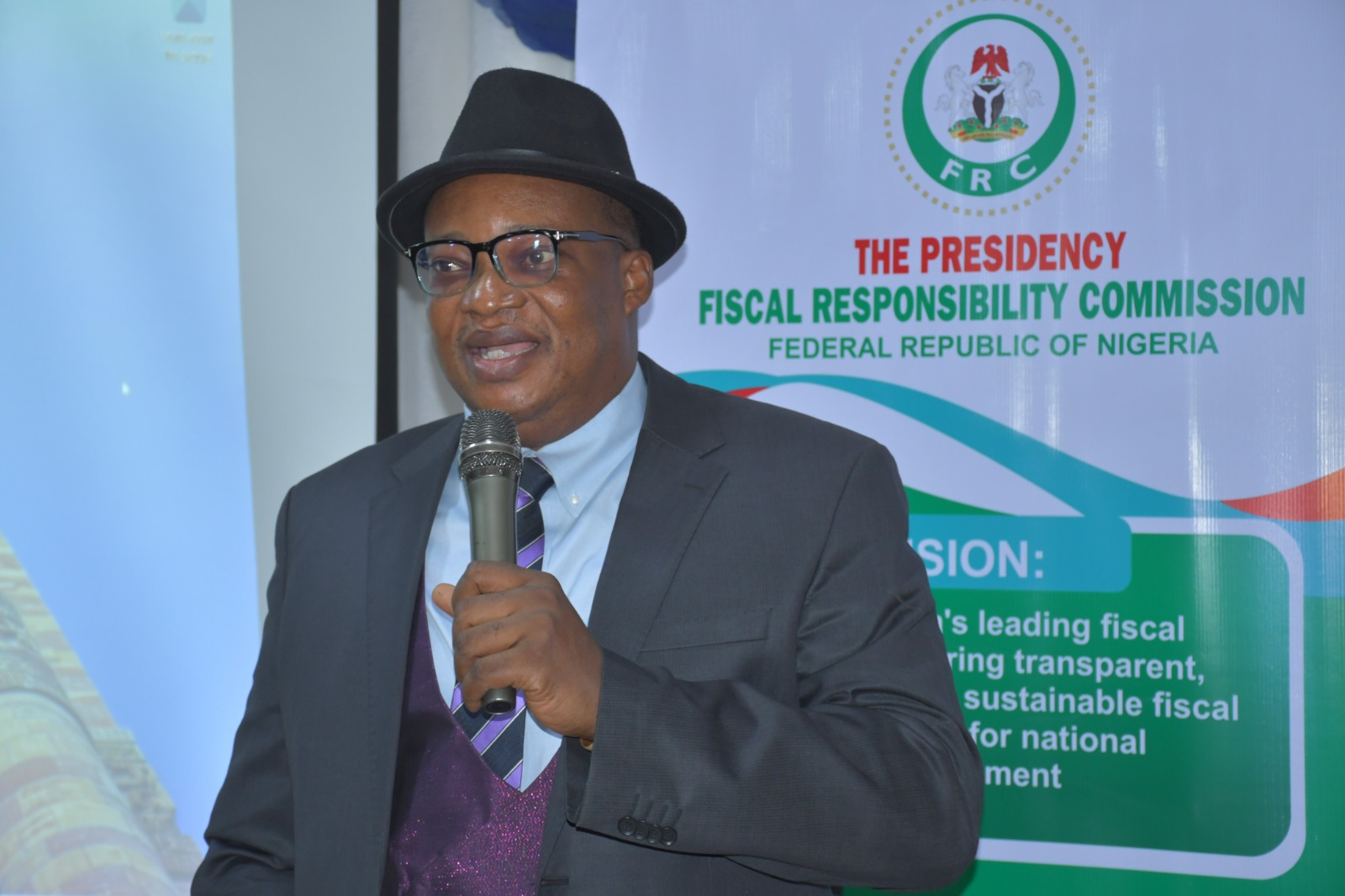
The Fiscal Responsibility Commission (FRC), in partnership with the Centre for Social Justice (CSJ) and with support from the Rule of Law and Anti-Corruption (RoLAC) Programme, has commenced the validation process for the Second Edition of the Fiscal Responsibility Index (FRI), a key initiative aimed at strengthening fiscal discipline, transparency and accountability across Nigeria’s public sector.

The validation meeting, held in Abuja, brought together stakeholders from Federal Ministries, Departments and Agencies (MDAs) to review and refine the framework and methodology that will be used to assess compliance with the Fiscal Responsibility Act and other public finance regulations.
Speaking at the event, the Lead Director of the Centre for Social Justice, Eze Onyekpere, described the exercise as the second phase of a comprehensive mechanism designed to evaluate fiscal responsibility and governance standards within federal institutions.
According to him, the initiative comes at a critical period as Nigeria prepares to mark the 20th anniversary of the Fiscal Responsibility Act next year. He noted that between 30 and 32 states have already enacted Fiscal Responsibility Laws to improve accountability and fiscal governance at the sub-national level.

Onyekpere stressed the importance of policy continuity and institutional commitment, noting that sustainable development requires both financial resources and skilled personnel dedicated to implementing effective governance frameworks.
“We must invest not only money but also human capacity to make Nigeria a country where citizens can thrive and realise their aspirations rather than seeking opportunities abroad,” he said.

He explained that the Fiscal Responsibility Index provides an objective platform for measuring compliance by MDAs and serves as a tool for enhancing institutional performance through evidence-based assessments.
In his keynote address, the Acting Chairman of the Fiscal Responsibility Commission, Charles Chukwuemeka Abana, described the validation meeting as a major step toward deepening fiscal discipline and improving public accountability in Nigeria.
Abana commended CSJ for its continued collaboration with the Commission, noting that the inaugural edition of the Fiscal Responsibility Index achieved significant success despite funding and operational challenges.
He explained that the Index was conceived as an innovative assessment mechanism for evaluating compliance with the Fiscal Responsibility Act, 2007, and other extant financial regulations guiding public expenditure management.
According to him, the first edition of the Index provided valuable insights into institutional performance, encouraged healthy competition among MDAs, and demonstrated that transparency and accountability can be objectively measured and improved.
“The second edition builds upon lessons learned from the inaugural exercise. It incorporates stakeholder feedback, enhanced methodologies, and refined indicators to ensure greater accuracy, objectivity, and relevance,” Abana said.
He emphasized that the objective of the exercise extends beyond ranking institutions, adding that it is intended to strengthen governance systems, improve compliance levels, and increase public confidence in government financial management.
Abana further disclosed that the Commission plans to institutionalise the Fiscal Responsibility Index as a regular performance assessment framework for monitoring fiscal governance outcomes across MDAs.
Also speaking at the event, Professor Ugochukwu Amakom, a consultant from the Institute of Development Studies, University of Nigeria, Enugu Campus, highlighted the role of sound fiscal policy in driving sustainable economic growth and development.
He expressed concern over Nigeria’s growing debt burden, stressing that public borrowing must translate into measurable improvements in citizens’ welfare and national development.
Professor Amakom identified several obstacles to effective budget implementation, including conflicting regulations, inadequate managerial capacity, weak fiscal discipline, poor financial management systems and ineffective internal controls.
He also underscored the importance of quality-based budgeting, budget comprehensiveness and budget credibility as critical elements for strengthening public financial management and governance outcomes.
Stakeholders at the meeting agreed that the Fiscal Responsibility Index remains an important instrument for promoting accountability, transparency, compliance and value-for-money in public expenditure management.
As part of the exercise, questionnaires for the second edition of the Fiscal Responsibility Index were distributed to participating MDAs, which have been given one month to complete and return them to the Commission.
Officials clarified that the assessment is not intended to indict any institution but rather to identify gaps, encourage reforms and strengthen systems for improved fiscal responsibility and good governance.
With increasing fiscal pressures and growing development needs, stakeholders expressed optimism that the successful implementation of the second edition of the Fiscal Responsibility Index will provide a stronger framework for evaluating institutional performance and advancing prudent fiscal management across Nigeria’s public sector.