
General News
Nigeria Moves to Fortify Borders as FG, States Unite Against Transnational Crimes

By Iyojo Ameh
The Federal Government has stepped up efforts to strengthen Nigeria’s border security, forging a broad alliance with border states, traditional rulers and key stakeholders to combat transnational crimes, irregular migration and other emerging security threats.



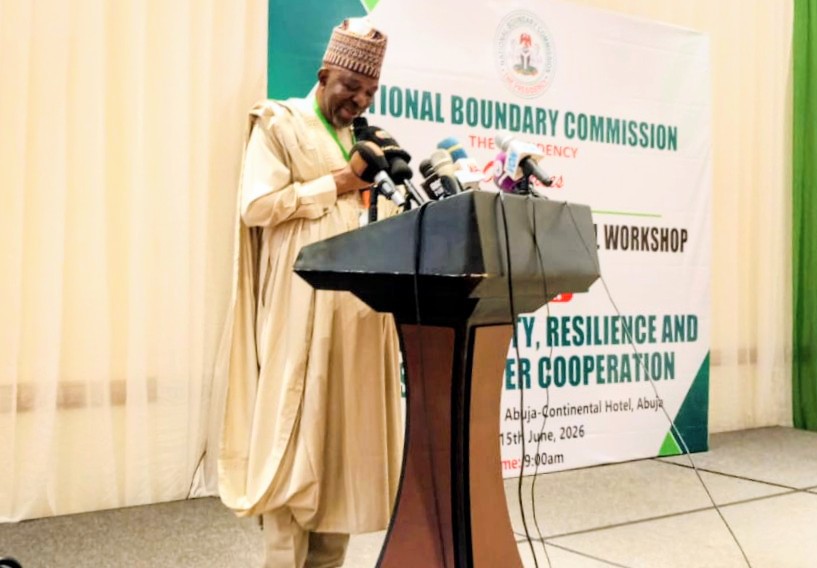
The renewed commitment was the focus of a one-day national workshop on “Border Security, Resilience and Cross-Border Cooperation” organised by the National Boundary Commission (NBC) in Abuja.
Speaking on behalf of the Minister of Defence, General Christopher Musa, the Special Adviser to the Minister, Rear Admiral Olusanya Bankole (rtd), said effective border management has become increasingly critical to safeguarding national security and driving economic growth.
He noted that Nigeria’s borders serve as gateways for trade, cultural exchanges and regional integration, but also present vulnerabilities that can be exploited by criminal networks involved in smuggling, trafficking and other cross-border crimes.
According to him, the country must embrace innovative approaches to border management, including technology-driven surveillance systems, early warning mechanisms and enhanced intelligence-sharing arrangements with neighbouring countries.
“Resilient borders are not only secured, they are adaptive, inclusive and capable of withstanding security threats, climate change and economic disruptions,” he said.
Earlier, the Director-General of the National Boundary Commission, Surveyor Adamu Adaji, stressed that securing Nigeria’s vast border network requires coordinated action among all stakeholders.
He said Nigeria shares approximately 4,454 kilometres of land borders with Benin, Niger, Chad and Cameroon, as well as an 853-kilometre coastline, making collaboration essential for effective border governance.
Adaji revealed that the Commission has established cross-border cooperation platforms involving traditional rulers, local authorities, security agencies, civil society organisations and border communities to strengthen dialogue, intelligence gathering and conflict prevention.
He said the initiative is helping to build trust among border populations while enhancing efforts to address security challenges and promote peaceful coexistence.
The workshop also featured presentations on maritime governance and the blue economy, drone technology, border resilience and peacebuilding strategies designed to bolster national security.
In his remarks, the Commandant of the National Defence College, Rear Admiral Abdullahi Ahmed, called for stronger regional cooperation, warning that no country can successfully tackle border security challenges in isolation.
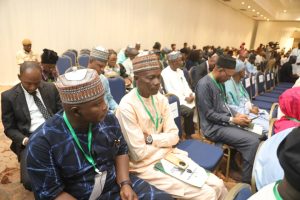
Representatives of border states, including deputy governors and chairmen of state boundary committees, commended the National Boundary Commission for its advocacy efforts and pledged greater collaboration in the fight against transboundary crimes.
Traditional rulers from border communities, led by the Emir of Machina, Alhaji (Dr.) Bashir, urged the government to deepen engagement with traditional institutions, describing them as critical partners in grassroots security and intelligence gathering.
The monarch said traditional rulers remain the first point of contact in many border communities and should be fully integrated into security coordination frameworks.
Stakeholders at the workshop unanimously reaffirmed their commitment to building secure, resilient and economically productive borders capable of supporting national development, regional stability and peaceful cross-border relations.